
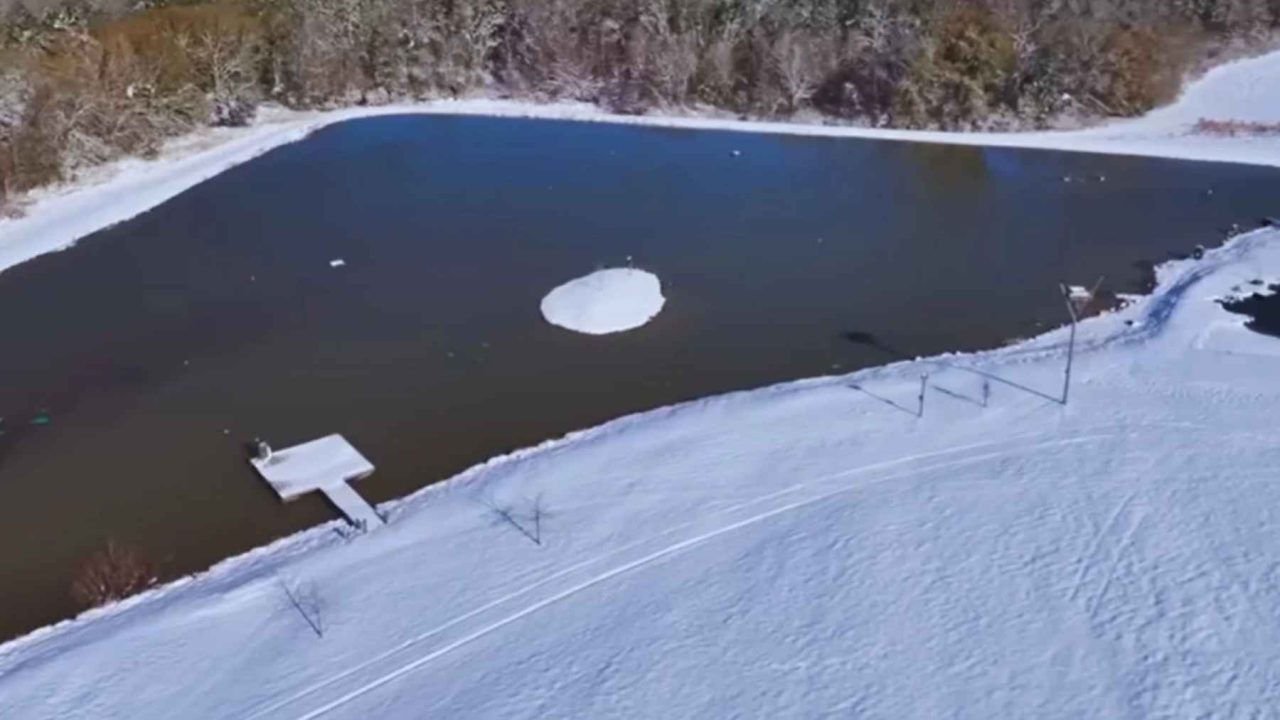
A five-acre pond dug on a former peanut field to raise fish quietly became something far larger than anyone planned — a functioning wild sanctuary visited by bald eagles, deer, owls, ducks, and raccoons, all within roughly 1,000 days of construction.
The transformation wasn’t the result of a conservation grant or a government rewilding program. It started as a practical fish-farming project, managed with technical precision. Nature showed up anyway — and fast.
The story, reported in early 2026, offers a striking example of what happens when you give water back to a landscape that lost it. The results arrived sooner than almost anyone would expect.
How a Fish Farm Became a Wildlife Habitat
The lake was built on land that had previously been used as a peanut field. The people behind the project — who document their work in a video series under the name BamaBass — designed it with underwater structure and careful attention to water quality, including dissolved oxygen levels, which is simply the oxygen that fish breathe while underwater.
The primary goal was raising tiger bass, a fish species selected for the project. Everything about the early construction was oriented around fish production: the shape of the pond, the depth, the structural features beneath the surface.
But about six months after the lake was established, something shifted. Animals weren’t just flying over or passing through. They were using the site regularly. The project’s focus began to widen, with habitat plantings and steady observation becoming part of the ongoing work alongside the fish operation.
According to reporting by journalist Martín Nicolás Parolari, the site’s evolution over roughly 1,000 days made it a documented case of rapid ecological colonization — the process by which wildlife discovers and establishes itself in a new habitat.
What Five Acres Actually Looks Like — and What Arrived
For context, five acres is roughly equivalent to four American football fields placed side by side. That’s not a vast wilderness. It’s a modest-sized pond on a working piece of land. Which makes what happened there all the more striking.
Within the 1,000-day window, the following species were documented using the site:
- Bald eagles
- Deer
- Owls
- Ducks
- Raccoons
The arrival of bald eagles is particularly notable. Eagles are apex predators that require healthy fish populations and open water to hunt effectively. Their presence signals that the ecosystem had matured enough to support a full food chain — not just the fish at the bottom of it.
| Feature | Detail |
|---|---|
| Lake size | Five acres (approximately four football fields) |
| Previous land use | Peanut field |
| Primary fish species | Tiger bass |
| Time to regular wildlife activity | Approximately six months |
| Total observation window | Roughly 1,000 days |
| Wildlife documented on site | Bald eagles, deer, owls, ducks, raccoons |
| Project documentation | Ongoing video series under the name BamaBass |
Why Nature Moved In So Quickly
The speed of colonization here reflects something ecologists have long understood: water is a magnet. When open, clean water appears in an agricultural landscape — especially one that has been farmed intensively for years — wildlife responds almost immediately.
Farmland, by its nature, tends to be simplified. Monocrops like peanuts reduce the structural diversity that most wildlife needs. When a pond replaces that, it introduces open water, edge habitat where land meets water, aquatic insects, amphibians, and fish — all of which support birds and mammals higher up the chain.
The deliberate design choices in this case also mattered. Underwater structure gives fish places to shelter and breed. When fish thrive, the predators that eat fish follow. The careful management of dissolved oxygen kept the water healthy enough to sustain a real population, not just a struggling one.
Habitat plantings added after the six-month mark likely accelerated the process further, providing cover and nesting opportunities for species that need more than open water alone.
The Part of This Story Most People Miss
It’s easy to read this as a feel-good nature story, and in many ways it is. But there’s a practical dimension worth paying attention to.
This wasn’t a dedicated conservation project backed by a nonprofit or a government agency. It was a fish-farming operation built by people who wanted to produce tiger bass. The wildlife sanctuary aspect was, in a real sense, a side effect of doing the fish project well.
That distinction matters because it suggests a broader possibility: productive agricultural land use and meaningful habitat creation are not always in conflict. A well-managed pond built for economic purposes can simultaneously function as a refuge for eagles and owls — without anyone having to choose one over the other.
The BamaBass video series continues to document the project, meaning the 1,000-day mark is a milestone rather than an endpoint. Observers following the series will likely see the site continue to evolve.
What Comes Next for the Site
Based on what The fish operation continues alongside habitat management, with plantings and observation forming a regular part of the work.
The 1,000-day figure represents roughly two years and nine months from construction. By the standards of ecological restoration, that is an extremely short timeline for a site to attract apex predators like bald eagles. Most habitat restoration programs measure meaningful results in decades, not years.
Whether the site will continue to attract new species or see deeper establishment by those already present has not been confirmed in available reporting. What is confirmed is that the process documented so far has already exceeded what most observers would predict from a five-acre fish pond on former farmland.
Frequently Asked Questions
What was the lake originally built for?
The lake was built as a practical fish-farming project, specifically designed to raise tiger bass on a former peanut field.
How large is the lake?
The lake covers five acres, which is roughly equivalent to the area of four American football fields.
How long did it take for wildlife to start using the site regularly?
According to
What animals have been documented at the site?
Bald eagles, deer, owls, ducks, and raccoons are among the wildlife confirmed as regular visitors to the site.
Where can I follow the project?
The project is documented in an ongoing video series shared under the name BamaBass.
Was this planned as a conservation project from the start?
No — the conservation outcome appears to have been an unplanned result of a well-managed fish-farming operation, not a dedicated rewilding effort.


Leave a Reply