
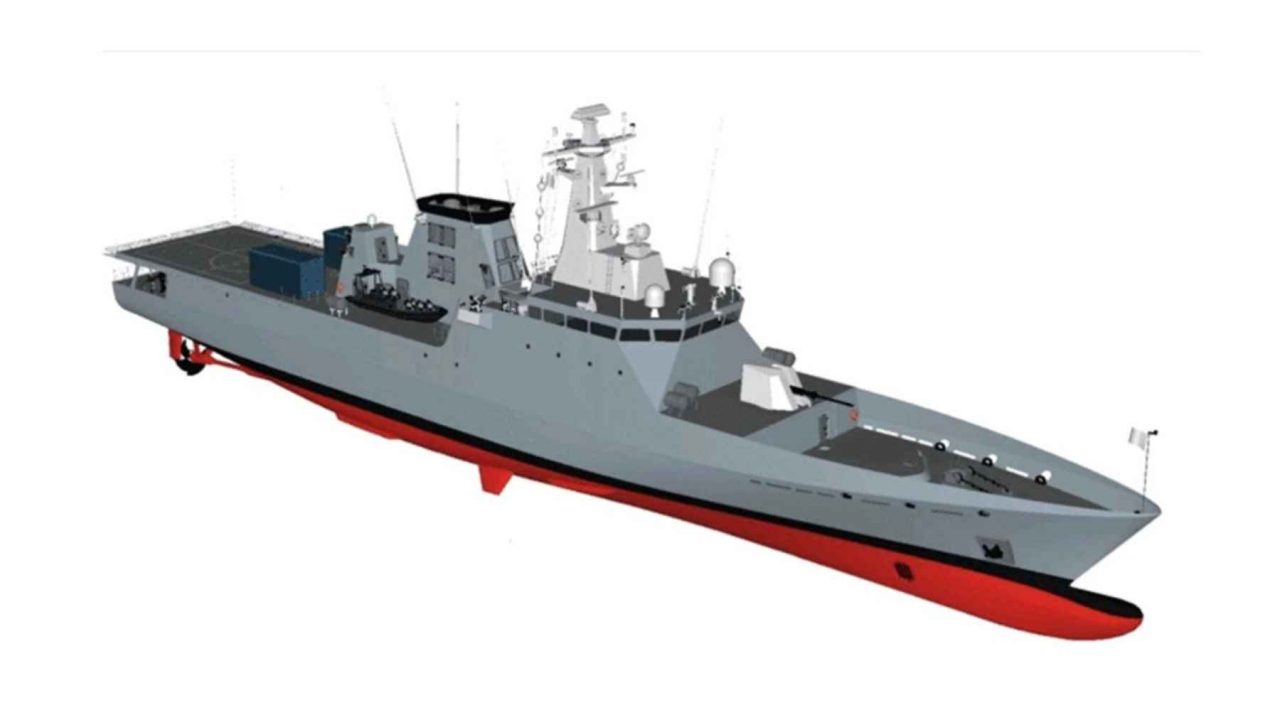
For the first time in roughly four decades, a Spanish shipyard has built a warship for Morocco’s Royal Navy — and that vessel is now undergoing sea trials off the coast of Cádiz ahead of its expected handover later in 2026.
The ship is an offshore patrol vessel displacing 2,020 tons, constructed by state-owned defense manufacturer Navantia at its San Fernando facility. It was launched on May 27, 2025, and carries the designation of construction number 565 at that yard. The milestone ends a long pause in Spanish naval exports to Morocco, one that defense media describe as stretching back approximately 40 years to vessels produced by the former Bazán shipyards — the predecessor company that was eventually folded into what is now Navantia.
The gap is significant. Decades of quiet in a bilateral defense relationship don’t close without political will and commercial trust on both sides. The fact that this ship is now in the water, running trials, says something about where Spain and Morocco stand today.
What Spain Has Actually Built — and Why It Matters
The vessel is based on Navantia’s Avante 1800 design platform. It is an offshore patrol vessel, a class of ship designed for sustained operations in open ocean environments rather than confined coastal waters. These ships are built to handle a range of demanding missions without the full combat loadout of a frigate or destroyer.
According to Navantia, the ship was built for the Royal Moroccan Navy and is scheduled for formal handover in 2026, following the current phase of sea trials being conducted off Cádiz. The trials represent one of the final steps in the delivery process — where the vessel is tested under real operating conditions before the client formally takes possession.
The Avante 1800 platform has been designed with modern naval missions in mind. Offshore patrol vessels in this class are typically suited for maritime surveillance, fisheries protection, search and rescue operations, and pollution response — all increasingly critical functions as Atlantic and Mediterranean waters see growing pressure from illegal fishing, migration flows, and environmental incidents.
Key Facts About the Vessel and the Program
| Detail | Information |
|---|---|
| Displacement | 2,020 tons |
| Vessel type | Offshore patrol vessel (OPV) |
| Design platform | Navantia Avante 1800 |
| Builder | Navantia, San Fernando shipyard, Cádiz |
| Construction number | 565 at the San Fernando yard |
| Launch date | May 27, 2025 |
| Client | Royal Moroccan Navy |
| Expected handover | 2026 |
| Last Spanish-built warship for Morocco | Approximately 40 years ago (former Bazán shipyards) |
- Sea trials are currently underway off the coast of Cádiz
- The program marks a revival of defense industrial cooperation between Spain and Morocco
- Navantia is the Spanish state-owned shipbuilder responsible for the project
- The Avante 1800 is a proven design platform adaptable to multiple naval roles
The Broader Picture: Spain, Morocco, and Maritime Security
The delivery of a warship is rarely just a commercial transaction. It reflects the state of a bilateral relationship — what two countries are willing to share, what industrial capabilities one is prepared to transfer, and how much strategic alignment exists between them.
Spain and Morocco share a complex and often tense relationship, shaped by geography, migration, fishing rights, and competing interests around the enclaves of Ceuta and Melilla. Against that backdrop, a defense export of this scale represents a notable signal that cooperation, at least in the naval domain, has been prioritized.
Officials have noted that maritime surveillance and search and rescue capacity are growing priorities across the region, particularly given the volume of Atlantic and Mediterranean traffic and the challenges of monitoring exclusive economic zones. A vessel like this one — capable of extended offshore operations — directly addresses those needs for the Moroccan navy.
For Navantia and Spain’s broader defense industry, the contract is also commercially meaningful. The San Fernando shipyard has a long history of naval construction, and securing an international export order for a vessel of this size helps sustain the skilled workforce and industrial infrastructure that modern shipbuilding requires. Gaps in order books can be as damaging to a shipyard as gaps in a navy’s fleet.
What the Sea Trials Phase Actually Involves
Sea trials are the critical final stage before a naval vessel changes hands. Engineers, naval architects, and crew put the ship through its paces in real ocean conditions — testing propulsion, navigation, communications systems, maneuverability, and damage control systems under load.
For a 2,020-ton offshore patrol vessel, trials off Cádiz provide access to open Atlantic waters where the ship can be pushed beyond the calm conditions of a harbor. Any deficiencies identified during this phase are addressed before the formal handover, ensuring that the Royal Moroccan Navy receives a vessel that meets the contracted specifications.
The trials phase also gives the receiving navy’s own crew members an opportunity to familiarize themselves with the vessel’s systems before taking full operational command. This is standard practice for naval deliveries of this kind.
What Happens After the Handover
Once sea trials conclude and both parties are satisfied, the formal handover is expected to take place in 2026. At that point, the vessel will enter service with the Royal Moroccan Navy and begin operational duties.
Given its design capabilities — maritime surveillance, fisheries enforcement, search and rescue, and pollution response — the ship is likely to be deployed across the Atlantic approaches and the Strait of Gibraltar region, waters that see some of the heaviest maritime traffic in the world and where the ability to project a sustained naval presence matters enormously.
Whether this contract leads to further orders between Morocco and Navantia has not been confirmed. But the fact that the two countries have successfully completed a major naval construction program together, after a 40-year gap, suggests the foundation for future cooperation is now firmly back in place.
Frequently Asked Questions
What type of ship has Spain built for Morocco?
It is an offshore patrol vessel based on Navantia’s Avante 1800 design, displacing 2,020 tons and built at the San Fernando shipyard in Cádiz.
Why is this described as breaking 40 years of tradition?
Defense media describe this as the first warship built by a Spanish shipyard for Morocco in roughly four decades, following earlier vessels produced by the former Bazán shipyards, which are now part of Navantia.
When will the vessel be handed over to Morocco?
The ship is expected to be formally delivered to the Royal Moroccan Navy in 2026, following the current sea trials phase off Cádiz.
What missions is this type of vessel designed for?
Offshore patrol vessels of this class are suited for maritime surveillance, fisheries protection, search and rescue operations, and pollution response in open ocean environments.
Where were the sea trials conducted?
Sea trials are being conducted off the coast of Cádiz, Spain, where the ship was also constructed at Navantia’s San Fernando shipyard.
Has it been confirmed whether Morocco will order additional vessels from Navantia?
This has not yet been confirmed based on the available source material.




Leave a Reply