
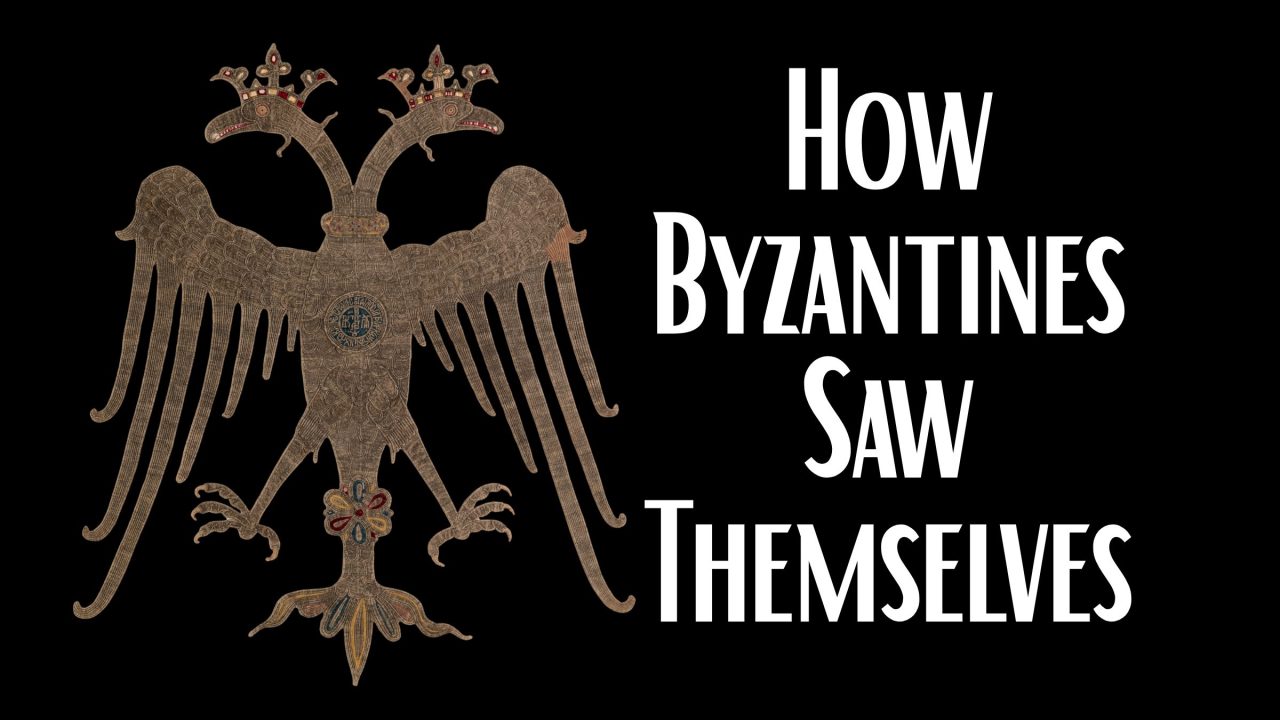
For more than a thousand years, one of history’s most powerful empires called itself something entirely different from the name we use today — and that gap between label and reality tells us something important about how history gets written, and by whom.
The people we call Byzantines never used that word. They called themselves Rhomaioi — Romans. Their state was, in their own understanding, the Roman Empire. Not a successor. Not an echo. The real thing, still standing, still governing, still Roman in every sense that mattered to them.
The disconnect between what they called themselves and what we call them isn’t just a quirk of historical naming. It reflects centuries of Western European bias that shaped — and in many ways distorted — how medieval history has been taught and understood ever since.
The Word “Byzantine” Was Never Theirs to Begin With
The term “Byzantine Empire” is a modern scholarly invention. It derives from Byzantion, the ancient Greek name for the city of Constantinople before it became the imperial capital. Early modern historians, particularly in Western Europe, popularized the label as a way to draw a clean line between the classical Roman past they admired and the Greek-speaking Christian empire they viewed with suspicion or disdain.
That label was never neutral. It carried the biases of Renaissance and Enlightenment thinkers who wanted to claim Rome’s legacy for Western Europe, not acknowledge its continuation in the East. By calling the eastern empire “Byzantine” rather than “Roman,” they could treat it as something foreign, derivative, and separate — even though the people living in it had an unbroken sense of Roman identity stretching back centuries.
The city of Constantinople itself had been founded as the new Roman capital. Its institutions, its legal traditions, its imperial titles — all were consciously Roman. The inhabitants weren’t pretending. They were continuing.
Why the Roman Identity Lasted Over a Millennium
What makes this story genuinely remarkable is the durability of that self-image. The Byzantine Roman identity didn’t just survive for a generation or two after the western empire’s fall in 476 CE. It endured through sweeping changes that would have shattered most national or cultural identities.
Consider what the empire absorbed and survived while still calling itself Roman:
- A shift in dominant language from Latin to Greek
- The transformation of the state religion to Eastern Orthodox Christianity
- Massive territorial losses over centuries
- The fall of Rome itself to outside powers
- Repeated military, political, and dynastic upheaval
Through all of it, the identity held. The term Rhomaioi — Romans — remained the way ordinary people and emperors alike described themselves. That kind of continuity across a thousand years of change is almost without parallel in world history.
What This Tells Us About Medieval History and Western Bias
Understanding how the Byzantines saw themselves does more than correct a naming convention. It fundamentally reshapes how we should read medieval European history.
Western Europe’s break with Rome was real and profound. When historians in the Renaissance and Enlightenment looked back, they saw a lost golden age — and they were not wrong that it was lost, at least in the West. But the impulse to treat Rome as something that simply ended, rather than something that continued in the East, was a choice rooted in cultural rivalry and religious difference as much as historical fact.
The eastern empire’s Greek language and Orthodox Christianity made it easy for Western scholars to classify it as something other than Roman. But that classification said more about Western European anxieties than it did about Byzantine reality.
| Label Used | Who Used It | What It Reflected |
|---|---|---|
| Rhomaioi (Romans) | The people themselves | Unbroken sense of Roman imperial continuity |
| Byzantine Empire | Early modern Western scholars | Renaissance and Enlightenment bias; desire to separate Greek-Christian East from classical Rome |
| Byzantion | Ancient Greeks | Original name of the city before it became Constantinople |
The Real-World Stakes of Getting This History Right
This might sound like an academic debate, but the consequences reach further than a classroom argument about terminology. How we label civilizations shapes how we value them, how we teach them, and whose historical legacy gets recognized.
For over a thousand years, a functioning Roman empire governed large portions of the Mediterranean world, preserved Roman law, maintained Roman institutions, and understood itself as the legitimate continuation of Rome. That story has been systematically minimized in Western historical tradition — not because the evidence was unclear, but because the label “Byzantine” made it easier to treat the eastern empire as a separate, lesser thing.
Scholars argue that correcting this framing matters for understanding the cultural divide between Eastern and Western Europe, a divide whose roots run directly through this question of Roman continuity and who gets to claim it.
What Happens When We Take Their Self-Description Seriously
Taking the Byzantine self-image seriously — accepting that these were people who genuinely, consistently, and reasonably understood themselves as Romans — forces a rethinking of where the Roman Empire actually ended.
The standard date of 476 CE, when the last western emperor was deposed, looks very different if you acknowledge that the Roman Empire in the East continued for nearly another thousand years, finally falling in 1453 CE when Constantinople was taken by Ottoman forces.
That’s not a minor revision. That’s a difference of almost a millennium. And it means that what we call the “medieval period” in European history overlapped almost entirely with a living, functioning Roman Empire — one that its own citizens never doubted was the real thing.
Frequently Asked Questions
Why do historians use the term “Byzantine” if the people themselves never used it?
The term was popularized by early modern Western European historians who wanted to distinguish the Greek-speaking Christian eastern empire from the classical Roman past they admired. It stuck in scholarly tradition despite not reflecting how the empire’s own people identified.
What did the people of the Byzantine Empire actually call themselves?
They called themselves Rhomaioi, meaning Romans, and referred to their state as the Roman Empire. The label “Byzantine” would have been meaningless to them.
Where does the word “Byzantine” come from?
It derives from Byzantion, the ancient Greek name for the city of Constantinople before it became the imperial capital.
How long did the Byzantine Roman identity last?
According to
When did the eastern Roman Empire actually end?
Constantinople, the imperial capital, fell in 1453 CE — nearly a thousand years after the traditional 476 CE date used to mark the “end” of the Roman Empire in the West.
Why does this naming debate matter beyond academic history?
Historians argue it matters because how civilizations are labeled shapes how they are valued and taught. The “Byzantine” label helped Western scholars minimize a thousand years of Roman continuity in the East, distorting our broader understanding of medieval history and the roots of the divide between Eastern and Western Europe.

Leave a Reply