
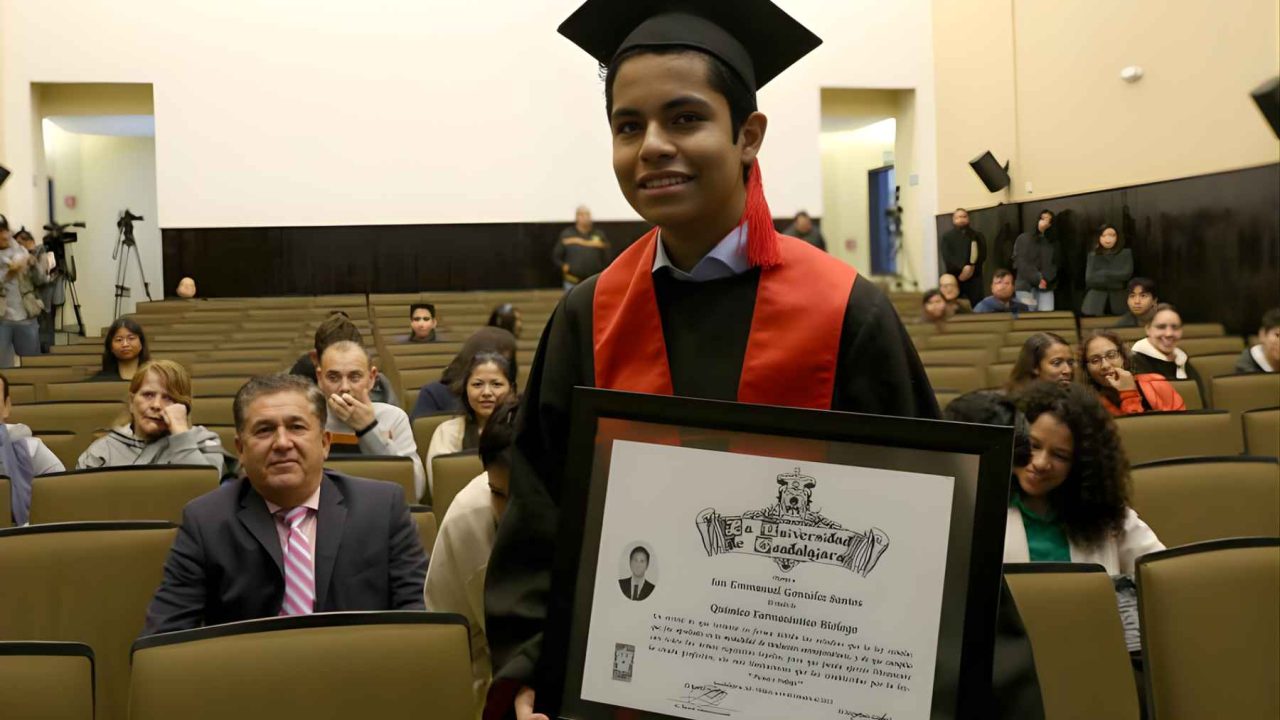
At 13 years old, Ian Emmanuel González Santos became the youngest graduate of the University of Guadalajara. By 15, he was pursuing doctoral-level research in molecular biology. And somewhere in between, he was sitting in a classroom being told he had attention deficit disorder.
His story is one of those rare cases that makes you question what schools are actually designed to reward — and who gets left behind when a student doesn’t fit the expected mold. González Santos has been featured in Spanish-language media for his work connected to breaking down PET plastic using bacteria, a field that sits at the intersection of environmental science and biotechnology.
The gap between how his school saw him and what he went on to accomplish is striking. It is also, for many families with exceptionally curious or unconventional children, uncomfortably familiar.
The Young Molecular Biologist Who Didn’t Fit the Classroom
González Santos earned a degree known as “Químico Farmacéutico Biólogo” from the University of Guadalajara at age 13. The program blends chemistry, biology, and health sciences — a demanding curriculum by any standard, let alone for a young teenager. The university recognized him as its youngest graduate.
According to interviews published in late 2025, he was 15 and already working toward doctoral-level research in molecular biology. His focus includes work linked to enzymatic and microbial breakdown of PET, the type of plastic used in most drink bottles and food containers.
Before any of that, though, there was school. And in school, he recalls being told that what he had was attention deficit disorder. The implication, as his story has been reported, is that his intensity, curiosity, or unconventional pace of learning was read as a problem rather than a signal.
It is a pattern that researchers and educators who work with gifted children have documented for decades — exceptional ability that looks, in a standard classroom setting, like restlessness or distraction.
What Ian Emmanuel’s Work Actually Involves
The headline version of his research — “bacteria that eat plastic” — is technically evocative but requires some context to understand properly.
PET, or polyethylene terephthalate, is one of the most widely used plastics in the world. It is durable, lightweight, and extremely resistant to natural degradation. That durability is exactly what makes it a long-term environmental problem when it ends up in landfills or waterways.
Research into microbial and enzymatic breakdown of PET has been growing since scientists identified certain bacteria and enzymes capable of attacking the polymer’s chemical bonds. The goal is not to release bacteria into oceans or rivers and watch them dissolve plastic. Instead, the process works more like industrial recycling — collecting and sorting plastic, then using biological tools to break it down into its chemical building blocks, which can potentially be reused.
González Santos has been associated with research in this area while still a teenager, which is what has drawn significant attention in Mexican and Spanish-language media coverage.
Key Facts About Ian Emmanuel González Santos
| Detail | Confirmed Information |
|---|---|
| Current age | 15 (as of late 2025 interviews) |
| Degree earned | Químico Farmacéutico Biólogo |
| Degree institution | University of Guadalajara |
| Age at graduation | 13 |
| Recognition | Youngest graduate of the University of Guadalajara |
| Current academic pursuit | Doctoral-level research in molecular biology |
| Research area | Microbial/enzymatic breakdown of PET plastic |
| Early school experience | Told he had attention deficit disorder |
Why This Story Resonates Beyond the Science
The plastic research is genuinely interesting. But what has made González Santos a figure of wider public attention is the contrast between his early school experience and his subsequent achievements.
Being labeled with attention deficit disorder is not, by itself, a negative outcome — many people with ADHD go on to accomplish remarkable things, and the diagnosis can lead to genuine support. The concern in stories like his is when the label is applied not because of a careful clinical assessment but because a student is bored, moving faster than the curriculum allows, or simply doesn’t match what teachers expect a well-behaved learner to look like.
His case raises questions that parents, educators, and policymakers continue to wrestle with:
- How do schools identify genuine giftedness, especially in students from backgrounds that don’t have access to specialized programs?
- When does a diagnosis reflect a real neurological difference, and when does it reflect a mismatch between a student and their environment?
- What happens to children like González Santos who don’t have the family support or individual determination to push through institutional resistance?
These are not easy questions, and there are no universal answers. But his story puts them in sharp relief.
What Comes Next for Plastic Biodegradation Research
The broader field that González Santos is entering is still developing. Microbial and enzymatic approaches to PET degradation have shown genuine promise in laboratory settings, but scaling them to industrial levels remains a significant challenge.
The process requires plastic to be collected and processed as a controlled input — it is not a solution for plastic already dispersed in the environment. Researchers in the field continue to work on improving the efficiency of enzymes, reducing processing costs, and identifying which plastic types are most amenable to biological breakdown.
For a 15-year-old to be contributing to doctoral-level work in this space is, by any measure, extraordinary. Whether his research produces breakthroughs or simply advances the field incrementally, the trajectory he is on is unlike almost anything seen at his age in Mexican academic history.
The University of Guadalajara’s recognition of him as its youngest graduate is not a ceremonial footnote — it is a marker of a genuinely unusual academic path, one that started in a classroom where adults thought he had a disorder, and has led, so far, to the frontier of biotechnology.
Frequently Asked Questions
How old is Ian Emmanuel González Santos?
He was 15 years old at the time of interviews published in late 2025.
What degree did he earn at the University of Guadalajara?
He earned a Químico Farmacéutico Biólogo degree, a program combining chemistry, biology, and health sciences, at age 13.
What is he researching?
His work is linked to the microbial and enzymatic breakdown of PET plastic, the material used in most drink bottles and food containers.
What did his school say about him when he was young?
According to interviews, he was told at school that he had attention deficit disorder.
Can plastic-eating bacteria actually clean up oceans?
Not directly — the biological breakdown of PET requires plastic to be collected and processed in controlled conditions, not scattered in open water.
Is he the youngest person to graduate from the University of Guadalajara?
Yes, the university has recognized him as its youngest graduate on record.




Leave a Reply