
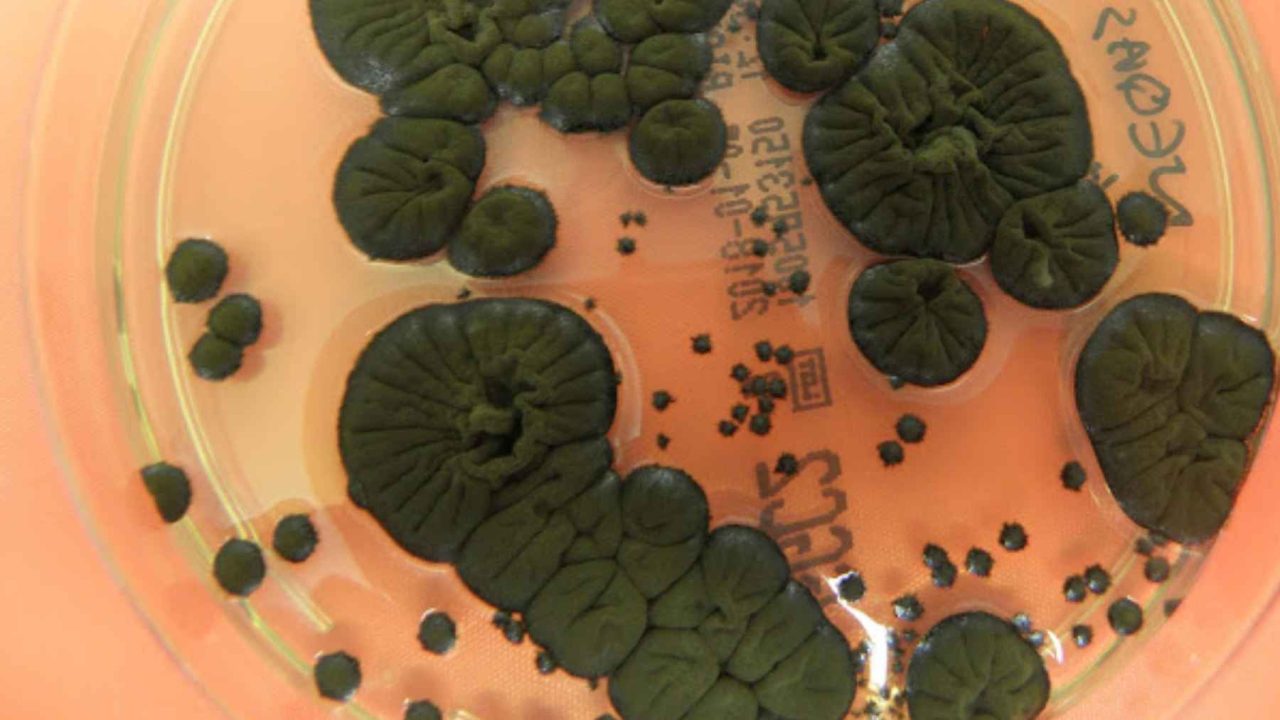
Nearly 40 years after one of the worst nuclear disasters in human history, the ruins of Chernobyl are still producing surprises — and one of the strangest involves a dark, melanin-rich fungus that appears to do more than simply survive intense radiation. According to multiple peer-reviewed studies, Cladosporium sphaerospermum may actually grow faster because of it.
That idea would sound absurd if researchers hadn’t kept finding evidence pointing in the same direction. A fungus feeding on radiation the way plants feed on sunlight challenges some deeply held assumptions about what life can tolerate — and what it might be able to use.
The implications stretch far beyond a crumbling reactor in Ukraine. Scientists are now having a serious conversation about whether this organism could one day help protect astronauts from the relentless radiation of deep space.
What Is This Fungus and Where Did It Come From?
Cladosporium sphaerospermum is a dark-pigmented fungus, and its color comes from melanin — the same family of pigment that gives human skin its tone and helps protect cells from UV damage. Melanin is known to absorb and neutralize various forms of radiation, but what researchers found at Chernobyl suggested the relationship goes much further than simple protection.
The story began inside the damaged reactor complex itself, where researchers including Nelli Zhdanova were among the first to document fungi not just surviving in the highly radioactive environment, but apparently thriving in it. These weren’t organisms clinging to life at the margins. They were colonizing the walls of a structure that remains one of the most radioactive places on Earth.
What made this finding particularly striking was the observation that the fungi seemed to be gravitating toward the most radioactive areas rather than away from them — behavior that suggested something more active than mere resistance was going on.
The Science Behind Radiation-Assisted Growth
The key research milestone came in 2007, when a paper published in PLOS ONE found that dark fungi — those containing melanin — grew better under radiation than similar fungi that lacked the pigment. This wasn’t a minor statistical difference. The melanin appeared to be doing something functionally useful with the energy from radiation, in a way that benefited the organism’s growth.
The working hypothesis among researchers is that melanin in these fungi may be capable of converting ionizing radiation into chemical energy that the organism can use — a process that would be loosely analogous to photosynthesis, where plants convert light energy into usable fuel. Scientists have called this proposed mechanism radiosynthesis, though the full biochemical picture is still being studied and confirmed.
Later research took the question into orbit. Experiments conducted on the International Space Station found that the Chernobyl-linked species also grew somewhat faster in the space environment — while also measurably reducing radiation readings beneath its biomass. In other words, it appeared to both benefit from radiation and act as a partial shield against it at the same time.
Key Findings at a Glance
| Study / Observation | Key Finding | Year |
|---|---|---|
| PLOS ONE peer-reviewed study | Melanin-rich dark fungi grew better under radiation than fungi without melanin | 2007 |
| Chernobyl reactor complex research (Nelli Zhdanova et al.) | Fungi found colonizing reactor walls and gravitating toward high-radiation zones | Post-1986 |
| International Space Station experiments | Species grew faster in orbit and reduced radiation readings beneath its biomass | Post-2007 |
- The fungus is called Cladosporium sphaerospermum and is rich in the pigment melanin
- Melanin is believed to be the key mechanism that allows it to interact productively with radiation
- Researchers have proposed the term radiosynthesis to describe the possible energy-conversion process
- The organism has been studied in both the Chernobyl exclusion zone and aboard the International Space Station
- Under the right lab conditions, radiation appears to help the fungus grow faster rather than simply harming it
Why This Matters Beyond Chernobyl
The most immediate practical application being discussed is space travel. Astronauts on long-duration missions — particularly any future trip to Mars — face serious radiation exposure risks that current shielding technology handles only partially. Heavy physical shielding adds enormous weight to spacecraft, making it expensive and logistically complicated.
A biological shielding material that could grow, self-repair, and potentially feed on the very radiation it’s blocking would be a radically different kind of solution. Researchers have noted that experiments on the International Space Station showed the fungus trimming radiation readings beneath its biomass, which is precisely the kind of passive, living shield that space agencies find worth investigating.
It’s worth being clear about what scientists have and haven’t confirmed. The research does not claim the fungus has “solved” radiation or that radiosynthesis is fully proven. What multiple peer-reviewed studies consistently show is that under the right conditions, radiation appears to accelerate its growth rather than harm it — and that the melanin pigment is central to that effect. The full mechanism is still being studied.
What Researchers Are Watching Next
The science here is still developing. The core question driving ongoing research is whether the energy-conversion mechanism can be fully characterized at the biochemical level — essentially, can researchers confirm exactly how melanin is processing ionizing radiation and turning it into something the fungus can use?
If that mechanism is confirmed and well understood, the follow-on questions become very practical: Could the process be replicated, enhanced, or applied in engineered materials? Could a fungal layer be grown as a living radiation shield on a spacecraft? Could related compounds derived from melanin be used in medical or industrial radiation protection?
None of those applications are confirmed yet. But the fact that a reactor-wall fungus is now part of serious scientific discussions about protecting astronauts says something remarkable about where nearly four decades of Chernobyl research have led.
Frequently Asked Questions
What is Cladosporium sphaerospermum?
It is a dark, melanin-rich fungus first studied in the highly radioactive environment of the Chernobyl reactor complex, where it was found colonizing walls and appearing to thrive rather than simply survive.
Does the fungus actually eat radiation like a plant eats sunlight?
Researchers have proposed a process called radiosynthesis to describe how melanin in the fungus may convert ionizing radiation into usable energy, but the full biochemical mechanism has not yet been completely confirmed.
What did the 2007 PLOS ONE study find?
The study found that dark, melanin-containing fungi grew better under radiation than similar fungi that lacked melanin, providing early peer-reviewed evidence that radiation could benefit rather than harm these organisms.
Has this fungus been tested in space?
Yes. Experiments on the International Space Station found that the Chernobyl-linked species grew somewhat faster in orbit and also reduced radiation readings beneath its biomass.
Could this fungus be used to protect astronauts?
Scientists are actively exploring the idea. The fungus’s apparent ability to both grow under radiation and reduce radiation levels beneath it has made it a serious subject of discussion for spacecraft shielding applications.
Is this research fully proven and settled?
Not entirely. Multiple peer-reviewed studies point in the same direction, but researchers are careful to note that the full mechanism is still being studied and that the fungus has not definitively “solved” radiation.



Leave a Reply