
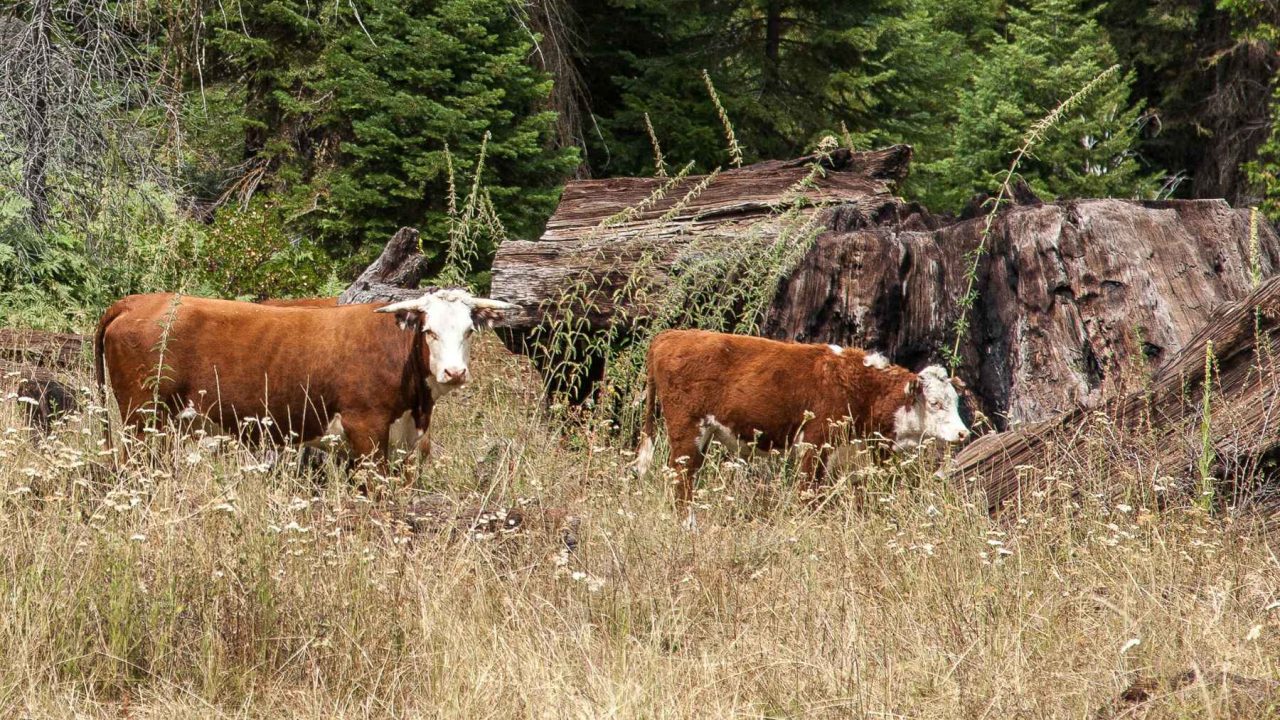
Five cows were left on a remote island in 1871 — and what happened next took scientists more than 150 years to fully understand. A 2024 genetic study has now reconstructed the remarkable story of how that tiny founding group built a wild, self-sustaining herd on one of the most inhospitable patches of land in the Southern Ocean, and the results were not what researchers expected.
The study drew on preserved DNA from animals sampled decades ago, piecing together a genetic history that spans generations of feral cattle living entirely without human help. What the science revealed challenges some long-held assumptions about how isolated animal populations change over time — and offers a striking window into what survival actually looks like when domesticated animals are left completely on their own.
It is the kind of story that sounds almost too strange to be real: a failed colonial settlement, five forgotten farm animals, and a lineage that quietly endured for over a century in one of the windiest, coldest, most isolated places on Earth.
How Five Cows Ended Up Alone on Amsterdam Island
Amsterdam Island is a tiny French territory sitting roughly 2,760 miles southeast of Madagascar in the Southern Ocean. It covers only about 21 square miles. The environment, as the researchers describe it, is “frequently buffeted by strong winds, sometimes reaching hurricane force,” with cold temperatures and very limited access to fresh water.
It is not a place anyone would choose to raise cattle. And yet, that is exactly what one farmer attempted to do.
According to historical records discussed in the study, a farmer named Heurtin brought five cattle to Amsterdam Island from Réunion in 1871. The goal was to establish a settlement on the island. The plan failed within months. But when Heurtin left, the animals stayed behind — left to fend for themselves in an environment that had no fences, no supplemental feed, and no veterinary care.
Those five cattle became feral. Over the following generations, they reproduced without any human management, adapting to one of the most remote and challenging environments on the planet.
What the Genetic Study Actually Found
The 2024 study used preserved DNA collected from animals sampled in earlier decades to reconstruct the herd’s genetic history. Because the researchers could not go back in time to observe the population directly, the DNA served as a kind of biological record — a way of reading the past through the animals’ inherited traits.
Two findings stood out as particularly unexpected.
First, the study found evidence of mixed ancestry. The cattle were not a genetically simple or uniform population, as might be assumed from such a small founding group. Their DNA pointed to more complex origins than five animals from a single source would typically suggest.
Second, and perhaps more surprising, the study found that the herd showed a fast rebound after an extreme bottleneck. A bottleneck occurs when a population drops to a very small number, reducing genetic diversity and often leaving lasting effects on a species’ long-term health. The Amsterdam Island cattle appeared to have recovered from this kind of event more quickly than researchers anticipated.
The third unexpected result challenged a common assumption about island populations: the cattle did not appear to have shrunk rapidly in body size, which is a pattern often seen when large animals become isolated on islands with limited resources — a phenomenon sometimes called island dwarfism.
Key Facts at a Glance
| Detail | Information |
|---|---|
| Location | Amsterdam Island, Southern Ocean |
| Distance from Madagascar | Approximately 2,760 miles southeast |
| Island size | Roughly 21 square miles |
| Year cattle were introduced | 1871 |
| Original founding animals | 5 cattle from Réunion |
| Farmer responsible | Heurtin |
| Study published | 2024 |
| Research method | Preserved DNA from previously sampled animals |
- The island environment is described as subject to hurricane-force winds
- Fresh water on the island is limited
- The cattle became fully feral after the settlement attempt collapsed
- The genetic study found mixed ancestry — more complex than expected from five founders
- The herd rebounded quickly after a population bottleneck
- The cattle did not rapidly shrink in size as island isolation theory might predict
Why This Challenges What Scientists Expected
When a population is founded by just five individuals, geneticists typically expect a narrow gene pool, reduced resilience, and physical changes that reflect the pressures of a limited environment. Island populations of large mammals, in particular, are often studied as examples of how isolation drives rapid physical downsizing over generations.
The Amsterdam Island cattle appear to complicate that picture. Rather than following the expected trajectory, they showed signs of mixed genetic ancestry — which raises questions about how that diversity entered the population — and they recovered from their bottleneck faster than models would typically forecast.
The finding that the cattle did not quickly shrink in size is also notable. It suggests that the relationship between island life and body size reduction may be more variable than previously understood, and that some feral populations are capable of maintaining physical traits even under significant environmental pressure.
For researchers studying feral livestock, island ecology, and the genetics of small founder populations, Amsterdam Island now offers a real-world case study that does not fit neatly into existing frameworks.
What This Story Means Beyond the Island
On the surface, this is a story about cows on a remote island. But the underlying questions it raises matter well beyond Amsterdam Island’s 21 square miles.
Understanding how small populations survive — and how quickly they can recover from near-collapse — has direct implications for conservation biology. Many endangered species exist today in population sizes comparable to, or even smaller than, five founding individuals. How those populations behave genetically, whether they can sustain diversity, and whether physical adaptation follows predictable rules are all questions that wildlife managers and conservation scientists work with every day.
The Amsterdam Island herd also serves as an unplanned, long-running natural experiment. Because the cattle were left entirely without human intervention for generations, their story offers a rare look at what feral survival actually produces — not in a controlled laboratory setting, but in one of the harshest environments on the planet.
The fact that the results surprised researchers is itself significant. It is a reminder that nature does not always follow the patterns we expect, and that preserved DNA can surface answers — and new questions — more than a century after the original events took place.
Frequently Asked Questions
Where is Amsterdam Island located?
Amsterdam Island is a small French territory in the Southern Ocean, situated approximately 2,760 miles southeast of Madagascar. It covers roughly 21 square miles.
How did cattle end up on Amsterdam Island?
A farmer named Heurtin brought five cattle from Réunion to Amsterdam Island in 1871 as part of a settlement attempt. The plan failed within months, but the animals were left behind and became feral.
What did the 2024 genetic study find?
The study found evidence of mixed ancestry in the herd, a faster-than-expected rebound after a population bottleneck, and no clear evidence of rapid body size reduction — all of which challenged researchers’ expectations.
How did scientists study the herd’s genetics?
Researchers used preserved DNA from animals that had been sampled in earlier decades, allowing them to reconstruct the herd’s genetic history without needing live access to the current population.
What is a population bottleneck?
A bottleneck occurs when a population drops to a very small number, which typically reduces genetic diversity and can affect a species’ long-term resilience. The Amsterdam Island cattle appeared to recover from this more quickly than expected.
Did the cattle shrink in size over generations?
Based on the study’s findings, the cattle did not rapidly reduce in body size as island isolation theory might predict — a result that researchers described as unexpected.


Leave a Reply