
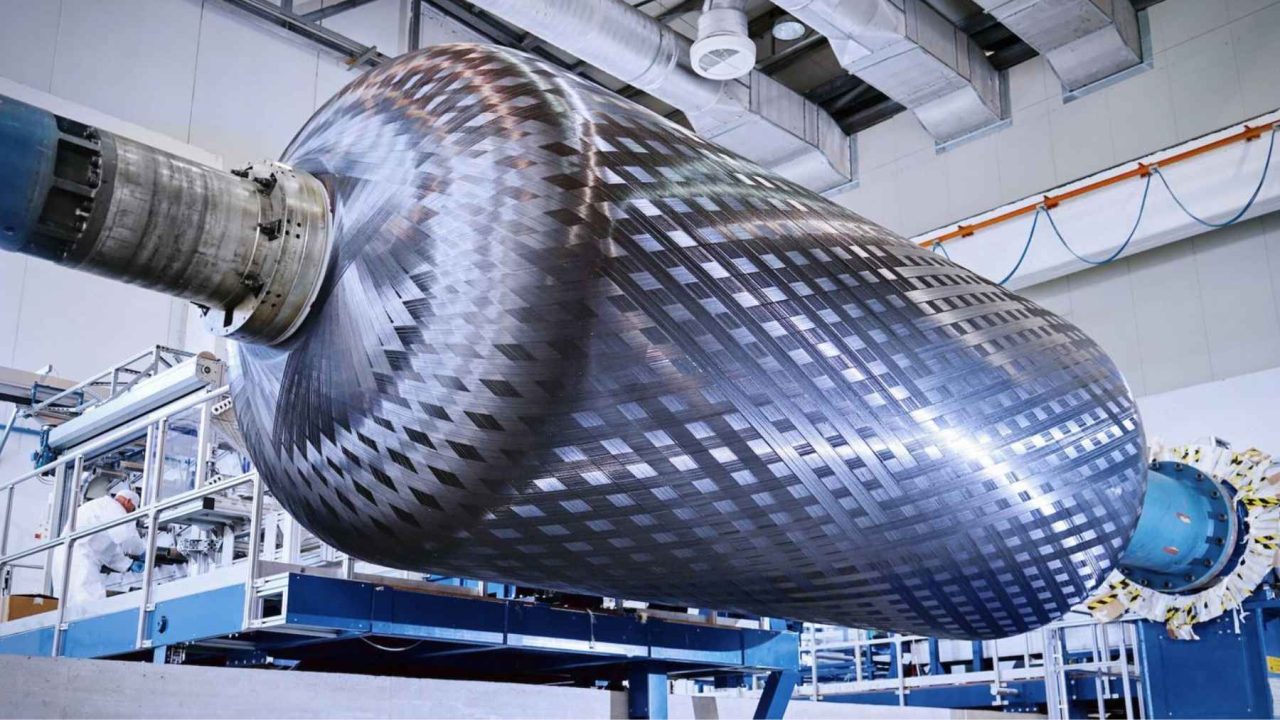
A material that can heal itself more than 1,000 times — not once, not a dozen times, but over a thousand — has been developed by a team of U.S. engineers, and it could fundamentally change how long the machines powering our clean-energy future actually last.
The breakthrough centers on a new type of fiber composite that repeatedly repairs a specific and common form of internal damage called delamination. In lab testing, the material kept healing itself cycle after cycle. The researchers believe it could push the typical lifespan of composite components from a few decades into the range of centuries.
That’s not a typo. Centuries. And if that holds up beyond the lab, the implications stretch well beyond engineering — reaching into environmental sustainability, industrial waste, and the long-term economics of clean energy infrastructure.
Why Today’s “Super Materials” Have a Hidden Problem
Fiber-reinforced polymer composites — known as FRPs — are everywhere in modern industry. They’re prized because they’re lightweight and strong, making them ideal for applications where every kilogram matters: wind turbine blades, airplane fuselages, and automotive components are all common examples.
But FRPs have a serious weakness that rarely gets discussed outside engineering circles. When they fail internally — and they do fail, through delamination, which is essentially the layers of the material separating from each other — the damage is extremely difficult to repair in any meaningful way. Most of the time, the component doesn’t get truly fixed. It gets replaced.
That replacement cycle carries a significant environmental cost. Manufacturing large composite components requires enormous amounts of energy and raw materials. Shipping them is logistically complex. And at the end of their service life, most composite materials are notoriously difficult to recycle, meaning they often end up as industrial waste.
The new self-repairing material directly targets this problem.
What the Self-Repairing Material Actually Does
The key claim from the U.S. engineering team is straightforward: their fiber composite can repair delamination damage more than 1,000 times. Each repair cycle restores the material’s structural integrity, allowing it to continue functioning rather than degrading progressively as conventional composites do.
The researchers estimate this repeated self-repair capability could extend the working lifespan of critical components dramatically — from the current standard of a few decades to potentially centuries of service life.
The practical significance of that shift is hard to overstate. A wind turbine blade that lasts a century instead of two or three decades doesn’t just save money. It reduces the manufacturing demand, the shipping burden, and the waste stream associated with that component — potentially by an order of magnitude.
| Factor | Conventional FRP Composites | Self-Repairing Composite (Claimed) |
|---|---|---|
| Self-repair cycles | None | More than 1,000 |
| Estimated service lifespan | A few decades | Potentially centuries |
| Repairability of delamination | Extremely limited | Repeatedly demonstrated in lab tests |
| End-of-life recyclability | Difficult | Not yet confirmed |
The Industries That Stand to Benefit Most
Three sectors sit at the center of this development: aviation, automotive, and renewable energy. All three rely heavily on fiber-reinforced composites, and all three face growing pressure to reduce their environmental footprint.
- Wind turbines: Turbine blades are among the largest composite structures in existence and among the hardest to recycle. A material that dramatically extends blade life without replacement could significantly reduce the waste burden associated with wind energy expansion.
- Aircraft: Modern commercial aircraft use composites extensively to reduce weight and improve fuel efficiency. Components that self-repair rather than degrade could reduce maintenance costs and the environmental impact of part manufacturing.
- Automobiles: As the automotive industry shifts toward electric vehicles, lightweight composites are increasingly used to offset battery weight. Longer-lasting structural components mean fewer replacements over a vehicle’s life.
The environmental argument here is particularly compelling. Clean-energy and low-emission technologies depend on these materials — but the materials themselves create waste problems that undermine the sustainability case. A component that lasts centuries instead of decades changes that equation significantly.
What This Means for Industrial Waste — and the Planet
One of the less-discussed costs of modern infrastructure is the sheer volume of composite material that gets manufactured, used briefly in relative terms, and then discarded. A wind turbine blade might weigh tens of thousands of kilograms. When it’s decommissioned, that material largely can’t be recycled in any practical sense today.
Advocates for this type of material research argue that if a critical component can be repaired again and again in place, fewer massive parts need to be manufactured, shipped, and eventually scrapped. The researchers behind this self-repairing composite point to exactly this logic: the environmental math on industrial waste changes when longevity is measured in centuries rather than decades.
It’s worth noting that the research is still at the lab stage. Real-world performance under the stresses of actual operating conditions — temperature swings, UV exposure, mechanical fatigue — will determine whether the thousand-repair promise holds up outside a controlled environment. That gap between lab and field is always significant in materials science.
What Comes Next for Self-Repairing Composites
The immediate next step for research like this is typically validation beyond the laboratory — testing under real-world conditions, scaling up production processes, and eventually working with industry partners to integrate the material into actual components.
What is confirmed is that the lab testing demonstrated repeated successful self-repair of delamination damage, and that the researchers are projecting century-scale lifespans based on those results.
Whether this particular material makes it into the next generation of wind turbines or aircraft is still an open question. But the direction of travel is clear: the industry’s reliance on components that can’t be meaningfully repaired is increasingly being recognized as both an economic and environmental liability — and materials science is beginning to respond.
Frequently Asked Questions
How many times can this new material repair itself?
According to the U.S. engineering team behind the research, the material has demonstrated the ability to self-repair more than 1,000 times in lab testing.
What type of damage does the material repair?
The material is specifically designed to repair delamination, which is a common form of internal damage in fiber-reinforced polymer composites where the material’s layers separate from each other.
Which industries could benefit from this self-repairing material?
The researchers highlight wind turbines, aircraft, and automobiles as key application areas, all of which rely heavily on fiber-reinforced composites for lightweight structural components.
How long could components made from this material last?
The researchers estimate the material could extend typical composite component lifespans from a few decades to potentially centuries, based on its repeated self-repair capability.
Is this material available commercially yet?
Why does this matter for the environment?
Because composite materials are difficult to recycle and are typically replaced rather than repaired, a material that lasts dramatically longer could significantly reduce manufacturing demand, shipping impacts, and industrial waste associated with clean-energy infrastructure.




Leave a Reply