
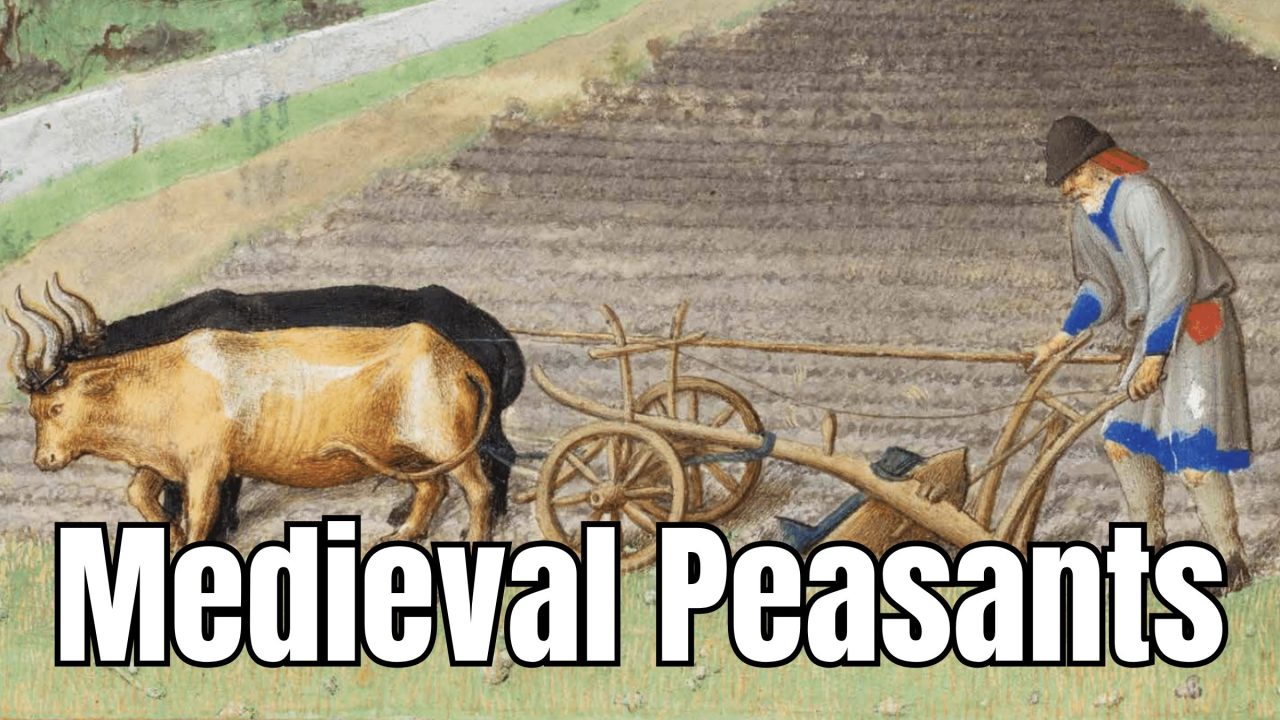
For roughly a thousand years, the people who fed Europe, tended its fields, and built its villages left behind fewer records than the kings and bishops who ruled over them — yet they vastly outnumbered everyone else. Medieval peasants were the backbone of the medieval world, and their lives were far more complex, varied, and consequential than the popular image of a downtrodden serf toiling in mud would suggest.
Historian Lucie Laumonier, writing for Medievalists.net, makes the case that understanding who medieval peasants actually were requires looking across a full millennium of history — and acknowledging that no single, simple answer exists. What scholars do know, drawn from written documents, illuminated manuscripts, and archaeological artifacts, is that peasants shared several defining characteristics that bound them together as a group across time and geography.
Those shared traits tell a story that is both familiar and surprising — one that still shapes how we understand social class, labor, and rural life today.
Who Medieval Peasants Actually Were
The most basic fact about medieval peasants is also the most striking: they were everywhere. Peasants outnumbered the nobility, the clergy, artisans, and merchants combined. In a society often remembered through the lens of its cathedrals, crusades, and royal courts, the overwhelming majority of people were agricultural workers living in rural communities.
According to Laumonier’s analysis, four core characteristics defined this group across medieval Europe:
- They were the most prevalent workers of the era — outnumbering every other social class
- They practiced agriculture and animal husbandry — farming and livestock care were the foundation of their daily existence
- Most lived in rural settings — though, notably, not all of them did
- Many experienced some degree of servitude — serfdom and social obligation shaped the lives of a significant portion of the peasant population
That last point — servitude — is where the history gets complicated. Not every peasant was a serf, and not every serf lived in identical conditions. The spectrum of freedom and obligation varied enormously depending on region, time period, and local custom.
What Medieval Peasants Actually Did
When most people picture a medieval peasant, they picture someone bent over a field — and that image is not wrong, exactly, but it is incomplete. Agropastoral work, meaning the combination of crop farming and animal husbandry, was indeed the defining labor of the peasant class. The famous illuminated manuscript known as the Grimani Breviary captures this vividly, depicting medieval peasants at work in scenes organized by the months of the year — June’s page showing the kind of agricultural labor that structured peasant life from season to season.
These weren’t passive workers simply following orders. Peasants managed complex cycles of planting, harvesting, animal care, and land maintenance. Their knowledge of local soil, weather, and crop rotation was practical and hard-won. The agricultural output they produced sustained not just themselves but the entire social hierarchy above them.
The fact that some peasants lived in or near towns — rather than purely rural settings — also points to a more dynamic picture. Medieval village life was not isolated or static. It connected to broader networks of trade, religion, and politics in ways that historians are still working to fully understand.
The Sources That Shape What We Know — and What We Don’t
One of the honest complications in studying medieval peasants is the nature of the historical record itself. Laumonier is direct about this: knowledge of the peasantry depends heavily on the kinds of sources that survive. Written documents, illuminated manuscripts like the Grimani Breviary, and archaeological artifacts each offer a different and partial window into peasant life.
Peasants rarely wrote about themselves. Most of what survives was created by the clergy, nobility, or administrative officials — people with their own perspectives and agendas. That means historians must read these sources carefully, looking for what they reveal about peasant life even when that wasn’t the author’s intention.
| Source Type | What It Reveals | Limitations |
|---|---|---|
| Written documents | Legal status, obligations, transactions | Usually created by elites, not peasants themselves |
| Illuminated manuscripts | Visual depictions of daily labor and seasonal life | Idealized or symbolic representations |
| Archaeological artifacts | Material culture, tools, housing, diet | Fragmentary and requires interpretation |
This is why Laumonier emphasizes that the history of medieval peasants is not a settled subject. Across a thousand years and an entire continent, the variation in peasant experience was enormous — and scholars are still piecing together the full picture.
Why This History Still Matters
It might be tempting to treat medieval peasant history as purely academic — interesting for specialists but distant from modern life. But the questions at the center of this history are not distant at all. Who does the essential labor of a society? How much freedom do workers actually have? What happens when social tensions between those who produce and those who rule reach a breaking point?
Laumonier’s framing highlights that medieval peasants were not passive victims of history. They played a central role in shaping medieval society — through their labor, their village communities, their negotiations with lords, and at times their resistance. Social tensions between peasants and the ruling classes were a recurring feature of medieval life, not an occasional footnote.
Understanding who these people were — not as a faceless mass but as varied individuals within a complex social system — changes how we read the entire medieval period. The cathedrals were built on agricultural surplus. The crusades were funded by it. The entire edifice of medieval civilization rested on the work of people history has too often overlooked.
Frequently Asked Questions
Who were medieval peasants?
Medieval peasants were agricultural workers who made up the largest portion of Europe’s population during the Middle Ages, outnumbering the nobility, clergy, artisans, and merchants.
Did all medieval peasants live in the countryside?
Most medieval peasants lived in rural settings, but according to historian Lucie Laumonier, not all of them did — some lived in or near towns.
Were all medieval peasants serfs?
No. While many peasants experienced some degree of servitude, serfdom was not universal — the level of freedom and obligation varied significantly depending on region, time period, and local conditions.
What kind of work did medieval peasants do?
Peasants primarily practiced agriculture and animal husbandry, managing crop cycles, harvests, and livestock as the foundation of their daily labor and the broader medieval economy.
How do historians learn about medieval peasant life?
Historians rely on three main source types: written documents, illuminated manuscripts such as the Grimani Breviary, and archaeological artifacts — each offering a partial and sometimes limited view of peasant experience.
How long did the medieval peasant era last?
The Middle Ages span roughly 1,000 years of history, meaning peasant life and conditions changed considerably across that period rather than remaining static throughout.
Leave a Reply