
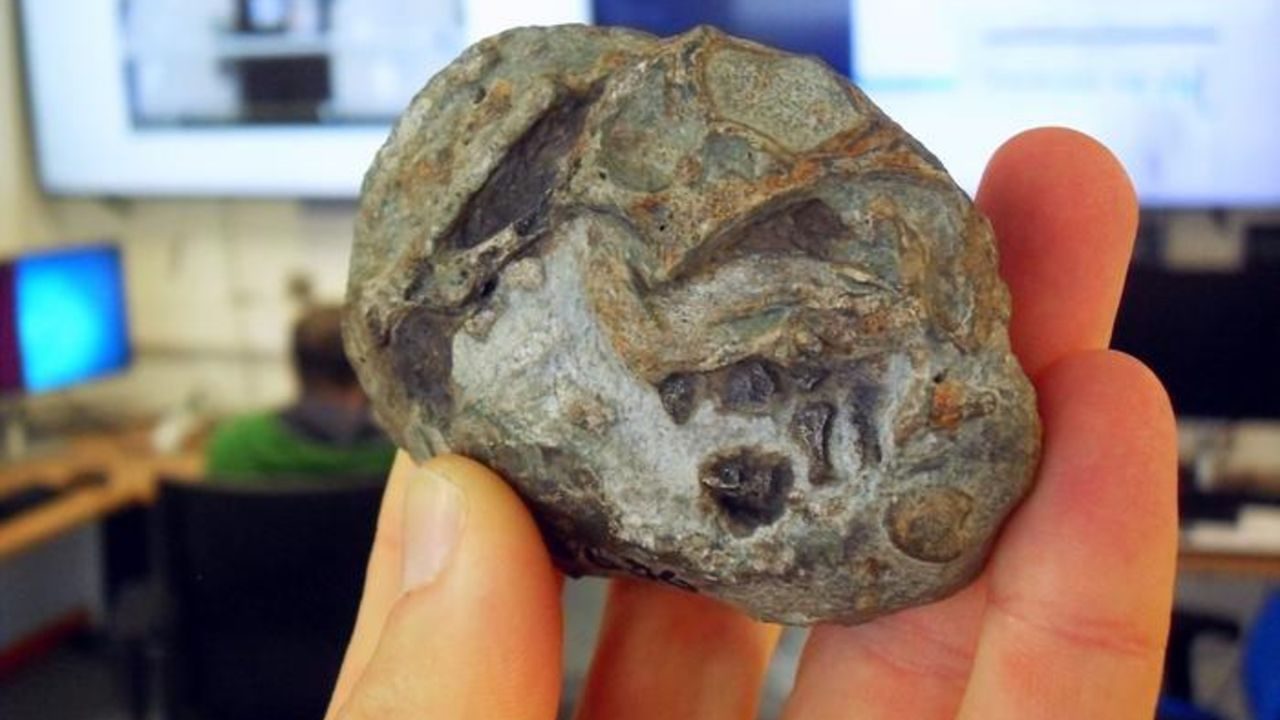
A 250-million-year-old fossilized egg — curled-up embryo still inside — has just rewritten what scientists thought they knew about the origins of mammals. The specimen belongs to Lystrosaurus, a plant-eating animal that lived before the age of the dinosaurs, and researchers say it is the first known egg ever found from a mammal ancestor. That single discovery confirms something that had long been debated: the ancient relatives of every mammal alive today, including humans, once laid eggs.
The find is remarkable on its own. But the story behind it goes even deeper — because Lystrosaurus wasn’t just any ancient creature. It was one of the great survivors of Earth’s history, somehow enduring the most catastrophic mass extinction the planet has ever seen. And according to researchers, the way it reproduced may have been central to that survival.
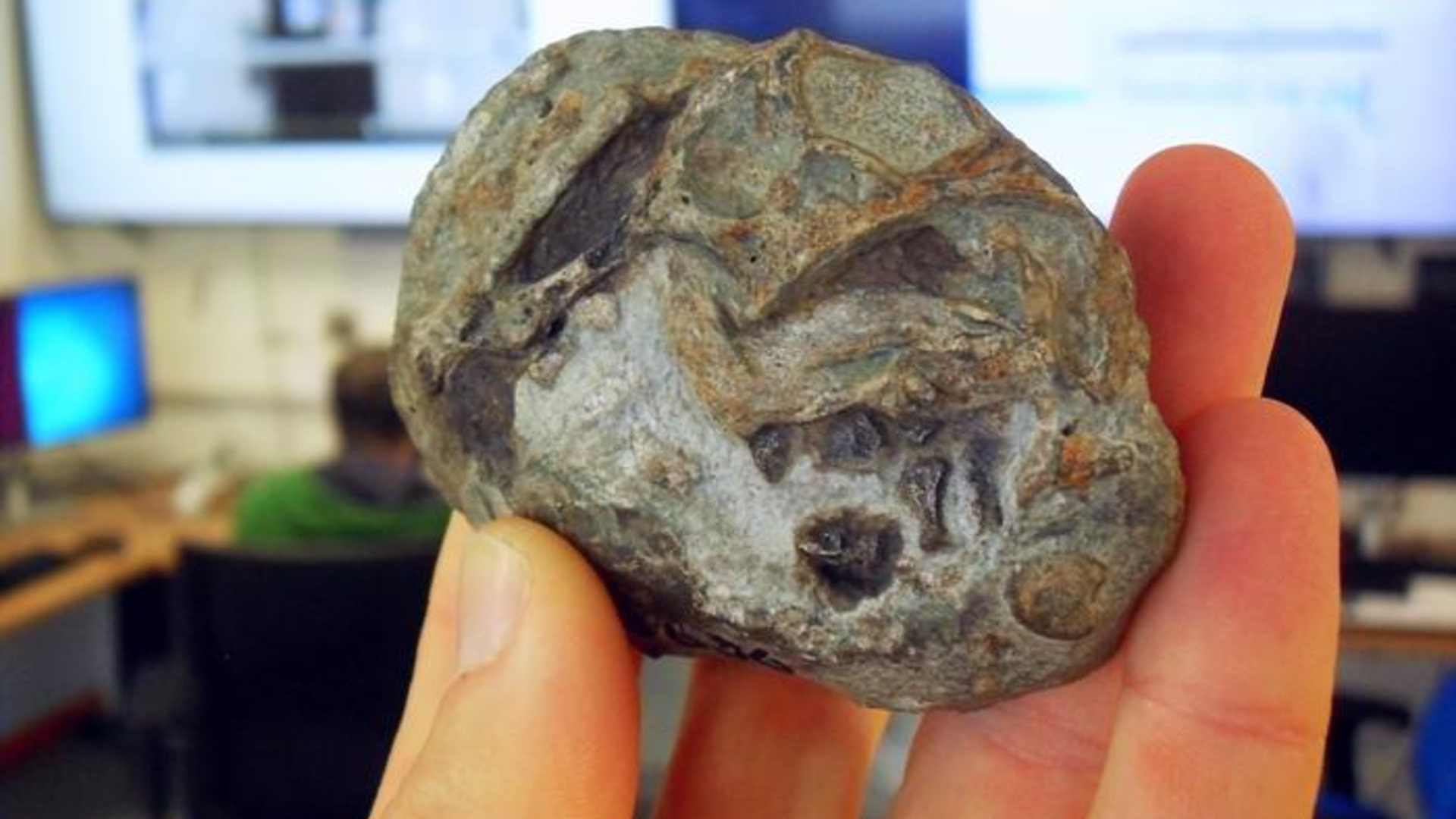
The fossilized egg was scanned at the European Synchrotron Radiation Facility in France, where high-powered imaging revealed the embryo preserved within. The image of a researcher holding the specimen in the facility’s control room, just before the scan, has already become one of the more striking visuals in recent paleontology news.
What Lystrosaurus Was — and Why It Mattered
Lystrosaurus lived approximately 250 million years ago, placing it in the Permian-Triassic period — a time before dinosaurs ruled the Earth. It belonged to a group called therapsids, which are classified as mammal ancestors, sitting on the evolutionary branch that would eventually lead to all modern mammals.
What made Lystrosaurus particularly notable wasn’t just its place on the family tree. It was its extraordinary resilience. The creature survived the Permian-Triassic mass extinction, an event so devastating it wiped out an estimated 90 to 96 percent of all species on Earth — far worse than the asteroid impact that later killed the dinosaurs. Lystrosaurus didn’t just survive. It thrived in the aftermath, becoming one of the most common vertebrates on the planet for millions of years.
Scientists have long puzzled over how it managed that. The new egg discovery offers a compelling piece of the puzzle.
The Egg Itself: What Researchers Found
The fossilized egg is described as large and leathery — not hard-shelled like a bird’s egg, but soft and flexible, more like the eggs laid by some modern reptiles. Inside, the curled-up embryo of a Lystrosaurus was preserved well enough for researchers to identify it clearly.
This is the first direct fossil evidence that mammal ancestors laid eggs, settling a long-standing question in evolutionary biology. While scientists had theorized this was likely the case — given that egg-laying mammals like the platypus still exist today — physical proof had never been found until now.
| Feature | Detail |
|---|---|
| Age of fossil | Approximately 250 million years old |
| Species | Lystrosaurus |
| Classification | Therapsid — mammal ancestor |
| Egg type | Large and leathery (soft-shelled) |
| Contents | Preserved curled-up embryo |
| Scan location | European Synchrotron Radiation Facility, France |
| Significance | First known egg from a mammal ancestor |
The scanning technology used at the European facility allowed researchers to examine the interior of the egg without damaging it — a critical step given how rare and fragile the specimen is.
How Egg-Laying Could Have Helped Lystrosaurus Survive Extinction
This is where the discovery becomes genuinely fascinating from an evolutionary standpoint. The Permian-Triassic extinction event was caused by massive volcanic activity that triggered rapid climate change, ocean acidification, and the collapse of ecosystems worldwide. The conditions were brutal and prolonged.
Researchers suggest that the ability to lay large, leathery eggs may have given Lystrosaurus a meaningful survival advantage during and after this catastrophe. Egg-laying can allow animals to reproduce more quickly and with less physiological burden on the mother than live birth — an important factor when resources are scarce and environmental conditions are unstable.
The size of the egg is also significant. Larger eggs generally contain more nutrients for the developing embryo, giving offspring a better chance of surviving to independence — particularly useful in an environment where food sources were severely disrupted.
While researchers are careful not to overstate a single fossil’s explanatory power, the evidence points toward reproduction strategy as one of several traits that helped this animal outlast nearly everything else alive at the time.
Why This Changes the Story of Mammal Evolution
For scientists studying how mammals evolved, this fossil fills in a gap that had existed for generations. Modern mammals are divided into three groups based on how they reproduce: monotremes (egg-layers, like the platypus), marsupials (which raise young in pouches), and placental mammals (which carry young internally). Humans fall into that last category.
The existence of egg-laying mammals today had always suggested that the common ancestor of all mammals likely laid eggs too. But suggestion and proof are very different things in science. This 250-million-year-old specimen now provides the physical evidence that had been missing — and it pushes that confirmed egg-laying history back to a point before the dinosaurs even existed.
It also reinforces just how ancient and resilient the mammal lineage truly is. The ancestors of every dog, whale, bat, and human alive today were laying leathery eggs in a world that was actively trying to kill everything on it — and surviving.
What Comes Next for This Research
The synchrotron scan data from the European facility is expected to allow researchers to continue studying the embryo’s development and anatomy in detail without any physical intervention on the fossil itself. This kind of non-destructive imaging has become increasingly valuable in paleontology, where specimens are often too rare and fragile to risk cutting or chemical treatment.
Further analysis may shed more light on the developmental biology of Lystrosaurus — how long incubation took, how developed the embryo was at the time of fossilization, and what the egg’s structure tells us about the evolutionary transition from egg-laying to live birth that eventually occurred in the mammal lineage.
For now, the discovery stands as one of the more significant paleontological finds in recent years — a single leathery egg that connects the dots between ancient survivors and the mammals that inherited the Earth.
Frequently Asked Questions
What animal laid the 250-million-year-old fossilized egg?
The egg belonged to Lystrosaurus, a plant-eating therapsid that lived approximately 250 million years ago and is classified as a mammal ancestor.
Why is this fossil discovery so significant?
It is the first known egg ever found from a mammal ancestor, providing the first direct physical evidence that the ancient relatives of modern mammals laid eggs.
What did the egg look like?
The egg was described as large and leathery — soft-shelled rather than hard, similar to the eggs of some modern reptiles — and contained a preserved curled-up embryo inside.
Where was the egg scanned?
The fossilized egg was scanned at the European Synchrotron Radiation Facility in France, which used high-powered imaging to examine the embryo without damaging the specimen.
How did egg-laying help Lystrosaurus survive the mass extinction?
Researchers suggest that laying large, nutrient-rich eggs may have allowed Lystrosaurus to reproduce more efficiently under harsh post-extinction conditions, though further research is ongoing.
Do any mammals still lay eggs today?
Yes — monotremes, including the platypus and echidna, are modern egg-laying mammals. This fossil helps confirm that egg-laying stretches back to the very roots of the mammal family tree.




Leave a Reply