
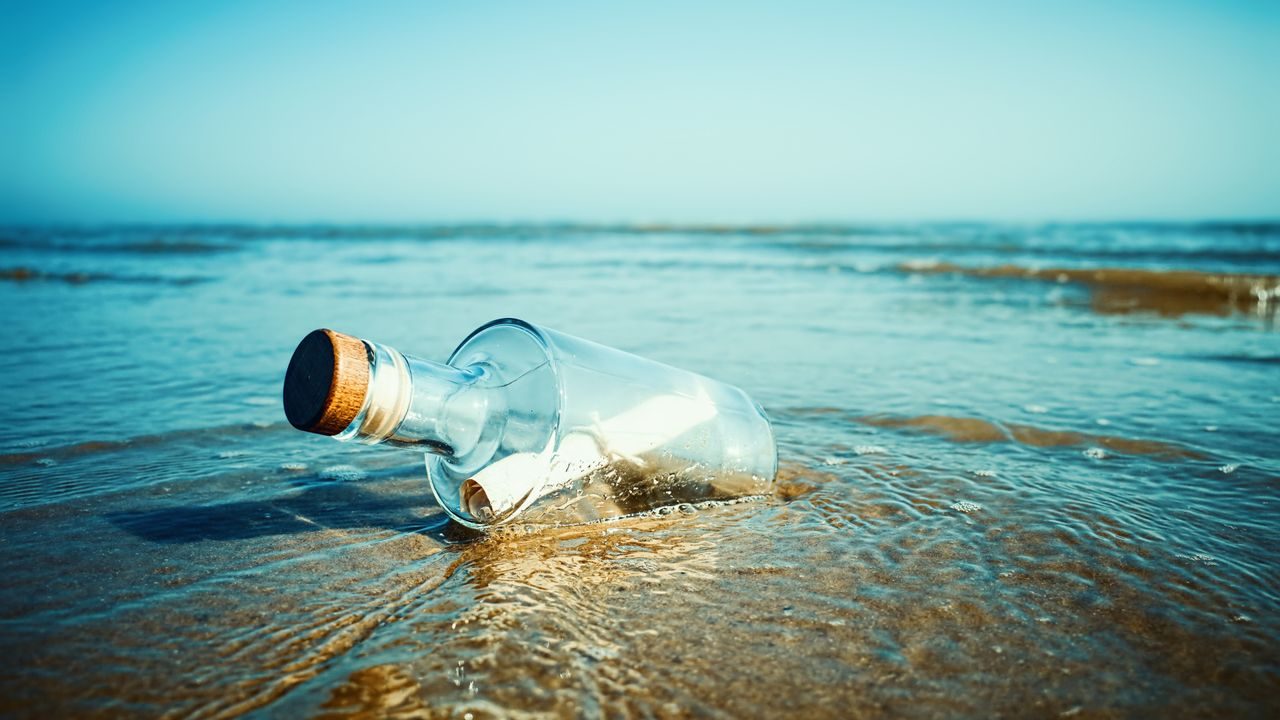
A 100-year-old message in a bottle, written by a World War One soldier who declared himself “as happy as Larry,” was recently discovered on the south-west coast of Australia. It’s the kind of story that feels almost impossible — and mathematically speaking, it very nearly is.
But just how unlikely is it, really, for a message in a bottle to be found? The answer involves ocean currents, probability, coastline geography, and a surprisingly honest admission: the odds are not in anyone’s favor. Yet bottles do wash ashore, and occasionally they carry century-old words from people long gone.
The story of that Australian discovery raises a genuinely fascinating question about chance, the sea, and what happens when you throw something into an ocean and hope for the best.
Why Finding a Message in a Bottle Is So Rare
Think about what a bottle has to survive to be found. Once it enters the ocean, it’s at the mercy of currents, winds, and waves. It could drift for days, years, or decades. It might sink. It might shatter against rocks. It might wash up on a stretch of coastline where no one ever walks.
That last point is the crux of the problem. Even if a bottle survives the journey and reaches land, it has to reach inhabited land — or at least land that someone visits. The world’s coastlines are vast, and large portions of them see very little human foot traffic.
The odds are stacked against any given bottle making it into someone’s hands. And yet, the fact that it occasionally happens — sometimes after a century at sea — is what makes these stories so compelling.
What the Ocean Actually Does to a Floating Bottle
Ocean currents are powerful, predictable in broad terms, and deeply unpredictable in specifics. A bottle dropped in one location might be swept along a major current and travel thousands of miles in a relatively straight path. Or it might get caught in a gyre — a large system of rotating currents — and circle endlessly without ever reaching shore.
Wind also plays a significant role. Bottles sit at the surface, which means they’re pushed not just by water currents but by surface winds. Depending on the season and location, this can either accelerate a bottle’s journey toward land or push it further out to sea.
Remote landing locations dramatically reduce the probability of discovery. A bottle that washes up in a wilderness stretch of coastline, an uninhabited island, or a rocky cliff face is effectively lost forever, even if it physically made it to land.
The Factors That Determine Whether a Message Gets Found
Several variables work together — or against each other — when it comes to the fate of any message in a bottle. Here’s how those factors break down:
- Starting location: Where a bottle enters the water shapes its likely trajectory based on regional current patterns.
- Bottle durability: Glass bottles can survive at sea for extraordinary lengths of time, as the Australian discovery proves. A bottle that entered the ocean during World War One was still intact a century later.
- Destination coastline: A bottle landing on a busy beach is far more likely to be found than one that reaches a remote or uninhabited stretch of shore.
- Human presence: Even populated coastlines vary enormously in foot traffic. A tourist beach versus a working port versus a cliff walk all present different odds of someone spotting a bottle.
- Time: The longer a bottle drifts, the greater the chance it degrades, sinks, or lands somewhere inaccessible — but also the greater the chance it eventually reaches somewhere inhabited.
A Quick Look at the Probability Problem
There’s no single agreed-upon statistic for the probability of finding a message in a bottle, because the variables are too numerous and location-dependent to produce one clean number. But it’s possible to frame the problem in general terms.
| Factor | Effect on Probability |
|---|---|
| Bottle enters near busy shipping lane or coastal current | Increases chance of reaching inhabited shore |
| Bottle enters open ocean far from land | Dramatically decreases chance of recovery |
| Landing site is remote or uninhabited | Near-zero chance of discovery even after arrival |
| Landing site is a populated beach or coastline | Significantly higher chance of being found |
| Message survives 100+ years intact | Extremely rare — requires durable container and dry conditions |
The Australian case is remarkable on multiple levels. Not only did the bottle survive a century in or near the ocean, but it landed in a location where someone actually found it — and recognized it for what it was.
What the WWI Soldier’s Message Tells Us
The message discovered on the south-west coast of Australia was written by a World War One soldier. His words — that he was “as happy as Larry” — offer a small, vivid window into the life of someone who lived more than a hundred years ago. That the note survived, traveled, and eventually found a reader is genuinely extraordinary.
It’s a reminder that messages in bottles aren’t just romantic novelties. Historically, they’ve been used for scientific purposes — tracking ocean currents — as well as personal expression. Sailors and soldiers cast them into the sea sometimes knowing the odds were slim, but doing it anyway.
The fact that this one made it back to human hands after a century is, statistically speaking, a near-miracle. Most bottles cast into the sea are never heard from again.
What the Chances Really Look Like for the Average Person
If you’re walking along a beach and hoping to stumble upon a message in a bottle, the honest answer is: don’t count on it. The combination of ocean size, current unpredictability, remote landing sites, and bottle survival rates makes any individual discovery vanishingly unlikely.
But “vanishingly unlikely” is not the same as impossible. The Australian discovery proves that. Bottles do survive. Currents do carry them to populated shores. People do find them.
The odds are long — but every so often, someone gets lucky, and a century-old soldier’s cheerful words find their way back into the world.
Frequently Asked Questions
Was a 100-year-old message in a bottle actually found recently?
Yes. A message written by a World War One soldier was discovered on the south-west coast of Australia. The soldier described himself as “as happy as Larry” in the note.
How long can a glass bottle survive at sea?
The Australian discovery suggests glass bottles can remain intact for at least 100 years, though survival depends on the conditions the bottle encounters during its journey.
What makes finding a message in a bottle so unlikely?
A bottle cast into the ocean can drift to remote, uninhabited coastlines where no one will ever find it, or it may sink or break before reaching land at all.
Do ocean currents affect where a bottle ends up?
Yes. Ocean currents and surface winds both influence a bottle’s path, but the outcome for any individual bottle is extremely difficult to predict with precision.
Have messages in bottles ever been used for scientific purposes?
Yes. Historically, bottles have been released into the ocean to help researchers track and understand ocean current patterns.
What are the odds of finding a message in a bottle on a beach walk?
There is no single confirmed probability figure, but the combination of ocean size, remote landing sites, and bottle survival rates makes any individual discovery extremely rare.




Leave a Reply