
More than 140,000 feral goats were removed from the Galápagos Islands between 1997 and 2006 — and the methods used to do it were unlike anything conservation had attempted before. Helicopters swept across rugged volcanic terrain. GPS technology tracked movement across remote landscapes. And a controversial strategy involving specially tagged animals turned the goats’ own social behavior against them.
This was Project Isabela, one of the most ambitious invasive species eradication efforts ever attempted on islands anywhere in the world. Its target was a population of feral goats that had been quietly devastating the habitat that Galápagos giant tortoises depend on to survive.
A peer-reviewed analysis led by researcher Victor Carrion, with coauthors C. Josh Donlan, Karl J. Campbell, Christian Lavoie, and Felipe Cruz, documented the effort and its results. What they found tells a story about what it actually takes to undo the damage invasive species cause — and how far conservationists are sometimes willing to go to do it.
Why Feral Goats Were Destroying Tortoise Habitat
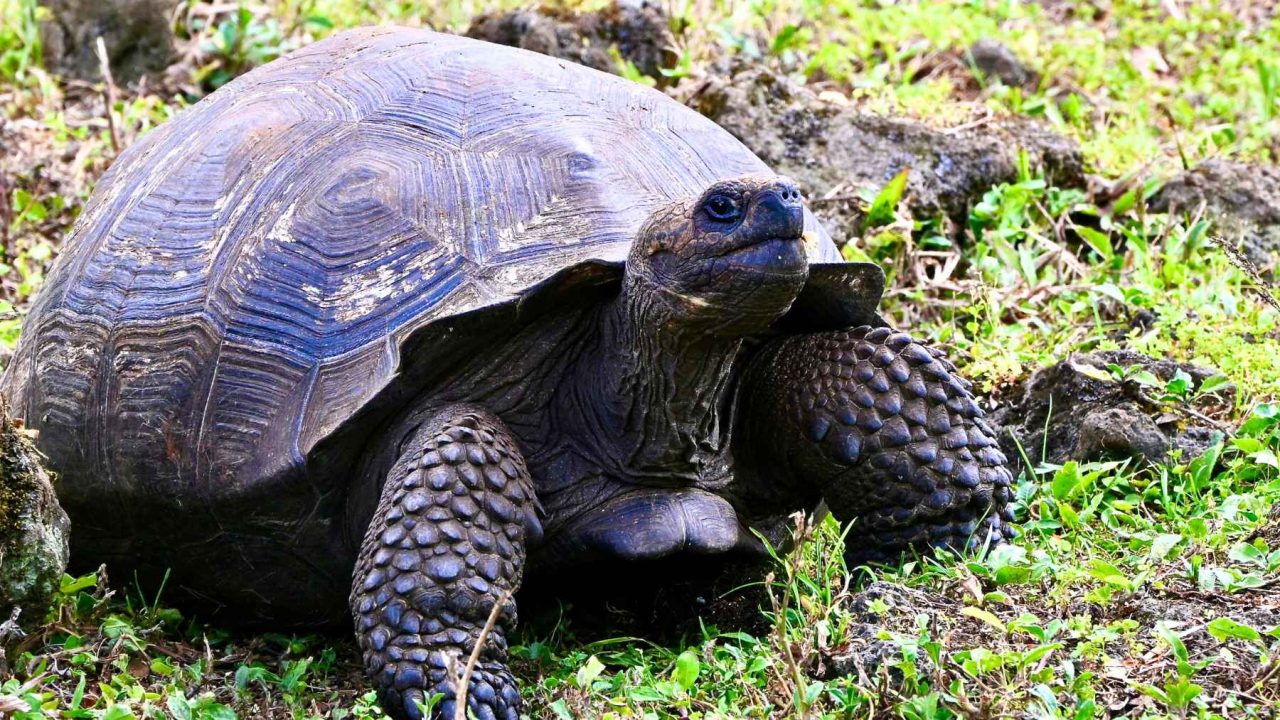
The Galápagos giant tortoise is one of the most recognized animals on Earth, closely tied to Charles Darwin’s observations about evolution. But by the late 1990s, parts of the tortoise’s home were being stripped bare — and the culprit was an animal humans had introduced long before anyone understood the consequences.
Goats are efficient, adaptable grazers. On a mainland with predators and competition, that’s manageable. On an island where native species never evolved alongside them, it’s catastrophic. The goats consumed the vegetation that tortoises relied on, altering the landscape at a pace the slow-moving reptiles had no way to adapt to.
This is what conservation scientists call the invasive species problem in its most visible form. When a species is introduced to a place where it didn’t evolve, the ecosystem has no natural checks on its spread. Island environments are especially vulnerable because native wildlife often has no defenses — behavioral or physical — against new grazers or predators.
On Isabela Island, the largest island in the Galápagos, the goat population had grown to a scale that made traditional removal methods completely impractical.
The Tools That Made Project Isabela Possible
What set Project Isabela apart wasn’t just its scale — it was the combination of technologies and strategies that had rarely, if ever, been used together in a conservation context.
- Helicopter hunting: Aerial teams were deployed to reach terrain that ground crews couldn’t access efficiently, allowing large numbers of goats to be located and removed across difficult volcanic landscapes.
- GPS mapping: Technology was used to systematically track coverage areas, ensuring that no part of the island was missed and that progress could be monitored in real time.
- Judas goats: This was the strategy that drew the most attention — and controversy. Certain goats were captured, fitted with radio tracking collars, and then released. Because goats are social animals, these “Judas goats” would naturally seek out other goats. Teams would then follow the signal to locate and remove the remaining groups. The tagged animals effectively betrayed the herds they joined.
The Judas goat technique in particular raised ethical questions about using an animal’s own social instincts as a tool against its species. But supporters of the project pointed to the ecological stakes: without aggressive intervention, the damage to tortoise habitat would continue to compound.
What the Project Actually Achieved
The numbers from Project Isabela reflect just how large the problem had become — and how sustained the response had to be.
| Project Detail | Information |
|---|---|
| Operation timeframe | 1997 to 2006 |
| Total goats removed | More than 140,000 |
| Primary island targeted | Isabela Island, Galápagos |
| Key methods used | Helicopter hunting, GPS mapping, Judas goats |
| Lead researcher (peer-reviewed analysis) | Victor Carrion, with C. Josh Donlan, Karl J. Campbell, Christian Lavoie, Felipe Cruz |
| Documented outcome | Damaged habitats began to recover |
According to the peer-reviewed analysis, the effort did more than just reduce goat numbers. Damaged habitats began to show signs of recovery once the grazing pressure was lifted. That recovery matters directly for the Galápagos giant tortoise, whose survival depends on having functional, vegetation-rich habitat available.
The Broader Lesson for Island Conservation
Project Isabela didn’t just save tortoise habitat in the Galápagos. It demonstrated something that conservation scientists had long debated: whether large-scale invasive species eradication on islands was even operationally feasible.
The answer, based on this effort, was yes — but only with the right combination of tools, sustained commitment over years, and a willingness to use methods that not everyone would find comfortable. The Judas goat strategy, in particular, showed that understanding animal behavior could be turned into a practical eradication tool, even when the ethical dimensions of that approach remained contested.
Island ecosystems are disproportionately important to global biodiversity. Many of the world’s most endangered species exist only on islands, precisely because those isolated environments allowed unique evolutionary paths to develop. When invasive species disrupt those environments, the losses can be permanent. Projects like Isabela offer a template — imperfect, controversial, but effective — for how those losses might be prevented.
For the Galápagos giant tortoise, one of the animals most associated with the very concept of evolution, that matters more than almost anything else.
Frequently Asked Questions
What was Project Isabela?
Project Isabela was a conservation operation carried out between 1997 and 2006 in the Galápagos Islands, aimed at removing invasive feral goats that were destroying the habitat of Galápagos giant tortoises.
How many goats were removed during Project Isabela?
More than 140,000 invasive goats were removed over the course of the project.
What is a Judas goat?
A Judas goat is a goat fitted with a radio tracking collar and released so that it will naturally seek out other goats — allowing removal teams to follow the signal and locate remaining herds.
Why were goats such a threat to Galápagos tortoises?
Feral goats consumed the vegetation that giant tortoises depended on, stripping habitats bare at a pace the slow-moving tortoises could not adapt to.
Did the project succeed in restoring tortoise habitat?
According to the peer-reviewed analysis led by Victor Carrion and colleagues, damaged habitats did begin to recover after the goats were removed.
Was the Judas goat strategy considered controversial?
Yes — using an animal’s social instincts as a tool to locate and remove its own species raised ethical questions, though supporters pointed to the significant ecological stakes involved.


Leave a Reply