
What did it mean to be a widow in medieval Italy — and who got to decide? For centuries, that question was answered almost entirely by men. Dante wrote about widows. Petrarch wrote about widows. Boccaccio wrote about widows. But the women themselves, the ones actually living through loss, were largely absent from the literary record — or so scholars assumed.
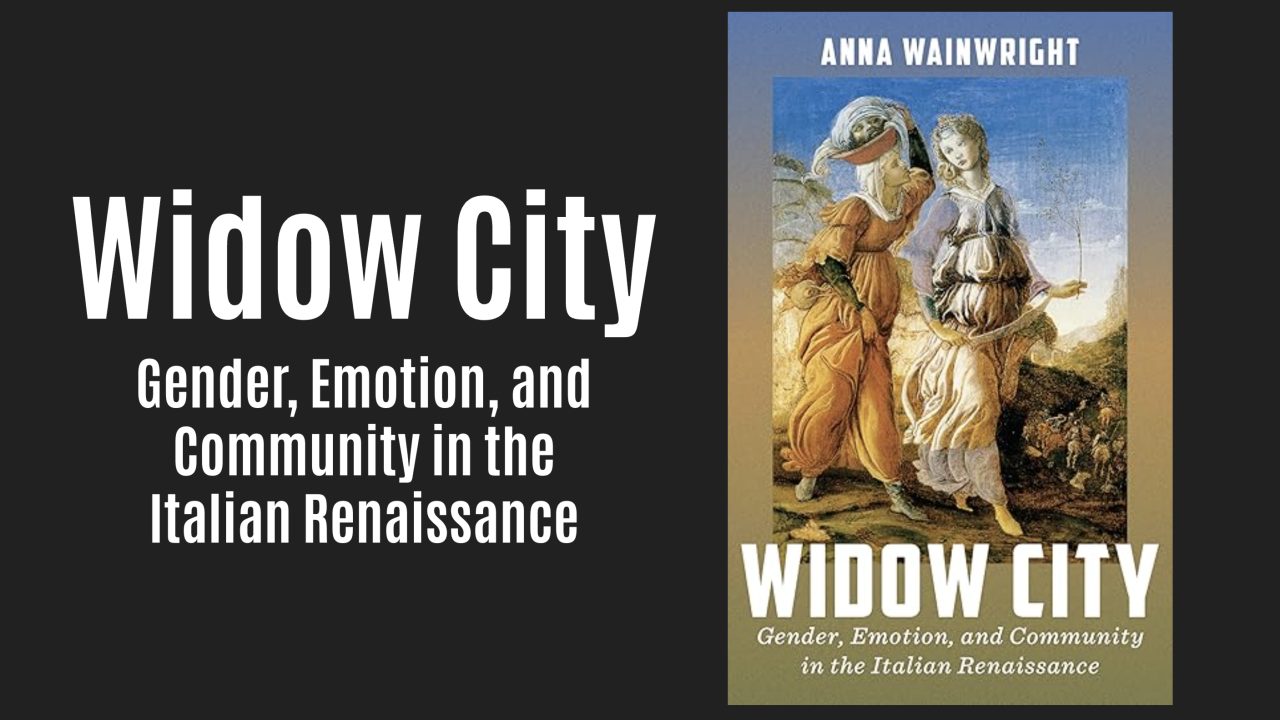
A new academic book is challenging that assumption directly. Widow City: Gender, Emotion, and Community in the Italian Renaissance, written by Anna Wainwright and published by the University of Delaware Press, makes the case that widowhood was one of the most culturally and politically loaded subjects in medieval and early modern Italy — and that widows themselves eventually seized control of the conversation.
It’s a subject that has been surprisingly underexplored in medieval history, and this book is being described as the first scholarly work of its kind to trace how the figure of the widow evolved from a literary symbol used by male authors into a voice claimed by women writers themselves.
Why Widowhood Was Such a Charged Subject in Medieval Italy
In late medieval Italy, women frequently outlived their husbands. That demographic reality had enormous social consequences. A widow occupied an unusual position — she was no longer under a husband’s authority, but she existed in a society that had strong expectations about how she should behave, mourn, and move forward.
Male authors of the period didn’t ignore this. According to Wainwright, canonical figures like Dante, Petrarch, and Boccaccio built what she describes as “a rich poetic vocabulary around widowhood.” In other words, widowhood became a literary and cultural theme long before widows themselves were writing about it.
That gap — between how widows were depicted and how they actually experienced their lives — is at the heart of what makes this book significant. The story isn’t just about grief. It’s about who controls the narrative of grief, and what happens when that control shifts.
How the Book Is Structured
Wainwright divides Widow City into three distinct parts, each approaching widowhood from a different angle. Together, they build a picture of how attitudes toward widowhood changed across several centuries of Italian literary and cultural history.
| Section | Focus |
|---|---|
| Part One | What major Italian male authors of the period — including Dante, Petrarch, and Boccaccio — wrote about widowhood |
| Part Two | How women themselves responded to losing a husband, through both religious and secular paths |
| Part Three | Writings by widows, including several prominent widowed writers who rose to prominence in the sixteenth century |
The structure is deliberate. By moving from male-authored depictions to women’s own voices, the book traces a genuine historical shift — one that Wainwright argues played out clearly in the literary record of the period.
The Moment Widows Took Back the Story
One of the book’s central arguments is that something significant happened in sixteenth-century Italy. A number of widowed women rose to literary prominence and, in Wainwright’s words, “radically changed the conversation to public mourning, offering an entirely new perspective on widowed identity.”
This wasn’t just a literary development. It was a social and political one. When widows began writing publicly about their experiences — their grief, their choices, their sense of self — they were doing something that had real cultural weight in a society that had long defined them through the writings of others.
The book cuts across genres to make this argument, which means it draws on poetry, prose, religious writing, and secular literature alike. That cross-genre approach allows Wainwright to show how widowhood functioned not just as a personal experience but as a recurring cultural and political symbol across different forms of expression.
Who This Book Is Written For
Wainwright’s book is an academic work, published by a university press and written for scholars and serious students of medieval and Renaissance history, literature, and gender studies. But the subject it addresses has a much broader relevance.
The questions it raises — about how grief is performed, how society polices mourning, and how women have historically been defined by their relationship to men even in death — are not questions that belong only to the medieval past.
- Readers interested in medieval Italian literature and figures like Dante, Petrarch, and Boccaccio will find substantial new context for familiar works
- Scholars of gender history will find the book fills what is acknowledged as a genuine gap in existing research
- Those interested in the history of women’s writing and authorship will find the third section of the book particularly relevant
- Renaissance historians will gain insight into the social and political dimensions of widowhood as a cultural institution
The book’s ISBN is 978-1-64453-359-8, published by the University of Delaware Press.
What This Research Adds to Our Understanding of the Renaissance
Medieval and Renaissance scholarship has historically centered male voices — the canonical authors, the political figures, the theologians. Books like Widow City push against that tendency by demonstrating that women were not simply subjects of literature but eventually its authors, and that their writing changed the cultural conversation in measurable ways.
Wainwright’s framing is careful. She doesn’t claim widows were uniformly empowered or that their literary emergence was simple or uncontested. Instead, the book traces an evolution — from allegorical subject to active author — that unfolded over centuries and across a wide range of texts.
That kind of long-view historical argument is exactly what fills a gap in the existing scholarship, and it’s what makes this book a meaningful contribution to how we understand gender, community, and emotional life in the Italian Renaissance.
Frequently Asked Questions
What is Widow City about?
It examines the role of widowhood in medieval and early modern Italian literature and culture, tracing how widows evolved from allegorical subjects in male-authored texts to authors in their own right.
Who wrote Widow City?
The book was written by Anna Wainwright and published by the University of Delaware Press.
Which historical authors are discussed in the book?
The book discusses canonical Italian authors including Dante, Petrarch, and Boccaccio, as well as numerous widowed women writers who rose to prominence in the sixteenth century.
How is the book organized?
It is divided into three parts: the first examines male-authored depictions of widowhood, the second looks at how women responded to losing a husband through religious and secular paths, and the third focuses on writings by widows themselves.
Is this the first book on this subject?
According to the author, it is the first scholarly work to investigate the evolving role of the widow from allegorical subject to author in medieval and early modern Italian literature.</p

Leave a Reply