
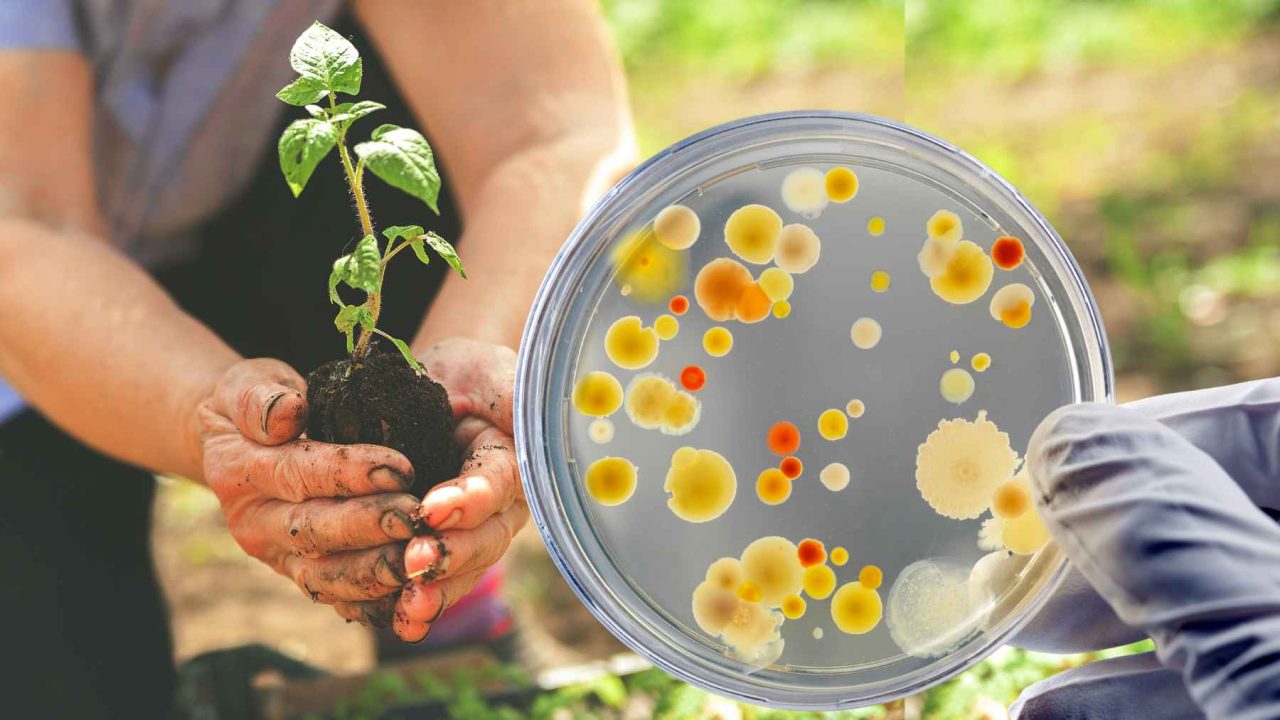
Beneath the cracked, sun-baked surface of a field at the end of a dry Mexican season, something extraordinary is already at work. Scientists at one of Latin America’s most prestigious universities have identified what they describe as an “army” of bacteria living in the soil — microscopic organisms that could reshape the way farmers approach agriculture without reaching for a single chemical.
Researchers at the National Autonomous University of Mexico (UNAM) analyzed soils from the Mixteca Alta UNESCO Global Geopark in Oaxaca and found 21 major bacterial groups thriving beneath traditional farmland. Four of those groups alone accounted for roughly four out of every five genetic reads collected — a finding that points to a rich, structured microbial community doing far more than simply existing in the dirt.
The study, published in the open-access journal Agriculture, was led by Mario Alberto Martínez-Núñez alongside Quetzalcoátl Orozco-Ramírez, working through UNAM’s Institute of Geography, the Academic Unit for Territorial Studies in Oaxaca, and the Observatorio Genómico de Oaxaca. What they found raises a question worth sitting with: what if one of farming’s most powerful tools has been underfoot the entire time?
What the UNAM Research Actually Found in the Soil
The core of the study focused on the soil “microbiome” — the living community of microorganisms that inhabit agricultural land. Using genetic analysis, the team was able to identify and map the bacterial populations present across different farm landscapes in the Mixteca Alta region, an area recognized internationally for its geographic and ecological significance as a UNESCO Global Geopark.
The researchers detected 21 major bacterial groups in total. That alone is a significant finding. But the deeper story is in what those bacteria are actually doing. The study links these microbial communities to two critical soil functions: breaking down organic matter and helping to limit plant disease. These aren’t minor background processes — they are fundamental to whether crops grow well or fail.
The team also connected the composition of bacterial communities to the specific type of traditional farm landscape they were sampled from. In other words, the way land has historically been managed in Oaxaca appears to influence which bacteria thrive there — and potentially how well those bacteria can support future crops.
The Four Bacterial Groups Driving the Most Activity
Of the 21 groups identified, four dominated the samples — together making up approximately 80 percent of all genetic material detected. Understanding what each of these groups does helps explain why researchers are paying close attention.
| Bacterial Group | Role in Soil Health |
|---|---|
| Acidobacteria | One of the most abundant soil bacteria globally; plays a key role in carbon cycling and organic matter breakdown |
| Proteobacteria | Highly diverse group linked to nutrient cycling, including nitrogen fixation that benefits plant growth |
| Actinobacteria | Known for decomposing tough organic compounds; some members produce natural antibiotics that suppress soil pathogens |
| Chloroflexi | Associated with carbon degradation and found in a wide range of soil environments |
Note: General characteristics of these bacterial groups are drawn from established microbiology. Specific roles as they relate to this study are based on
These are not obscure, newly discovered organisms. They are well-studied bacterial families — but finding them in such concentration in traditional Oaxacan farmland, and linking their presence directly to agricultural function, adds meaningful new context to how we understand these landscapes.
Why This Matters Beyond Mexico’s Borders
The significance of this research extends well beyond a single geopark in southern Mexico. Agriculture globally is under pressure to reduce its dependence on synthetic chemicals — fertilizers and pesticides that can degrade soil over time, contaminate water sources, and lose effectiveness as pests and pathogens adapt to them.
Bacterial communities like the ones documented in this study represent a potential alternative path. If specific bacteria can be shown to reliably suppress plant disease or improve soil fertility, they could eventually be used as biological tools — applied to fields the way a treatment is applied to a patient, but working with nature rather than against it.
The researchers’ decision to study traditional farm landscapes specifically is also worth noting. Indigenous and traditional agricultural practices in regions like the Mixteca Alta have shaped the land for generations. The bacterial communities found there may reflect centuries of land management that, unintentionally or otherwise, fostered a more biologically diverse and resilient soil environment than modern industrial farming typically produces.
Advocates for sustainable agriculture argue that findings like these underscore the value of preserving traditional farming knowledge — not just culturally, but scientifically. The microbial wealth documented in this study could only be found because those landscapes still exist.
Where This Research Goes From Here
The UNAM team’s work is published as an open-access paper, meaning any researcher, agricultural institution, or policymaker can access it without a subscription paywall. That matters for a finding with potential applications across developing nations where access to expensive agrochemicals is limited and where soil degradation is already a serious problem.
The next steps in research like this typically involve isolating specific bacterial strains, testing their effects on crops under controlled conditions, and eventually exploring whether those strains can be cultivated and distributed at scale. None of those stages are confirmed in the current study — this is foundational research, the kind that identifies what is present and what it might do.
But foundational research is where every practical agricultural tool begins. The chemical fertilizers and pesticides that defined 20th-century farming also started in laboratories, with scientists asking basic questions about what was in the soil and how it worked. The UNAM team is asking the same kind of questions — just arriving at very different answers.
For farmers in Oaxaca and beyond, the idea that their soil already contains a microscopic force capable of protecting crops and building fertility is both surprising and, in a way, reassuring. The army, it turns out, was already there.
Frequently Asked Questions
Where did the UNAM researchers collect their soil samples?
The samples were taken from the Mixteca Alta UNESCO Global Geopark in Oaxaca, Mexico, an internationally recognized region studied for its geographic and ecological significance.
Who led the study?
The research was led by Mario Alberto Martínez-Núñez alongside Quetzalcoátl Orozco-Ramírez, working through UNAM’s Institute of Geography, the Academic Unit for Territorial Studies in Oaxaca, and the Observatorio Genómico de Oaxaca.
How many bacterial groups did the researchers find?
The team identified 21 major bacterial groups in the soil samples, with four groups — Acidobacteria, Proteobacteria, Actinobacteria, and Chloroflexi — making up approximately 80 percent of all genetic reads collected.
What can these bacteria actually do for crops?
According to the study, the identified bacteria are linked to breaking down organic matter in the soil and helping to limit plant disease — two functions that are central to healthy, productive farmland.
Where can I read the full study?
The paper is published as an open-access article in the journal Agriculture, meaning it is freely available to the public without a paywall.
Will these bacteria be used in farming soon?
This has not yet been confirmed. The current study is foundational research identifying which bacteria are present and what roles they may play — further testing and development would be required before any practical agricultural applications could be established.


Leave a Reply