
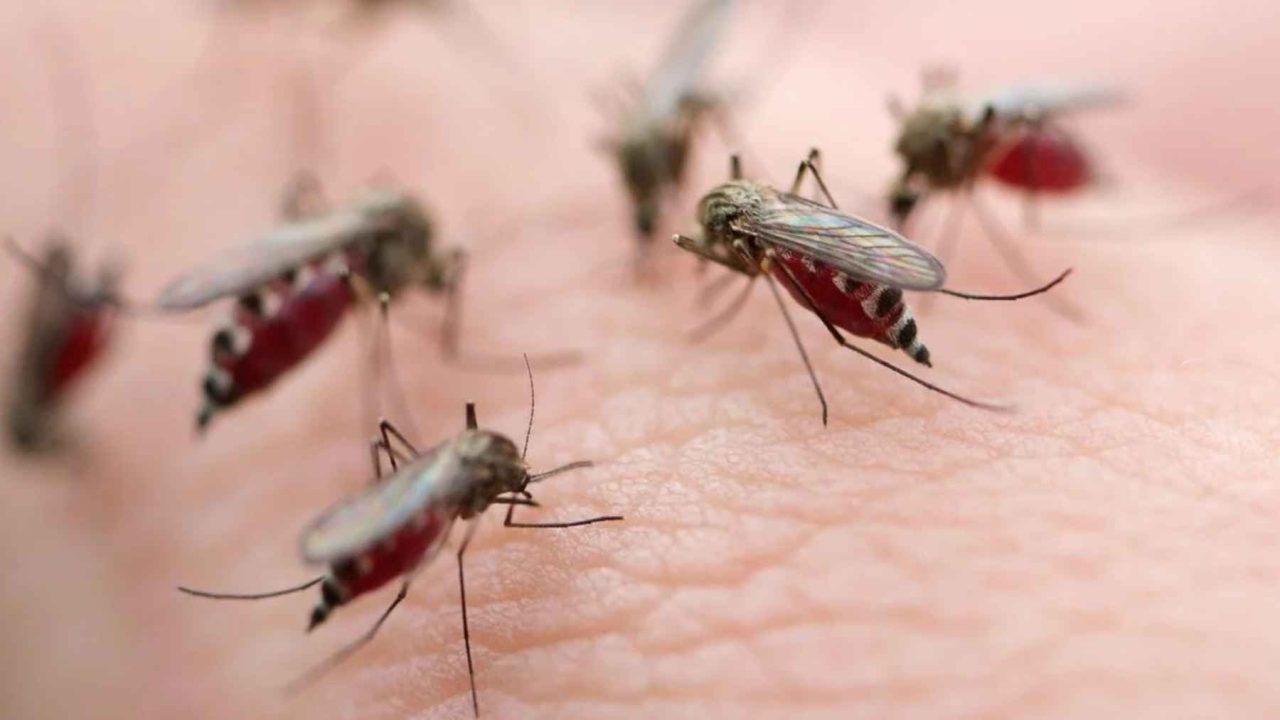
Most people assume mosquitoes bite them more than others because of something in their blood — too much sugar, the wrong type, some invisible biological flag. It turns out the real answer has far less to do with what’s inside you and far more to do with what surrounds you the moment you step outside.
A new study from a collaboration between Georgia Tech and the Massachusetts Institute of Technology has used three-dimensional tracking of live female mosquitoes to build a predictive model of mosquito flight behavior. The findings suggest the dominant triggers are the carbon dioxide cloud you exhale and the visual contrast your body creates against its background — not the chemical composition of your blood.
For anyone who has ever felt personally targeted at a backyard gathering while the person next to them walked away unscathed, this research offers a more grounded explanation — and it has real implications for how we protect ourselves.
What the New Research Actually Found
The study focused on female mosquitoes, which are the ones that bite. Males feed on nectar and pose no threat to humans. Females need blood to produce eggs, which means they spend significant energy in what researchers describe as a “host-seeking” mode — an active search state that activates when the right environmental signals align.
To study this behavior precisely, the Georgia Tech and MIT team tracked mosquitoes in three dimensions, capturing their movement patterns in real time. From that data, they built a model capable of predicting where a mosquito will fly when specific cues are present.
According to the model, the strongest trigger is a combination of two factors working together. First, CO₂ — the carbon dioxide exhaled in every breath — appears to activate the mosquito’s host-seeking behavior at a distance. Once that chemical signal is detected, the insect then uses visual contrast to home in on a target. In practical terms, this means the way your clothing stands out against your surroundings may determine whether a mosquito locks onto you specifically.
The research suggests these two signals work as a sequential system: CO₂ triggers the search, and visual contrast guides the approach. Neither alone appears to be as effective as the combination.
Why the “Sweet Blood” Theory Doesn’t Hold Up
The idea that mosquitoes prefer people with “sweet blood” — often linked to high sugar intake, certain blood types, or diet — has circulated for decades. It persists partly because the experience of being bitten more than others feels so personal and consistent.
But the new 3D behavioral model points away from blood chemistry as the primary driver of attraction. The triggers identified — CO₂ output and visual contrast — are external and largely independent of what’s in your bloodstream. This matters because it shifts the focus of prevention from internal biology (which you can’t easily change) to external conditions (which you can).
It also helps explain why mosquito exposure feels uneven in group settings. People who exhale more CO₂, whether due to body size, physical activity, or respiratory rate, and who wear clothing that creates stronger contrast against their environment, may simply present a more compelling set of signals to a searching mosquito.
The Conditions That Make You a Target
Based on what the research describes, certain situations naturally stack these attractant cues in ways that increase your exposure. The study itself references scenarios like a humid dusk soccer practice or a backyard cookout that runs into the evening — settings where CO₂ output from exertion or close gathering is elevated, and where people are stationary long enough for mosquitoes to close in.
| Attractant Factor | What It Is | Why It Matters |
|---|---|---|
| CO₂ output | Carbon dioxide exhaled with every breath | Activates mosquito host-seeking behavior at a distance |
| Visual contrast | How much your clothing or body stands out against background | Guides the mosquito toward a specific target once CO₂ is detected |
| Physical activity | Exercise or movement that increases breathing rate | Raises CO₂ output, amplifying the primary attractant signal |
| Time of day | Dusk and evening hours | Peak activity window for host-seeking female mosquitoes |
How the Mosquito Trap Industry Is Already Responding
This makes sense: if CO₂ is the primary long-range trigger that activates host-seeking behavior, then traps designed to emit CO₂ plumes have a scientifically grounded mechanism for luring mosquitoes away from people.
The combination of CO₂ emission with visual contrast elements — dark surfaces that stand out in an environment — represents a logical design direction for next-generation traps. Rather than relying on heat or light alone, products informed by this research can more precisely replicate the two-signal system mosquitoes appear to follow.
This is a meaningful shift in how the industry approaches the problem, moving from general attractants toward a more targeted behavioral model based on how mosquitoes actually make decisions in the field.
What This Means for How You Dress and Where You Sit
The practical takeaways here are more actionable than most mosquito advice. If visual contrast plays a role in guiding mosquitoes toward a specific person, then clothing choices — particularly how strongly your outfit contrasts with your surroundings — may genuinely matter at outdoor events.
Reducing CO₂ output isn’t realistic in any meaningful way. But being aware that physical exertion increases your attractiveness to mosquitoes, and that dusk is the highest-risk window, gives you real information to work with when planning outdoor time.
The research also reinforces why group settings don’t distribute bites evenly. It’s not random, and it’s not mystical. It’s a combination of how much CO₂ you’re putting out and how clearly you stand out visually — two factors that vary significantly from person to person in any given crowd.
Frequently Asked Questions
Is the “sweet blood” theory scientifically supported?
According to this new research from Georgia Tech and MIT, the primary attractants identified are CO₂ output and visual contrast — not blood chemistry. The sweet blood theory is not supported by the behavioral model the study produced.
What two factors does the 3D model identify as the strongest mosquito attractants?
The model points to a combination of the carbon dioxide you exhale and the visual contrast your body or clothing creates against its background as the dominant triggers for mosquito host-seeking behavior.
Why do female mosquitoes bite and not males?
Female mosquitoes need blood to produce eggs, so they actively seek out warm-blooded hosts. Male mosquitoes feed on nectar and do not bite humans.
How is the mosquito trap industry responding to this research?
According to
Which institutions conducted this research?
The study was a collaboration between Georgia Tech and the Massachusetts Institute of Technology, using three-dimensional mosquito tracking to build a predictive flight behavior model.
Does physical activity make you more attractive to mosquitoes?
Based on the research, physical exertion increases your CO₂ output, which is identified as the primary long-range trigger for mosquito host-seeking — so yes, activity level appears to be a contributing factor.




Leave a Reply