
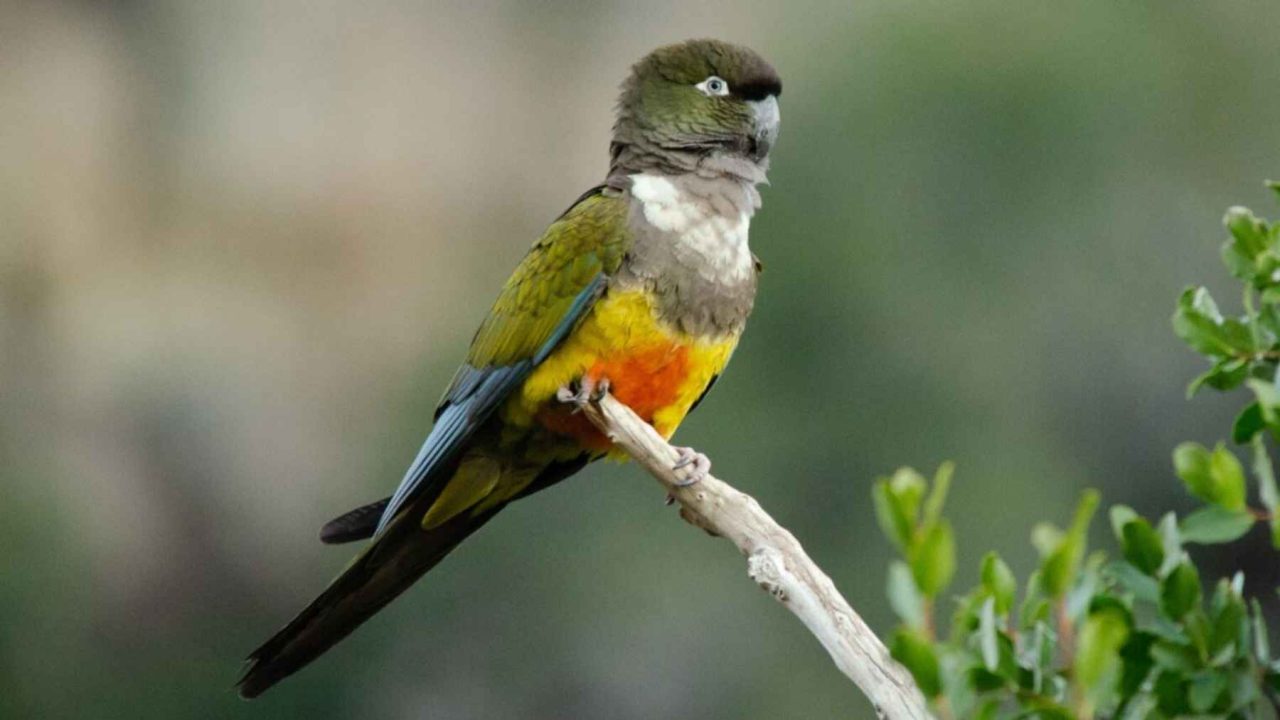
For more than 15 years, the tricahue parrot was essentially a ghost in Chile’s Metropolitan Region — spotted occasionally passing through, but never confirmed as a resident. That changed when park rangers at Río Clarillo National Park made a discovery that conservationists are calling a milestone: an active nesting area, with birds not just visiting but staying, breeding, and raising young just outside the capital city of Santiago.
The confirmation came after a neighbor’s report in 2024 triggered careful monitoring by park staff. What they found was nesting activity on a pumice cliff near the El Principal sector, close to the park’s main access point. For a species that had gone unrecorded as a year-round resident in this part of Chile for over a decade and a half, the evidence of active nests carries real weight.
This isn’t a feel-good footnote. It’s a signal that something meaningful is shifting in one of South America’s most ecologically pressured urban corridors.
Why the Tricahue Parrot’s Return to Río Clarillo Matters So Much
The tricahue — Chile’s largest native parrot — has faced significant pressure from habitat loss, illegal trapping for the pet trade, and the general squeeze that comes with being a wild species in a region dominated by one of the continent’s biggest cities. Its absence from the Metropolitan Region as a breeding bird wasn’t a mystery. It was a predictable consequence of those pressures.
That’s precisely why the word “nesting” carries so much significance here. There’s a meaningful difference between a bird that flies through an area and one that chooses to stay, feed, and reproduce there. A flyover sighting is interesting. A confirmed breeding colony is evidence that the landscape can support a population — that food, shelter, and safety are present in sufficient quantity for the birds to commit.
Río Clarillo National Park sits in the community of Pirque, just outside Santiago. Its protected status makes it one of the few places near the capital where that kind of ecological stability exists. The return of the tricahue to this specific location suggests the park is doing what protected areas are supposed to do: hold the line while species recover.
What the Discovery Actually Confirmed
The sequence of events matters here. A local neighbor flagged unusual parrot activity in 2024. Park rangers followed up with structured monitoring rather than treating it as a casual report. That monitoring identified an active nesting site on a pumice cliff near the El Principal sector — a geologically distinctive habitat that the birds appear to have selected deliberately.
Park ranger Catalina Parra Loyola was among those involved in the monitoring and public communication around the discovery. She raised an important practical point for anyone visiting the park:
“It is essential to identify them and not confuse them with the Argentine parakeet.”
That warning isn’t trivial. Misidentification can distort population data and lead to inaccurate reporting of what’s actually present in the park. The Argentine parakeet is a visually similar species, and distinguishing between the two requires attention to detail that casual visitors may not apply.
| Detail | Confirmed Information |
|---|---|
| Location | Río Clarillo National Park, Pirque, Metropolitan Region, Chile |
| Species | Tricahue parrot (Chile’s largest native parrot) |
| Absence period | More than 15 years without confirmed year-round residency |
| Discovery trigger | Neighbor report in 2024, followed by ranger monitoring |
| Nesting site | Pumice cliff near El Principal sector, close to park access point |
| Key ranger involved | Catalina Parra Loyola |
| Similar species to distinguish | Argentine parakeet |
The Difference Between a Sighting and a Settlement
This distinction is worth sitting with, because it’s easy to underestimate. Wildlife monitoring distinguishes between transient animals — those moving through an area — and resident populations that establish territories and breed. The tricahue had been seen in the Metropolitan Region before this discovery. But seeing a bird is not the same as confirming it has made a place its home.
Breeding confirmation is the gold standard in conservation monitoring. It tells researchers that a habitat isn’t just tolerable for a species — it’s viable. That viability has implications for how the park is managed, how visitor access might be regulated near sensitive nesting zones, and how the broader recovery of the tricahue population in central Chile is understood.
For a species that had effectively vanished from this region as a breeding bird, the reappearance of active nests represents a threshold being crossed — not just a data point, but a turning point.
What This Means for People Who Visit the Park
Río Clarillo National Park is accessible to the public, and the nesting site near the El Principal sector sits close to the park’s access point. That proximity means visitors have a genuine chance of encountering these birds — but it also means the risk of disturbance is real.
Rangers have been clear about the need for responsible behavior around the nesting area. Misidentifying the birds, approaching too closely, or generating noise near active nests could disrupt breeding activity at a critical moment in the population’s recovery.
- Learn to distinguish the tricahue parrot from the Argentine parakeet before visiting
- Follow ranger guidance on distance and behavior near the El Principal sector
- Report any unusual sightings to park staff rather than assuming identification
- Treat the nesting site as a sensitive zone, not a photo opportunity
The neighbor who made the original 2024 report is a reminder that community observation plays a real role in conservation. Everyday people noticing something unusual and passing it on to the right authorities set this entire chain of events in motion.
Where Things Stand and What Comes Next
The confirmation of active nesting is the beginning of a monitoring story, not the end of one. Rangers will need to track whether the colony persists across seasons, how many breeding pairs are present, and whether the population expands over time. A single confirmed nesting season is promising. A sustained, growing colony would represent something much larger.
For now, the protected landscape of Río Clarillo appears to be holding space for a species that spent 15 years absent from this part of Chile. That’s not nothing. In a region under constant development pressure, a national park outside Santiago sheltering a breeding population of the country’s largest native parrot is exactly the kind of outcome that conservation infrastructure is designed to produce.
The return that seemed impossible, as rangers and conservationists have described it, is already underway.
Frequently Asked Questions
Where exactly were the tricahue parrot nests found?
The nests were found on a pumice cliff near the El Principal sector of Río Clarillo National Park, close to the park’s main access point, in the community of Pirque outside Santiago.
How long had the tricahue been absent from this region?
The tricahue had not been documented as a year-round resident in Chile’s Metropolitan Region for more than 15 years before this discovery.
How was the nesting site first discovered?
A neighbor filed a report in 2024 after noticing the birds, which prompted park rangers to begin structured monitoring that confirmed the active nesting activity.
Why is it important not to confuse the tricahue with the Argentine parakeet?
Park ranger Catalina Parra Loyola noted that misidentification between the two visually similar species can lead to inaccurate population records and monitoring data.
Is Río Clarillo National Park open to the public?
Yes, the park is open to visitors, though rangers have emphasized responsible behavior near the nesting site given its proximity to the park’s access point.
Does this confirm the tricahue population is fully recovered in the region?
The confirmed nesting is a significant milestone, but whether the population will sustain and grow over time has not yet been determined — ongoing monitoring will be needed to assess long-term recovery.


Leave a Reply