
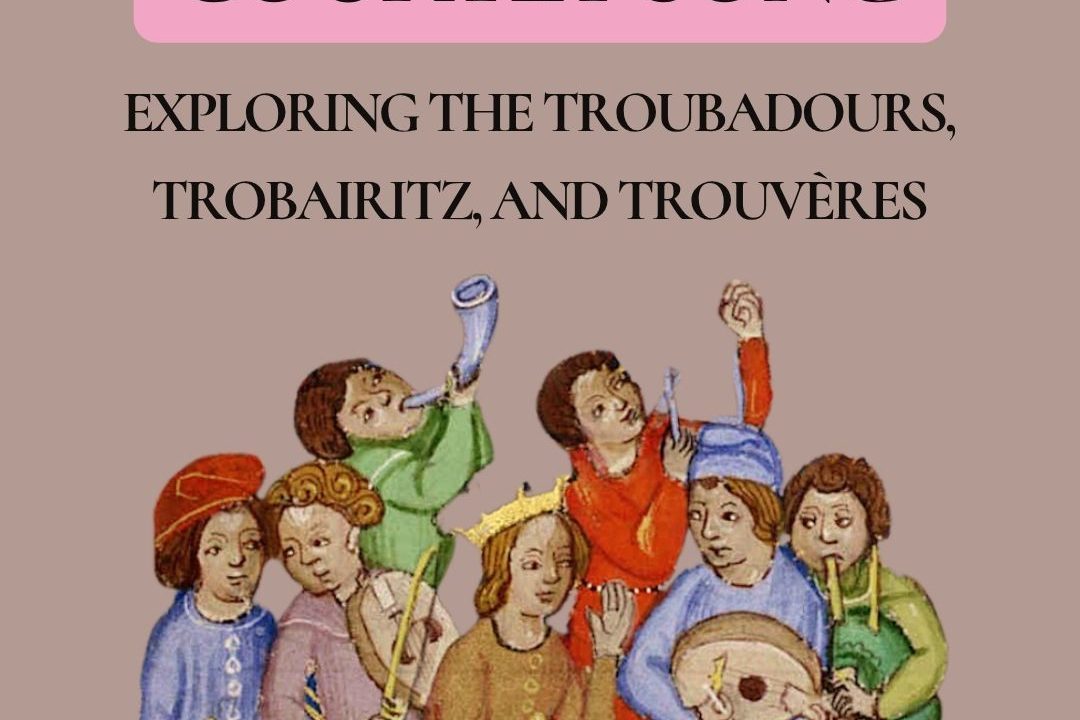
What did it actually sound like when a medieval poet-composer performed at a twelfth-century court? That question sits at the heart of a new online course launching this April, one that brings the world of the troubadours, trobairitz, and trouvères back to life through their music, poetry, and the turbulent historical forces that shaped them.
These were not passive scribes copying religious texts. They were performers, innovators, and sometimes political provocateurs — composing and singing in the vernacular at a time when Latin dominated the written word. Their influence stretched from the sun-drenched courts of southern France to the crusading fields of the Holy Land, and their legacy runs through Western music and literature to this day.
For anyone curious about medieval culture, music history, or the origins of lyric poetry in Europe, this course offers a rare opportunity to explore that world with a specialist who brings both academic rigor and musical performance experience to the subject.
Who Were the Troubadours, Trobairitz, and Trouvères?
The troubadours were poet-composers who flourished primarily in southern France during the medieval period, writing and performing in Occitan, the regional language of that area. They are among the earliest known secular songwriters in the European tradition, and their work covered themes ranging from courtly love and chivalry to politics, war, and satire.
The trobairitz were their female counterparts — women who composed and performed in the same tradition. Their existence challenges the assumption that medieval creative life was exclusively male, and their surviving works offer a rare and direct female voice from a period when women’s perspectives are often absent from the historical record.
The trouvères operated in northern France, composing in Old French rather than Occitan. They inherited and adapted the southern tradition, bringing it into contact with different courts, different patrons, and different social contexts. Together, these three groups represent a remarkable flowering of vernacular artistic culture in medieval Europe.
What the Course Actually Covers
The course is taught by Dr. Sonja Maurer-Dass, a Canadian musicologist and harpsichordist. That combination matters. Musicology provides the analytical and historical tools to place these figures in context, while performance experience brings a practical understanding of how this music actually works — how it moves, how it breathes, how it would have sounded to a medieval audience.
The course spans three weeks and covers the music, poetry, and historical contexts that shaped the troubadour world. That context is rich and varied, touching on the glittering courts where these performers found patronage, the crusades that influenced both their subject matter and their careers, and the broader social and artistic traditions that were shifting around them.
| Course Detail | Information |
|---|---|
| Start Date | April 18th |
| Duration | Three weeks |
| Live Session Schedule | Saturdays, 1:00–3:00 pm EST |
| Instructor | Dr. Sonja Maurer-Dass |
| Instructor Background | Canadian musicologist and harpsichordist |
| Platform | Online (live sessions) |
| Course Focus | Music, poetry, and historical context of troubadours, trobairitz, and trouvères |
Why This Subject Still Matters
Medieval music and poetry can feel distant — separated from modern life by language barriers, unfamiliar instruments, and centuries of cultural change. But the troubadour tradition carries ideas that remain surprisingly current.
The trobairitz, in particular, represent something genuinely significant. Women composing and performing their own original work in a professional or semi-professional context in the twelfth and thirteenth centuries is not what most people imagine when they think of the medieval period. Studying their work forces a more honest and complicated picture of what women’s lives and voices could look like in that era.
The connections to the crusades are equally compelling. The crusading movement did not just reshape politics and religion — it moved people, ideas, and artistic forms across enormous distances. Troubadours followed or accompanied crusading armies. Their songs reflected, responded to, and sometimes directly commented on those campaigns. Understanding their music means understanding something real about how medieval people processed one of the defining events of their time.
For anyone with an interest in music history, literary history, gender studies, or medieval Europe more broadly, this is not a narrow specialist topic. It sits at the intersection of several major threads in Western cultural history.
What to Expect From the Live Sessions
The course runs on a Saturday schedule, with two-hour live sessions each week. That format — concentrated, interactive, and spread across three weeks — is well suited to working adults who want genuine engagement with the material rather than a passive video series they may never finish.
Live sessions allow for questions, discussion, and the kind of back-and-forth that makes a complex historical subject genuinely accessible. With an instructor who is both a scholar and a practicing musician, there is also the possibility of hearing how this music sounds in practice, not just reading about it on a page.
The course is listed through Medievalists.net, a well-established resource for medieval studies content, which has previously offered online courses covering topics from medieval music manuscripts to women troubadours in southern France.
Frequently Asked Questions
When does the course start?
The course begins on April 18th, with live sessions held each Saturday from 1:00 to 3:00 pm EST.
How long does the course run?
It is a three-week course, with one two-hour live session per week.
Who is teaching the course?
The course is taught by Dr. Sonja Maurer-Dass, a Canadian musicologist and harpsichordist.
What topics does the course cover?
The course explores the music, poetry, and historical contexts of the troubadours, trobairitz, and trouvères, including themes such as medieval courts and the crusades.
What is the difference between troubadours, trobairitz, and trouvères?
Troubadours were medieval poet-composers from southern France; trobairitz were their female counterparts in the same tradition; trouvères were poet-composers from northern France working in Old French.
Where can I sign up for the course?
Full details and registration information are available through Medievalists.net, where the course is listed.
Leave a Reply