
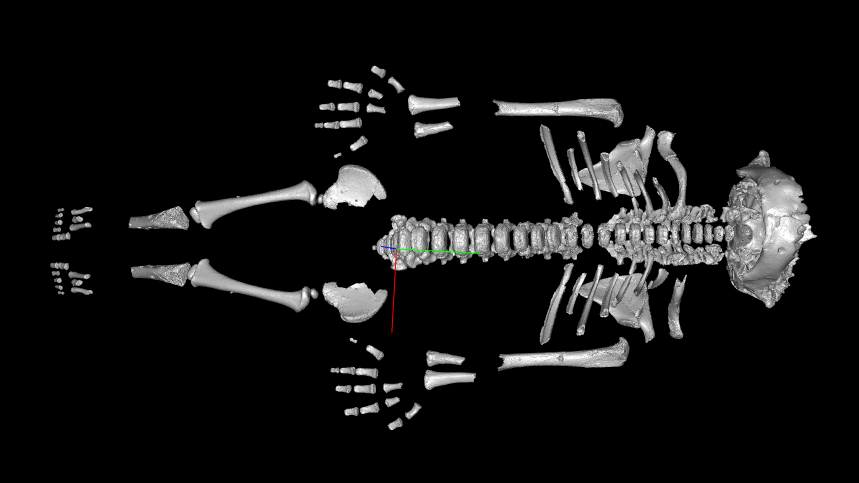
A small set of bones found in a cave in northern Israel is rewriting what scientists thought they knew about how Neanderthals grew up — and why they developed so differently from us.
New research published on April 15 in the journal Current Biology reveals that Neanderthal toddlers grew faster than modern human children of the same age. The finding comes from the analysis of bones belonging to a young Neanderthal discovered at Amud Cave in northern Israel in the 1990s. Scientists believe this accelerated growth was likely an evolutionary adaptation to surviving in a cold, demanding environment.
It is a striking reminder that Neanderthals were not simply a rougher version of us. They were a genuinely different kind of human, shaped by millions of years of pressure from a world that required them to grow up — fast.
What the Bones From Amud Cave Actually Revealed
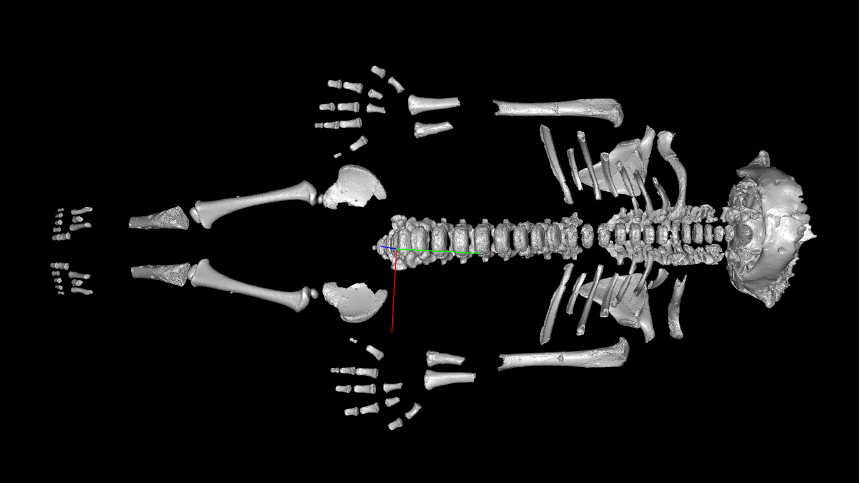
The Neanderthal remains studied in this research were recovered from Amud Cave in northern Israel during excavations in the 1990s. The bones belonged to a young Neanderthal child — a toddler — and offered researchers a rare window into early Neanderthal development.
By examining the physical structure of these bones, scientists were able to reconstruct how quickly this individual was growing at the time of death. What they found challenged a long-standing assumption: that Neanderthals and modern humans followed broadly similar developmental timelines during early childhood.
The data suggests the opposite. Neanderthal toddlers appear to have grown at a noticeably faster rate than their Homo sapiens counterparts at the same life stage. This is not a minor variation — it points to a fundamentally different biological strategy for early development.
Why Neanderthals and Modern Humans Grew Up Differently
The researchers believe this difference in growth rate was not random. It was almost certainly an adaptation to the harsh, cold environments that Neanderthals evolved in over hundreds of thousands of years.
Neanderthals and modern humans share a common ancestor, but the two lineages split apart roughly 600,000 years ago. From that point, each group followed a separate evolutionary path — shaped by the different environments and pressures each population faced.
Neanderthals spent most of their evolutionary history in Europe and western Asia, enduring ice ages, scarce resources, and the physical demands of cold-climate survival. Growing faster during the earliest, most vulnerable years of life may have been a critical survival advantage. A child who reaches physical maturity sooner is a child who can better withstand the threats of that world.
Modern humans, by contrast, are known for an unusually slow and extended period of childhood development — something researchers believe supports the long learning period that underpins human culture, language, and social complexity. These two species were solving the problem of survival in very different ways.
Key Facts at a Glance
| Detail | Information |
|---|---|
| Research published | April 15, in the journal Current Biology |
| Fossil source | Amud Cave, northern Israel |
| When remains were found | 1990s |
| Individual studied | A young Neanderthal toddler |
| Key finding | Neanderthal toddlers grew faster than modern human children |
| Proposed reason | Adaptation to cold, harsh environments |
| When lineages diverged | Approximately 600,000 years ago |
- The research draws on fossil bones discovered at Amud Cave in the 1990s
- Neanderthals and modern humans (Homo sapiens) split from a common ancestor around 600,000 years ago
- Faster early growth in Neanderthals is believed to reflect environmental pressures, not simply genetic drift
- The findings suggest the two species followed genuinely distinct developmental strategies after diverging
What This Means for How We Understand Neanderthals
For decades, popular science portrayed Neanderthals as primitive near-humans — slower, less capable, and ultimately outcompeted by the smarter, more adaptable Homo sapiens. That picture has been steadily dismantled by modern research, and this study adds another important piece.
The fact that Neanderthal toddlers grew faster than modern human toddlers is not a sign of inferiority — it is a sign of sophisticated biological adaptation. Their bodies were doing exactly what hundreds of thousands of years of evolution had shaped them to do: develop quickly in an unforgiving world.
Researchers argue this finding deepens our understanding of how the two lineages diverged not just genetically, but biologically and developmentally. The split that began roughly 600,000 years ago did not just produce two groups with different tools or cultures — it produced two groups with different bodies, different growth patterns, and different strategies for keeping their children alive.
That is a significant distinction, and one that a single set of toddler bones from a cave in Israel has helped make clearer.
What Researchers Will Be Looking For Next
A single fossil can only tell scientists so much. The findings from Amud Cave are compelling, but researchers will likely seek to validate and expand on them by studying additional Neanderthal remains from different sites and age groups.
Understanding whether faster toddler growth was consistent across all Neanderthal populations — or whether it varied by region and time period — will be a key question going forward. Scientists will also want to explore at what point in development the growth rates between Neanderthals and modern humans converged, if they did at all.
Every new fossil discovery has the potential to shift the picture again. For now, the bones from Amud Cave have given researchers a rare and unusually clear look at what it meant to be a Neanderthal child.
Frequently Asked Questions
Where were the Neanderthal bones studied in this research found?
The bones were discovered at Amud Cave in northern Israel during excavations carried out in the 1990s.
When was this research published?
The study was published on April 15 in the journal Current Biology.
Why did Neanderthal toddlers grow faster than modern human children?
Researchers believe faster early growth was likely an adaptation to the cold, harsh environments that Neanderthals evolved in over hundreds of thousands of years.
When did Neanderthals and modern humans split from a common ancestor?
According to the research, the two lineages diverged from a shared common ancestor approximately 600,000 years ago.
Does faster growth mean Neanderthals were more physically advanced than modern humans?
Not necessarily — the difference reflects distinct evolutionary strategies rather than one being superior to the other. Modern humans are known for a notably slow, extended childhood that supports learning and social development.
Will scientists study more Neanderthal fossils to confirm these findings?
This has not been formally confirmed in the source, but additional fossil analysis from other sites would typically be the next step in validating findings of this kind.




Leave a Reply