
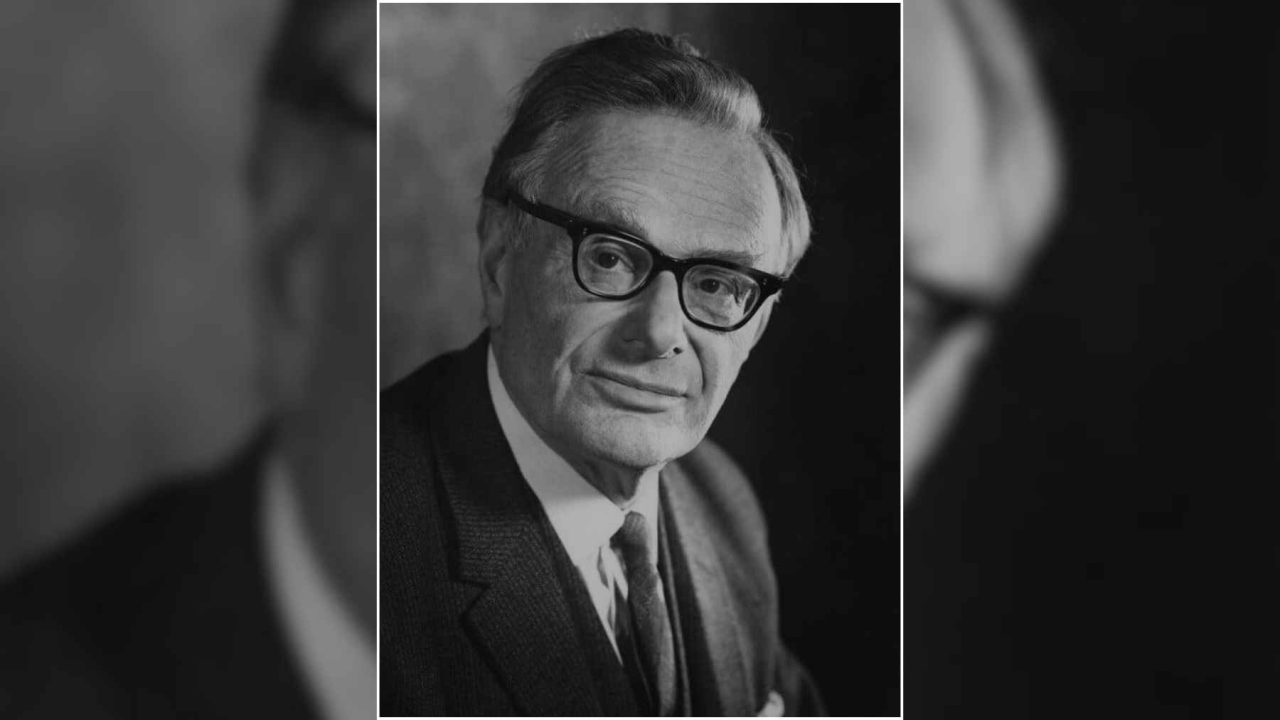
What if one of the most important ideas in modern metabolism science came from a biochemist who was fired from his job by a political regime — and whose discovery still shapes how we understand fat burning nearly a century later?
That is exactly the story behind Hans Adolf Krebs and the citric acid cycle, a biological pathway that sits at the heart of how your body converts food into energy. A quote attributed to Krebs — that “the breakdown and burning of fats depend, to a large extent, on the continuous catabolism of carbohydrates” — has been resurfacing in health and nutrition discussions, and it carries more weight than most diet headlines ever acknowledge.
The idea sounds almost counterintuitive in an era obsessed with low-carb eating. But the chemistry behind it is grounded in real biology, and understanding it changes how you think about metabolism entirely.
Who Was Hans Adolf Krebs, and Why Does His Work Still Matter?
Krebs was a physician and biochemist whose career took a dramatic turn in June 1933, when the National Socialist government terminated his appointment in Germany. He moved to Cambridge in the United Kingdom and later worked at the University of Sheffield and then Oxford — building the research career that would eventually earn him one of science’s highest honors.
In 1953, Krebs shared the Nobel Prize in Physiology or Medicine “for his discovery of the citric acid cycle.” This pathway — sometimes called the Krebs cycle — describes how cells extract energy from nutrients. It is not a niche corner of biochemistry. It is a central process running in virtually every cell in your body, every moment of every day.
The research methods of that era were demanding and precise. Scientists working on cellular respiration often used oxygen-hungry tissue — pigeon breast muscle was a common choice — to measure respiration and map metabolic reactions step by step. The level of rigor required to trace these invisible chemical reactions without modern imaging tools was extraordinary.
What the Citric Acid Cycle Actually Does
The citric acid cycle is essentially a cellular energy extraction system. When you eat carbohydrates, proteins, or fats, your body breaks them down into simpler molecules. Those molecules feed into this cycle, which spins through a series of chemical reactions that release energy the cell can use.
Carbon is always moving through this process. One of the byproducts is carbon dioxide — the CO2 you breathe out. This is not a trivial detail. When you lose weight, a significant portion of that fat literally leaves your body as exhaled carbon dioxide, a fact that surprises most people who assume fat is simply “burned off” invisibly.
The connection to carbohydrates is where Krebs’s observation becomes especially relevant. His point was that fat metabolism does not operate independently — it relies on the metabolic machinery that carbohydrate breakdown keeps running. Without that continuous carbohydrate catabolism, fat oxidation becomes less efficient. The cycle needs intermediates that carbohydrates help supply.
The Carbon Connection — From Your Lungs to the Atmosphere
There is a larger carbon story worth noting here. The same element — carbon — that your cells process and exhale as CO2 is also the central concern of global climate discussions. According to 1 billion metric tons in 2025 (roughly 42.0 billion U.S. tons), a pace that nature cannot fully absorb.
The parallel is not a perfect comparison, but it is a striking one. Carbon cycling in biology and carbon cycling in the atmosphere both follow the same fundamental chemistry. What Krebs mapped inside the cell echoes, in a broader sense, the carbon flows that scientists now track across the entire planet.
Key Facts About Krebs and the Citric Acid Cycle
| Detail | Information |
|---|---|
| Full name | Hans Adolf Krebs |
| Profession | Physician and biochemist |
| Forced departure from Germany | June 1933, following termination by National Socialist government |
| Relocated to | Cambridge, UK; later University of Sheffield; then Oxford |
| Nobel Prize awarded | 1953, Nobel Prize in Physiology or Medicine |
| Prize citation | “For his discovery of the citric acid cycle” |
| Key metabolic insight | Fat breakdown depends significantly on ongoing carbohydrate catabolism |
| Research tool of the era | Pigeon breast muscle (high oxygen demand, useful for respiration studies) |
- The citric acid cycle helps cells extract energy from carbohydrates, fats, and proteins
- Carbon dioxide is a direct byproduct — exhaled CO2 is partly how the body disposes of metabolized fat
- Global fossil fuel CO2 emissions were projected at roughly 38.1 billion metric tons for 2025
- Krebs’s work originated in an era when metabolic research required painstaking manual measurement
Why This Matters to Anyone Thinking About Diet and Fat Loss
The resurgence of interest in Krebs’s observation is not accidental. It pushes back — gently but firmly — against the oversimplified idea that cutting carbohydrates entirely is the most efficient path to burning fat. The biochemistry suggests the relationship between carbs and fat metabolism is more cooperative than competitive.
That does not mean any particular diet is right or wrong. But it does mean that anyone making sweeping claims about fat burning without acknowledging the underlying metabolic pathways is leaving out some important science.
Krebs spent decades building this understanding under difficult personal circumstances — forced from his home country, rebuilding his career in a foreign country, working with the limited tools of mid-20th century science. The fact that his framework still anchors modern metabolic biology says something about the durability of careful, evidence-based research.
What This Story Tells Us Going Forward
The citric acid cycle is not new science. But the way it keeps returning to public conversation — reframed through diet culture, weight loss trends, and now climate carbon discussions — shows how foundational it remains.
For readers tracking their own health, the practical takeaway is that metabolism is not a simple on/off switch. Carbohydrates and fats are not enemies in the body’s energy system. They are, at the biochemical level, deeply connected — just as Krebs described decades ago.
And for anyone curious about where the carbon in your body actually goes: a meaningful portion of it leaves through your lungs every time you exhale. Biology, it turns out, has been cycling carbon long before it became a global headline.
Frequently Asked Questions
Who was Hans Adolf Krebs?
Hans Adolf Krebs was a physician and biochemist who won the 1953 Nobel Prize in Physiology or Medicine for his discovery of the citric acid cycle, a central pathway in cellular energy metabolism.
Why did Krebs leave Germany?
The National Socialist government terminated his appointment in June 1933, prompting him to relocate to Cambridge in the United Kingdom, where he continued his research.
What does the citric acid cycle do?
It is a series of chemical reactions that helps cells extract energy from nutrients including carbohydrates, fats, and proteins, producing carbon dioxide as a byproduct.
What did Krebs mean about fat burning depending on carbohydrates?
His observation was that the breakdown and burning of fats depends to a large extent on the continuous catabolism of carbohydrates — meaning fat metabolism relies on the metabolic intermediates that carbohydrate breakdown helps supply.
What were global CO2 emissions projected to be in 2025?
According to 1 billion metric tons in 2025, roughly 42.0 billion U.S. tons.
How did researchers study the citric acid cycle in Krebs’s era?
Scientists of that period often used oxygen-hungry tissue such as pigeon breast muscle to measure respiration and map metabolic reactions step by step, without the imaging technologies available today.




Leave a Reply