
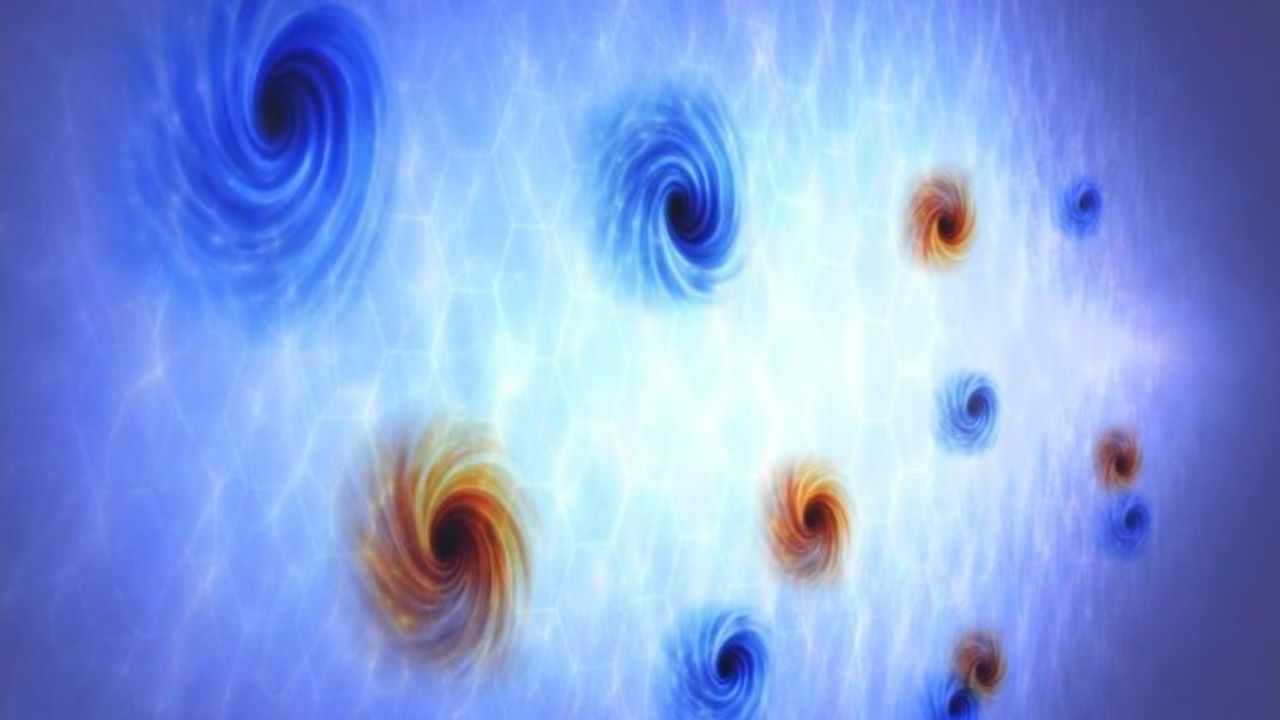
Something just moved faster than light — and physics didn’t break. That’s not a headline from a science fiction novel. It’s the result of a real experiment, recently reported by researchers who observed empty voids, described as pinpricks of darkness, surpassing the cosmic speed limit that Albert Einstein’s theory of relativity enshrined over a century ago.
The catch? No physical matter actually crossed that threshold. And that distinction turns out to be everything.
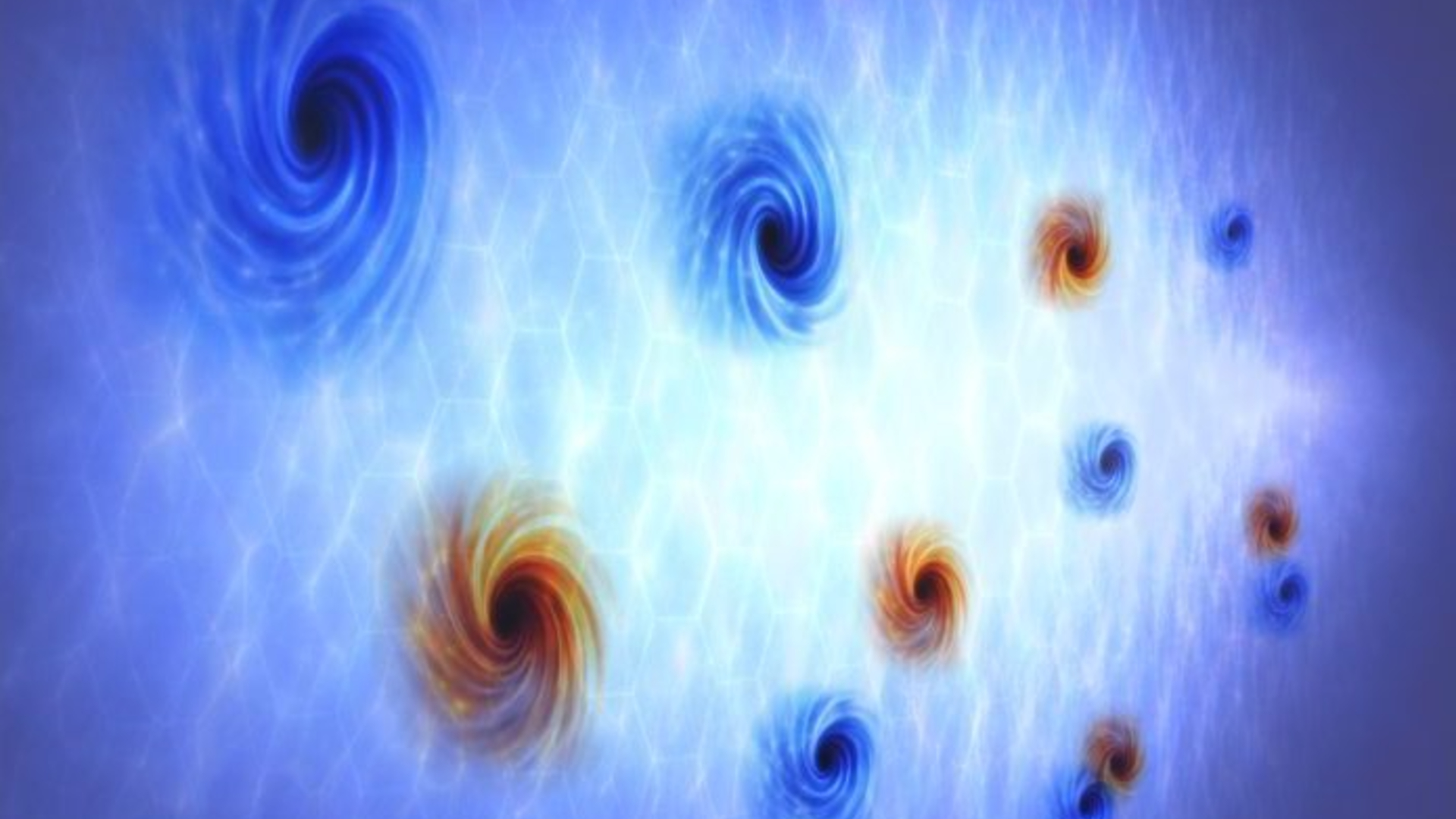
The findings, highlighted by researchers working with ultrafast electron microscopy, represent the first time scientists have directly detected and measured these superluminal voids in action. The experiment was connected to work from the Technion-Israel Institute of Technology, and the imagery it produced — dark singularities surrounded by fast-moving whirlpools — is as striking as the physics behind it.
What Exactly Are These “Pinpricks of Darkness”?
To understand what’s happening here, it helps to think about what a void actually is. These aren’t objects in any traditional sense. They’re absences — regions where something is missing rather than present. In this case, researchers observed voids moving through a medium at speeds that exceeded the speed of light.
This is less bizarre than it sounds once you understand a key principle of physics: Einstein’s relativity prohibits matter and information from traveling faster than light. It says nothing about the movement of patterns, shadows, or empty spaces. A void carries no mass and transmits no usable information, so it isn’t bound by the same rules.
Think of it like a shadow. If you shine a flashlight at a wall and sweep it quickly enough, the shadow of your hand can race across the surface faster than light — not because anything physical moved that fast, but because a pattern shifted. The voids observed in this experiment work on a similar principle, though the physics involved is considerably more complex.
How Researchers Actually Measured Faster-Than-Light Voids
The key technological leap here was the use of ultrafast electron microscopy, a relatively recent advance that allows scientists to observe phenomena at timescales and scales previously impossible to capture. This tool gave the research team the precision needed to detect and measure the motion of these voids directly — not infer it theoretically, but actually observe it.
What they found confirmed what some physicists had theorized: under the right conditions, these dark voids can and do move faster than light. The experiment demonstrated this acceleration in measurable, reproducible terms.
The significance isn’t just that the voids moved fast. It’s that their superluminal motion was documented in a controlled setting for what researchers describe as the first time.
| Concept | What It Means | Does It Break Relativity? |
|---|---|---|
| Matter exceeding light speed | Physical particles or objects moving faster than ~299,792 km/s | Yes — forbidden by special relativity |
| Information exceeding light speed | Transmitting a signal or data faster than light | Yes — also forbidden |
| Voids (empty spaces) exceeding light speed | A pattern of absence shifting faster than light | No — no mass or information is transferred |
| Shadows exceeding light speed | A projected absence moving faster than light across a surface | No — same principle applies |
Why This Matters Beyond the Headlines
At first glance, this might seem like a physics curiosity — impressive at a cocktail party, but not exactly life-changing. That reading would sell the discovery short.
Experiments like this one push the boundaries of what ultrafast electron microscopy can detect and measure. Each time scientists develop tools sensitive enough to observe phenomena at this scale and speed, those tools find applications across multiple fields — from materials science to medical imaging to quantum computing research.
There’s also a deeper theoretical value. Every time physicists probe the edges of what relativity permits and what it forbids, they sharpen their understanding of the theory itself. Relativity has held up remarkably well for more than a hundred years, and experiments like this one — which appear to challenge it but ultimately confirm its boundaries — reinforce just how precisely it describes reality.
The fact that voids can move faster than light without violating any physical law also raises interesting questions about what else might operate outside our intuitive sense of speed limits. Researchers and theorists have long explored related phenomena, including certain quantum effects and mathematical constructs, that seem to dance around relativity’s edges without breaking through them.
The Role of the Technion-Israel Institute of Technology
The research was associated with the Technion-Israel Institute of Technology, an institution with a strong track record in experimental physics and photonics. The artist’s impression released alongside the findings — depicting dark singularities encircled by fast-moving whirlpools — offers a visual shorthand for what the mathematics and microscopy revealed.
Visualizations like this matter for public understanding. The underlying physics is abstract enough that even a well-educated general audience can struggle to grasp what “a void moving faster than light” actually looks like in practice. The imagery helps bridge that gap without distorting the science.
What Comes Next for This Research
The immediate next step for work like this is typically replication and extension. Other research teams will attempt to reproduce the findings using their own ultrafast microscopy setups, and if the results hold, the scientific community will begin asking what other void behaviors can be measured and whether the phenomenon has any practical applications.
Ultrafast electron microscopy itself is still a relatively young and rapidly developing field. As the technology improves, researchers expect to observe phenomena at even finer timescales, potentially revealing new physics that current instruments can only hint at.
Whether this specific discovery leads to applications beyond fundamental physics remains an open question. But the experiment has already done something valuable: it gave scientists a direct, empirical look at superluminal motion — and showed, once again, that the universe is stranger and more interesting than our everyday intuitions suggest.
Frequently Asked Questions
Did something actually travel faster than the speed of light?
Empty voids — regions of absence rather than physical matter — were observed moving faster than light. No physical matter or information crossed the speed limit, so relativity was not violated.
Does this discovery break Einstein’s theory of relativity?
No. Relativity forbids matter and information from exceeding the speed of light. Voids carry neither mass nor transmittable information, so their superluminal motion is permitted under the theory.
What technology was used to detect these voids?
Researchers used advances in ultrafast electron microscopy, a tool capable of measuring phenomena at extremely small scales and timescales, to directly observe and measure the voids’ motion.
Which institution was involved in this research?
The research was associated with the Technion-Israel Institute of Technology, which also released an artist’s impression of the dark singularities and surrounding whirlpools.
Is this the first time faster-than-light voids have been observed?
According to the reporting on this study, researchers detected and measured these superluminal voids for the first time using ultrafast electron microscopy.
Could this lead to faster-than-light communication or travel?
No. Because the voids carry no information and no physical matter, they cannot be used to transmit signals or transport anything faster than light — the fundamental barrier relativity establishes remains intact.




Leave a Reply