
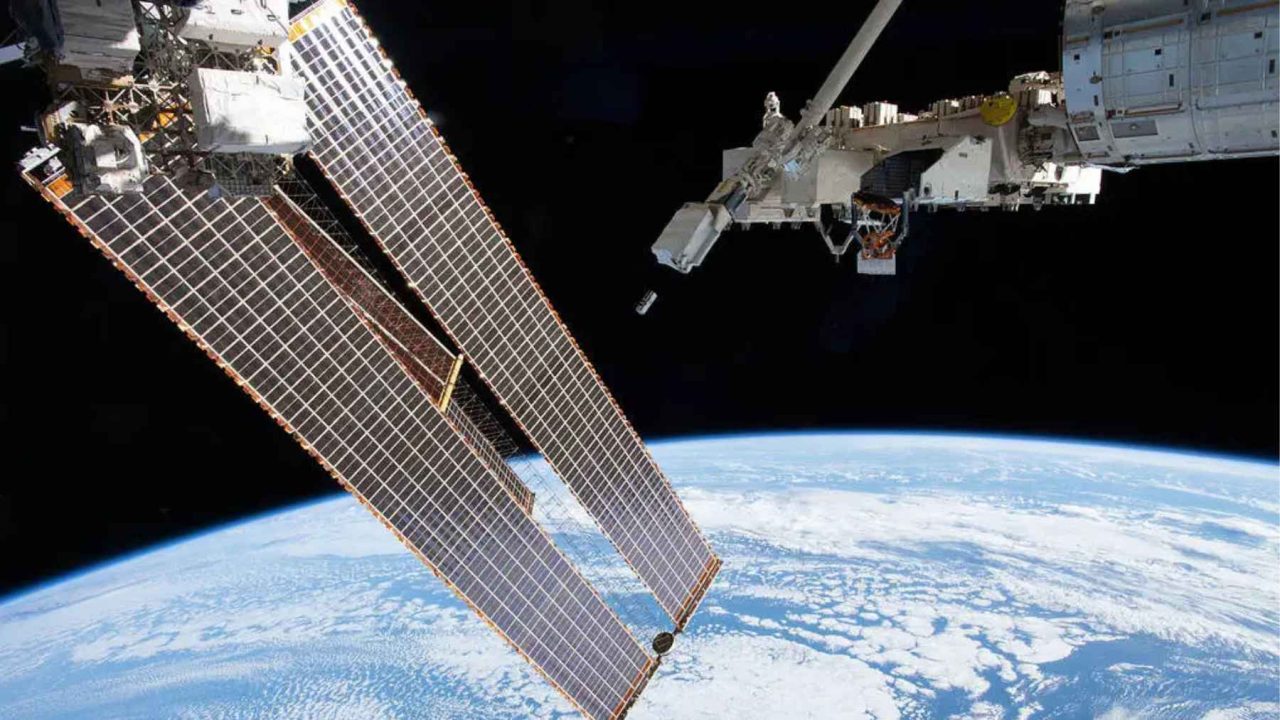
There are flashes of red light exploding silently above thunderstorms, reaching altitudes of up to 89 kilometers — roughly 55 miles — above Earth’s surface. For decades, pilots who reported seeing them were largely dismissed. Scientists weren’t sure they were real. Now, astronauts aboard the International Space Station are photographing them from orbit, and what they’re capturing is forcing researchers to rethink how much energy a storm actually releases, and where it all goes.
These aren’t lightning bolts in the traditional sense. They don’t crack downward from clouds to the ground. They erupt upward, into regions of the atmosphere that are thin, cold, and almost impossible to study from the surface. And they’re far more common than anyone once believed.
The images coming from the ISS are adding to a growing scientific record that is helping researchers understand a phenomenon that, not long ago, existed mostly in the realm of aviation folklore.
What Are Transient Luminous Events — and Why Does the Name Matter?
The scientific term for these upper-atmosphere flashes is transient luminous events, or TLEs. The name is deliberately broad, because the phenomenon comes in several distinct forms, each with its own behavior, altitude, and appearance.
The most visually striking are red sprites — large, jellyfish-shaped bursts of reddish light that appear high above active thunderstorms. Then there are blue jets, which shoot upward from the tops of storm clouds in narrow cone shapes. And there are ELVES — a fitting acronym for events that expand outward as a ring of optical and ultraviolet light near the bottom of the ionosphere, spreading across hundreds of kilometers in less than a millisecond.
All of them are short-lived. Blink and you miss them. That’s a big part of why they went unconfirmed for so long. Ground-based observers rarely had the right angle, the right equipment, or even the right location to catch them in the act. Pilots flying above storm systems had better luck — but pilot reports aren’t scientific data, and for years, those accounts were treated with skepticism.
Why the ISS Changes Everything About Studying These Phenomena
The International Space Station gives researchers something they’ve never had before: a consistent, high-altitude vantage point looking down at storms rather than up through them.
From orbit, astronauts can observe TLEs without the interference of clouds, moisture, and atmospheric distortion that block ground-based observations. The geometry is simply better. When a red sprite or blue jet fires above a thunderstorm, a camera aboard the ISS has a clear line of sight to capture it.
The new images being shared from orbit are part of a growing stream of observations that researchers say is meaningfully advancing the science. The data isn’t just confirming that TLEs exist — it’s helping scientists understand how energy from storms propagates upward into layers of the atmosphere that directly affect aviation, radio communications, and atmospheric chemistry.
A Breakdown of What’s Being Observed Above Storms
| Type of TLE | Appearance | Altitude Range | Key Characteristic |
|---|---|---|---|
| Red Sprites | Large reddish bursts, jellyfish-shaped | Up to ~89 km (55 miles) | Appear above active thunderstorms |
| Blue Jets | Narrow blue cones shooting upward | Above cloud tops | Originate at the tops of storm clouds |
| ELVES | Expanding ring of optical and UV light | Near bottom of ionosphere | Spread outward at extreme speed |
Each type behaves differently, but all are connected to the electrical activity of thunderstorms below. Researchers believe they represent energy that storms release upward — energy that, until recently, wasn’t fully accounted for in models of how Earth’s atmosphere works.
What This Means Beyond Pure Science
This isn’t just a story about beautiful lights in the sky. TLEs occur in the upper atmosphere — a region where aircraft fly, where satellites orbit, and where the chemistry of the air has real consequences for the environment closer to the ground.
Researchers note that the energy pushed upward by storms into these thin, high-altitude layers can affect communications systems that rely on the ionosphere to bounce signals around the globe. Aircraft flying at high altitudes, particularly polar routes, pass through regions where TLEs are active. Understanding what’s happening in these zones matters for safety and engineering.
There’s also the question of atmospheric chemistry. When electrical discharges occur at extreme altitudes, they can trigger chemical reactions in air that is already at the edge of space. Scientists believe this could have implications for how certain gases are distributed through the upper atmosphere — though the full picture is still being studied.
The growing library of ISS observations is giving researchers the data they need to start building more accurate models of these processes — models that could eventually improve weather forecasting, communications planning, and aviation safety protocols.
From Pilot Legend to Legitimate Science
Perhaps the most striking part of this story is how recently TLEs were considered credible at all. Pilots had been describing flashes above storms for generations. The reports were consistent enough to be intriguing, but without photographic evidence, they remained on the fringes of atmospheric science.
The shift came as camera technology improved and researchers began deliberately looking upward from the right positions. Ground-based high-speed cameras captured the first confirmed images. Then came satellite observations. Now the ISS is adding a steady stream of new data, photographed directly by astronauts who have a front-row seat to one of Earth’s least-understood weather phenomena.
What was once dismissed as a pilot’s legend has become one of the more active areas of atmospheric research. And the more scientists look, the more they find — suggesting that the energy budget of a thunderstorm is far more complex, and far more far-reaching, than the lightning we see from the ground ever hinted at.
Frequently Asked Questions
What are transient luminous events (TLEs)?
TLEs are short-lived flashes of light that occur above thunderstorms, sometimes tens of miles above Earth, in parts of the atmosphere far above where conventional lightning forms.
How high above Earth do red sprites occur?
According to
What types of TLEs have been identified?
Researchers have identified several types, including red sprites, blue jets, and ELVES — the last of which spreads as a ring of optical and ultraviolet light near the bottom of the ionosphere.
Why were TLEs doubted for so long?
They were dismissed largely because the primary reports came from pilots, and without photographic or scientific evidence, the accounts were treated with skepticism by the broader scientific community.
Why is the ISS useful for studying TLEs?
The ISS gives researchers a consistent, downward-looking vantage point above storms, free from the clouds and atmospheric interference that block ground-based observations.
Do TLEs affect everyday life in any way?
Researchers believe TLEs can influence communications systems that rely on the ionosphere and may affect atmospheric chemistry at high altitudes, with potential implications for aviation and radio communications.



Leave a Reply