
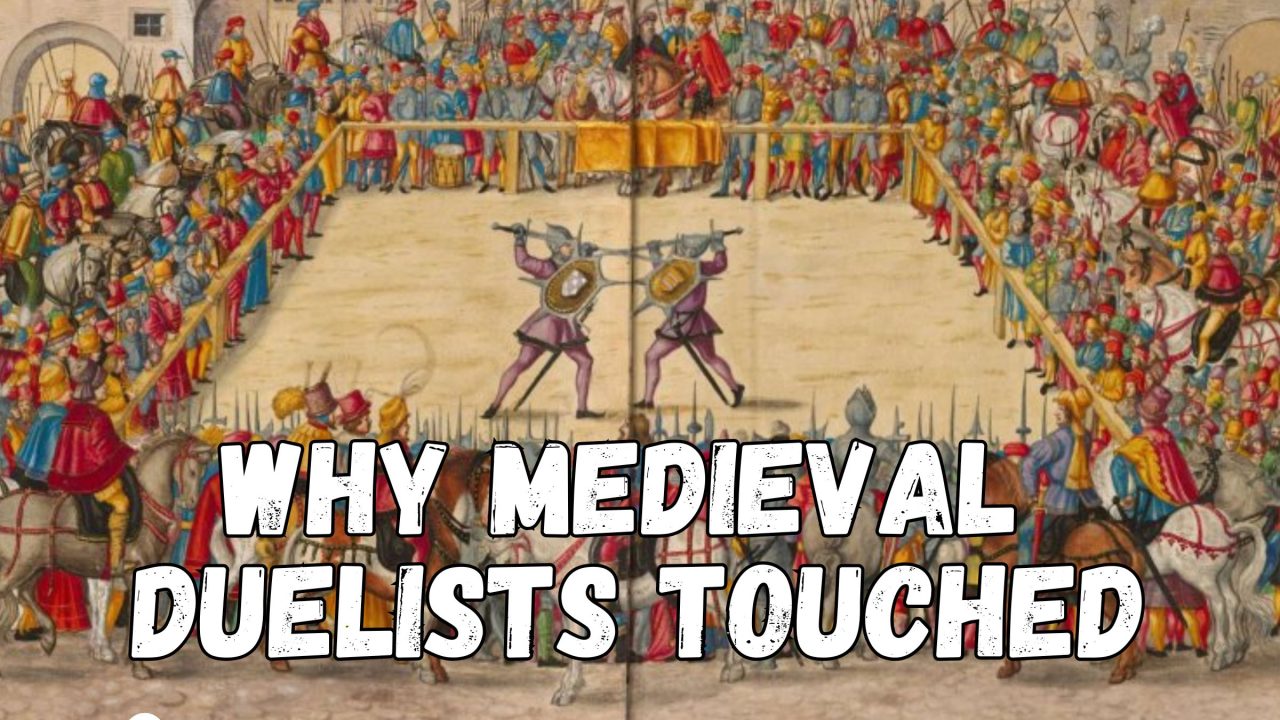
Just moments before fighting to the death, medieval duelists were required to grasp one another by the hand. It sounds like a contradiction — two men preparing to kill each other, pausing to share the most universal gesture of goodwill. But this strange ritual was no accident. It was a deliberate, carefully structured act that reveals something unexpected about how medieval society understood violence, honor, and the possibility of peace.
The handshake before a duel wasn’t a formality people rushed through. It was loaded with meaning — a final, physical opportunity to step back from the brink. And the fact that it was required, not optional, tells us a great deal about the world these fighters inhabited.
Scholars studying the history of medieval combat have increasingly turned their attention not just to the weapons and wounds, but to the rituals surrounding violence — the gestures, the ceremonies, and the emotional frameworks that governed how conflict was supposed to unfold. What they’ve found is a culture far more emotionally complex than the popular image of brutal medieval warfare tends to suggest.
Why Medieval Duels Were About More Than Just Fighting
The judicial duel — combat used to settle legal disputes or accusations — was a recognized institution in medieval Europe. It wasn’t simply two angry men hacking at each other in a field. It was a formal proceeding, embedded in legal and religious frameworks, with rules that governed every stage of the encounter.
Researcher Lorris Chevalier, writing for Medievalists.net, approaches this subject through the lens of the history of emotions — a growing scholarly field that examines how societies in the past structured, managed, and expressed affective experience. The key insight of this approach is that emotions aren’t just private, internal states. They operate through visible, social practices: gestures, rituals, and institutional frameworks that can be observed and analyzed even centuries later.
This means that even a source that never explicitly mentions feelings can reveal the emotional logic of a society — if you know what to look for. And the pre-duel handshake is exactly that kind of evidence.
The Handshake That Could Stop a Death
The requirement that opponents touch — specifically, grasp one another by the hand — just before combat served a precise social function. It was a structured moment of potential reconciliation. By forcing physical contact between two people who were, in theory, enemies willing to kill each other, the ritual created a final opening for peace.
The logic runs deeper than simple ceremony. In medieval culture, a handshake carried real weight. It was a gesture of agreement, trust, and human connection. Requiring it at the very edge of lethal combat wasn’t ironic — it was intentional. The gesture acknowledged that the two men standing opposite each other were still human beings capable of choosing a different path, even at the last possible moment.
This reflects what scholars in the history of emotions describe as the social management of affect — the idea that societies develop strategies not just to express emotions, but to direct them, contain them, and sometimes redirect them entirely. The pre-duel handshake was one such strategy: a ritualized attempt to mobilize the possibility of reconciliation precisely when violence seemed most inevitable.
What This Tells Us About Medieval Attitudes Toward Violence
The ritual complicates the familiar picture of medieval people as casually brutal or indifferent to bloodshed. In reality, the formal structures surrounding judicial combat suggest a society that was deeply invested in regulating violence — not eliminating it, but ensuring it followed rules that preserved social order and left room for alternatives.
The scholarly approach Chevalier draws on emphasizes that emotions in historical contexts cannot be treated as straightforward, transparent realities. They are always mediated — shaped by systems of representation, social coding, and cultural transmission. What a gesture meant to a medieval duelist was not necessarily what the same gesture would mean today.
That’s what makes the pre-duel handshake so revealing. It wasn’t just a nicety. It was a socially coded act, understood by everyone present to carry specific implications about honor, obligation, and the possibility of peace. Ignoring it, or refusing it, would have communicated something very specific about the person who refused.
| Aspect of the Pre-Duel Ritual | What It Reveals |
|---|---|
| Physical contact between opponents required | Combat was embedded in social and human frameworks, not purely adversarial |
| Gesture recognized as an opportunity for peace | Medieval society structured violence with formal off-ramps |
| Ritual was mandatory, not optional | Emotional management was institutionalized, not left to individual choice |
| Studied through history of emotions methodology | Gestures and rituals can reveal affective dynamics even when texts are silent |
Why Historians Are Paying Closer Attention to Gestures Like This
The renewed scholarly interest in the history of emotions has generated substantial debate over the past few decades. The central methodological challenge is significant: how do you study feelings that no one directly recorded? How do you get at the emotional interior of people who lived centuries ago and left behind only legal documents, chronicles, and rulebooks?
The answer, increasingly, is to focus not on trying to access inner states directly — which is impossible — but on analyzing observable practices. Gestures. Rituals. Institutional requirements. These are the traces that emotions leave in the historical record. They show us how societies perceived, structured, and mobilized affective experience in ways that shaped real behavior.
The pre-duel handshake is a perfect example of this kind of evidence. No medieval writer needed to explain what it meant for two men about to fight to the death to clasp hands. Everyone in that culture already knew. Which is precisely why scholars today have to work carefully to recover what that knowledge contained.
The Bigger Picture This Research Opens Up
What this line of research ultimately suggests is that the boundary between violence and peace in medieval society was more permeable — and more carefully managed — than we often assume. Combat wasn’t simply unleashed. It was structured, ritualized, and surrounded by moments designed to give it meaning and, where possible, prevent it entirely.
The handshake before the duel wasn’t a contradiction. It was the point. A society that required enemies to touch before they fought was a society that had not given up on the idea that even in the worst moments, human connection remained possible — and worth attempting.
That’s a surprisingly resonant idea, and one that the dry language of legal and ceremonial records from the Middle Ages turns out to preserve quite vividly, once you know how to read it.
Frequently Asked Questions
Why were medieval duelists required to touch or shake hands before fighting?
The gesture served as a final, structured opportunity for reconciliation — a socially coded act that acknowledged the possibility of peace even at the very edge of lethal combat.
What is the history of emotions, and how does it relate to medieval duels?
The history of emotions is a scholarly field that examines how societies structured and managed affective experience through visible practices like gestures and rituals, rather than trying to access private internal feelings directly.
Was the pre-duel handshake optional or required?
According to
Who is researching this topic?
Lorris Chevalier is the researcher credited in
Does this mean medieval people were less violent than we think?
Not necessarily less violent, but the evidence suggests medieval society invested heavily in regulating and ritualizing violence — building in formal moments and gestures designed to contain it or offer alternatives.
Can historians really learn about emotions from gestures and rituals alone?
Scholars in this field argue that observable practices — gestures, ceremonies, institutional requirements — reveal how emotions operated socially, even when written sources say nothing explicitly about feelings.

Leave a Reply