
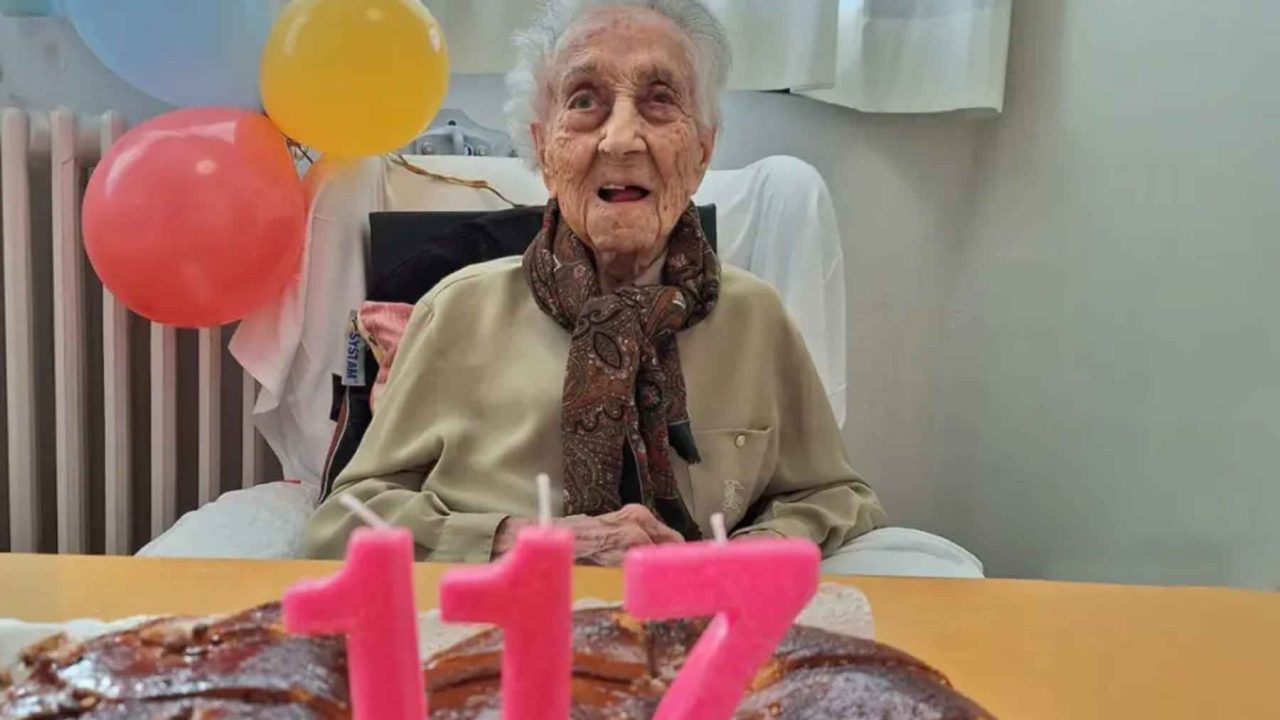
Her cells were behaving like those of a woman in her 90s — but her birth certificate said 117. That gap between biological age and calendar age may be the most important thing scientists have learned about human longevity in years.
Researchers have completed a sweeping genetic and biological analysis of Maria Branyas Morera, who became the world’s oldest known person before her death at 117. What they found challenges one of the most deeply held assumptions about aging: that growing old and growing sick are essentially the same process.
They are not — at least, they weren’t for her. And understanding why could reshape how scientists think about the biology of human aging.
What Scientists Actually Did — and Why It’s Different This Time
This wasn’t a standard genetic test. Researchers at the Josep Carreras Leukaemia Research Institute used what’s called a multiomics approach — an unusually comprehensive biological read that pulls together multiple layers of information from a single person’s body at once.
They analyzed samples from her blood, saliva, urine, and stool. From those samples, they mapped her genome, epigenome, metabolome, proteome, and gut microbiome. In plain terms: they looked at her DNA, the chemical tags sitting on top of it, the molecules her body was producing, the proteins in her system, and the bacteria living in her gut.
The goal was to get a complete biological portrait — not just a snapshot of one system, but a full picture of how her body was actually functioning at the cellular level.
The Numbers That Make This Story Hard to Ignore
The most striking findings came from epigenetic clocks — scientific tools that estimate a person’s biological age by reading chemical modifications on DNA. These clocks have become one of the most trusted ways to measure how fast a body is truly aging, independent of how many birthdays someone has had.
Across six different epigenetic clocks, Maria’s tissues consistently read as far younger than her actual age. A separate clock based on ribosomal DNA reinforced the same conclusion.
| Measurement Method | Finding |
|---|---|
| Six epigenetic clocks (blood and tissues) | Biological age estimated 10 to 30 years younger than chronological age |
| Ribosomal DNA clock | Cells estimated approximately 23 years younger than chronological age |
| Typical female life expectancy in Catalonia | Around 86 years |
| Years Maria lived beyond regional average | More than 30 years |
Those numbers are hard to dismiss. Thirty years beyond average life expectancy in her region, and yet her cells were still behaving as if she had decades left in them. She also avoided cancer, dementia, and other common age-related diseases until the very end of her life.
The Disturbing Idea at the Center of This Research
Here’s the part that should make you stop and think. Most people assume that aging and disease are essentially bundled together — that as the body gets older, it inevitably breaks down, accumulates damage, and becomes vulnerable to illness. That’s the standard model.
Maria Branyas Morera’s biology suggests that model may be incomplete. Her case raises the possibility that the body’s internal clock — the rate at which cells actually age at a molecular level — can run significantly slower than the calendar does. And when it does, the usual diseases of old age may be delayed or avoided entirely.
Researchers describe this as a simple conclusion that is harder to ignore: her cells looked and behaved as if they were far younger than her real age. That distinction between biological age and chronological age is not just academic. It implies that the diseases we associate with being old may be less about time passing and more about what’s happening inside the cell.
That’s a genuinely unsettling reframe. It suggests that aging — real aging, the kind that kills you — may be more malleable than we assumed.
Why Her Case Stands Apart From Other Longevity Research
Supercentenarians — people who live past 110 — are extraordinarily rare, which makes studying them difficult. But Maria’s case is notable not just for how long she lived, but for how she lived. She remained in relatively good health for the vast majority of those 117 years, avoiding the cascade of chronic illnesses that typically mark extreme old age.
The multiomics approach used by the Josep Carreras team gave researchers an unusually detailed window into why that might have been. Rather than looking at one biological marker in isolation, they were able to see how multiple systems — genetic, epigenetic, metabolic, microbial — were all functioning together. That kind of comprehensive biological profile on a person of her age is exceptionally rare.
For her home region of Catalonia, where women typically live to around 86, she surpassed the average by more than three decades. That gap alone makes her biology worth studying. The fact that her cells appear to have aged at a fundamentally slower rate makes the findings genuinely significant.
What This Means for the Science of Aging
The researchers’ findings don’t offer a simple roadmap to living past 100. But they do sharpen the scientific conversation around what biological aging actually is — and whether it can be measured, tracked, or potentially slowed.
Epigenetic clocks are already being used in aging research to test whether certain interventions — diet, exercise, medical treatments — can shift a person’s biological age. Maria’s case provides an extreme natural data point: a human body that, by every molecular measure available, aged at a slower rate than almost anyone else on record.
Whether that was genetic, environmental, or some combination of both is a question the research raises more than it answers. But the underlying message is clear. The number of years you’ve been alive and the age of your cells are not always the same number — and that difference may be the most important thing science learns about longevity in the years ahead.
Frequently Asked Questions
Who was Maria Branyas Morera?
She was a woman who lived to 117 years old and became the subject of a major biological study on aging conducted by researchers at the Josep Carreras Leukaemia Research Institute.
What is a multiomics approach?
It’s a comprehensive scientific method that analyzes multiple biological systems at once — in this case, her genome, epigenome, metabolome, proteome, and gut microbiome — using samples from blood, saliva, urine, and stool.
What did epigenetic clocks show about her biological age?
Across six different epigenetic clocks, her tissues read as 10 to 30 years younger than her actual age, with a ribosomal DNA clock suggesting her cells were approximately 23 years younger.
Did she suffer from age-related diseases?
According to the research, she avoided cancer, dementia, and other common age-related diseases until the very end of her life.
How much longer did she live than the average woman in her region?
Women in Catalonia typically live to around 86. Maria lived more than 30 years beyond that regional average.
Does this research explain how to live longer?
The study does not offer a direct roadmap to extended life, but it provides important evidence that biological age and chronological age can diverge significantly — a finding that may inform future longevity research.


Leave a Reply