
“`html
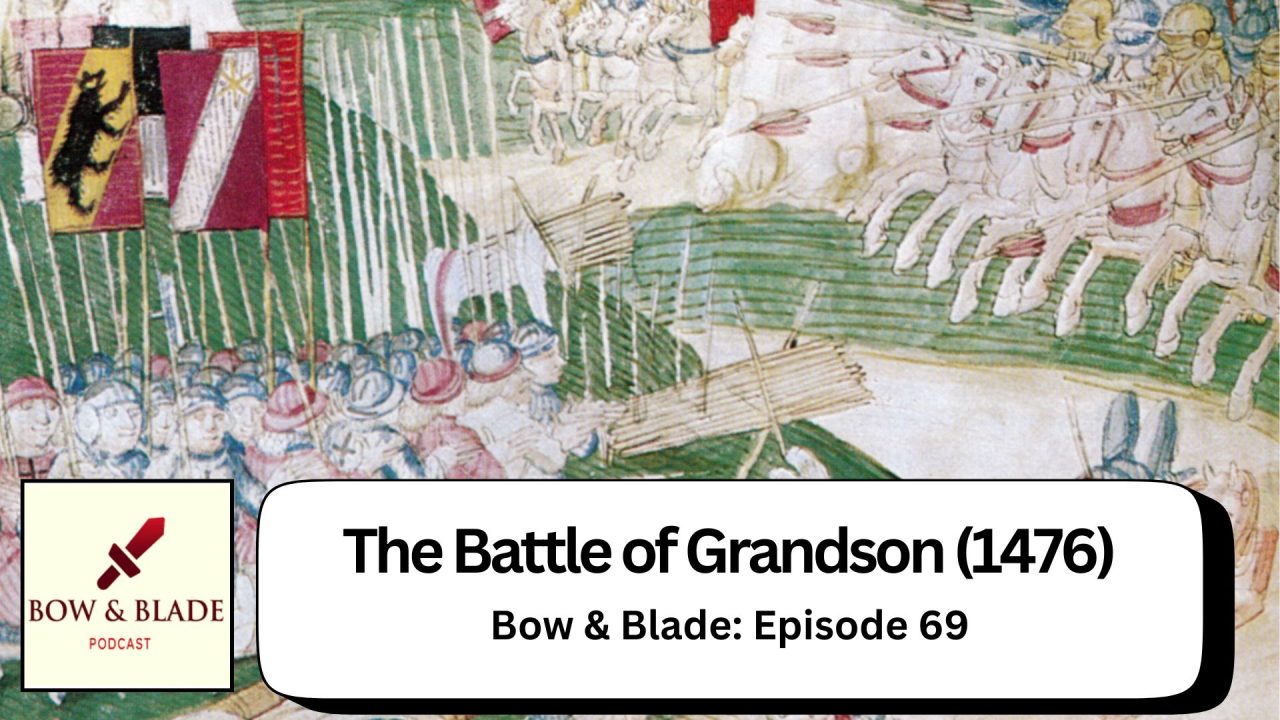
In the winter of 1476, one of Europe’s most ambitious rulers marched his formidable army into Swiss territory — and walked straight into a military disaster that would help unravel his entire empire. The Battle of Grandson, fought on March 2, 1476, stands as one of the most consequential clashes of the late medieval period, a moment when the legendary military machine of Burgundy collided with the disciplined and ferocious fighters of the Old Swiss Confederacy.
It is a battle that most casual history readers have never heard of, yet its outcome helped reshape the political map of Western Europe. Charles the Bold, Duke of Burgundy, was in the middle of an audacious project — transforming his duchy into a major European power — when the Swiss brought that ambition crashing to earth on the shores of Lake Neuchâtel.
The Battle of Grandson is the focus of a recent episode of Bow & Blade, the history podcast hosted by two prominent medieval scholars: Kelly DeVries, Professor Emeritus at Loyola University in Maryland and Honorary Historical Consultant at the Royal Armouries, and Michael Livingston, who teaches at The Citadel and has authored numerous books on medieval history.
Charles the Bold and the Making of a Burgundian Empire
By the mid-fifteenth century, the Duchy of Burgundy was no ordinary feudal territory. Under Charles the Bold, it had grown into a wealthy, well-organized state stretching across what is now eastern France, Belgium, Luxembourg, and the Netherlands. Charles had serious imperial ambitions — he wanted to turn Burgundy into a kingdom, a true rival to France and the Holy Roman Empire.
To do that, he needed military dominance. And for a time, he had it. His army was among the most modern and well-equipped in Europe, blending heavy cavalry, artillery, and professional infantry in ways that felt genuinely cutting-edge for the era.
But Charles made a critical miscalculation when he turned his attention toward the Swiss Confederacy. The Swiss were not a conventional feudal opponent. They fought in tight, disciplined formations — the famous pike squares — and had already built a reputation as some of the most effective soldiers on the continent. Underestimating them would prove catastrophic.
What the Battle of Grandson Actually Was
Grandson was not a complex tactical engagement decided by clever maneuvering. It was, in many ways, a rout. The Burgundian army, caught in difficult terrain and apparently unprepared for the speed and ferocity of the Swiss advance, collapsed. Charles escaped with his life, but he left behind an enormous quantity of treasure, artillery, and military equipment — a loss that humiliated him across Europe.
The battle was part of the broader Burgundian Wars, a series of conflicts between 1474 and 1477 in which the Swiss Confederacy, allied with various other powers, systematically dismantled Burgundian military prestige. Grandson was the first major blow. Two more defeats followed — at Murten in June 1476 and at Nancy in January 1477, where Charles himself was killed.
Together, these three battles effectively ended Burgundy as an independent power.
Key Facts About the Burgundian Wars and the Battle of Grandson
| Event | Date | Significance |
|---|---|---|
| Battle of Grandson | March 2, 1476 | First major Swiss defeat of Charles the Bold; Burgundian army routed |
| Battle of Murten | June 22, 1476 | Second decisive Swiss victory; massive Burgundian casualties |
| Battle of Nancy | January 5, 1477 | Charles the Bold killed; end of Burgundian independence |
| Burgundian Wars (full conflict) | 1474–1477 | Series of wars ending Burgundy as a major European power |
- Charles the Bold was attempting to elevate Burgundy from a duchy to a fully independent European kingdom
- The Old Swiss Confederacy was a loose alliance of cantons known for exceptionally effective infantry tactics
- Grandson was part of a sequence of three defeats that collectively destroyed Burgundian military power
- The battle took place near Lake Neuchâtel in what is now western Switzerland
Why This Battle Still Matters Centuries Later
The fall of Charles the Bold and the collapse of Burgundian power had enormous long-term consequences for European history. Without an independent Burgundy, France was able to consolidate its borders. The territories Charles had controlled were eventually absorbed into the Habsburg domains through inheritance — a shift that would fuel Franco-Habsburg rivalry for the next two centuries.
For the Swiss Confederacy, the victories of 1476 and 1477 cemented a military reputation that made Swiss mercenaries the most sought-after soldiers in Europe for generations. The pike squares that destroyed the Burgundian army at Grandson became the template for infantry warfare across the continent.
There is also something deeply instructive in how Grandson unfolded. Charles the Bold was not a fool — he was one of the most capable rulers of his era. But he consistently underestimated opponents who did not fit the conventional model of medieval warfare. The Swiss were not knights. They were not playing by the same rules. And that difference cost him everything.
Where to Learn More About the Battle of Grandson
The Bow & Blade podcast, hosted by DeVries and Livingston, covers historical battles in depth, combining academic rigor with accessible storytelling. Kelly DeVries brings decades of scholarship on medieval military history, while Michael Livingston contributes expertise in medieval literature and history alongside a gift for making complex events approachable.
Their episode on Grandson sits alongside other Bow & Blade discussions of pivotal medieval engagements, including the Battle of Tours in 732, the Battle of Verneuil in 1424, and the Battle of Hastings — battles that, like Grandson, turned on moments when the expected outcome simply did not materialize.
For anyone curious about the military and political history of late medieval Europe, Grandson is an essential episode in a story that tends to get overshadowed by better-known conflicts. It deserves far more attention than it typically receives.
Frequently Asked Questions
What was the Battle of Grandson?
The Battle of Grandson, fought on March 2, 1476, was a major engagement during the Burgundian Wars in which the Swiss Confederacy decisively defeated the army of Charles the Bold, Duke of Burgundy.
Who was Charles the Bold?
Charles the Bold was the Duke of Burgundy who sought to transform his duchy into a major independent European power before his military campaigns against the Swiss ended in a series of catastrophic defeats.
Who hosts the Bow & Blade podcast?
The podcast is hosted by Kelly DeVries, Professor Emeritus at Loyola University in Maryland and Honorary Historical Consultant at the Royal Armouries, and Michael Livingston, who teaches at The Citadel and has written numerous books on medieval history.
What were the Burgundian Wars?
The Burgundian Wars were a series of conflicts fought between 1474 and 1477 between Charles the Bold’s Burgundy and the Old Swiss Confederacy and its allies, ending with the destruction of Burgundian military power and the death of Charles himself.
What happened to Charles the Bold after Grandson?
Charles survived the Battle of Grandson but suffered two further defeats — at Murten in June 1476 and at Nancy in January 1477, where he was killed in battle, effectively ending the Duchy of Burgundy as an independent power.
Where can I listen to the Bow & Blade episode on Grandson?
The episode is available through Medievalists.net, where the Bow & Blade podcast is hosted and archived alongside related historical content.</p

Leave a Reply