
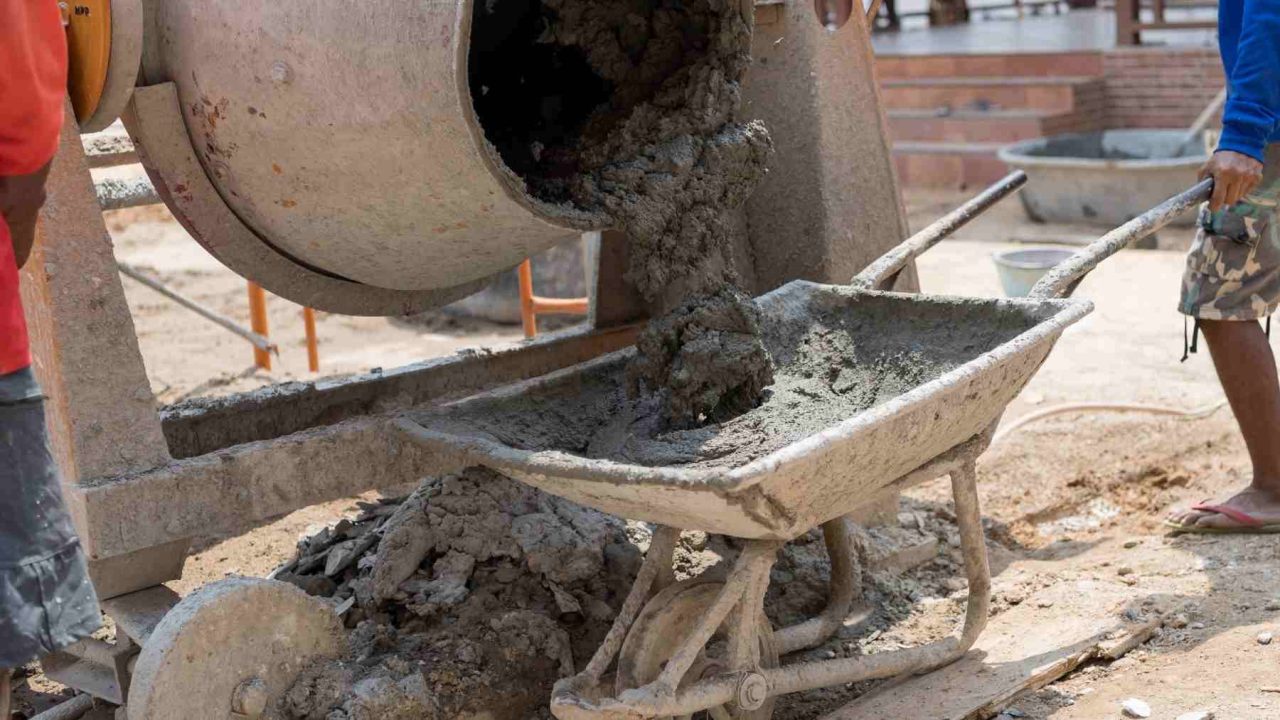
Cement is responsible for somewhere between 5 and 8 percent of all human-caused carbon dioxide emissions on Earth — and that number has barely budged in decades, despite every climate pledge and green building trend you’ve heard about. Now a research team at the University of Miami thinks an unlikely material pulled from the coastline might finally give the construction industry a way forward.
Their idea centers on algae-derived biochar — a carbon-rich material made by heating seaweed at high temperatures with limited oxygen. The researchers are exploring whether this biochar can partially replace cement in concrete, and whether the resulting material can actually absorb and store carbon dioxide as it hardens. If that works at scale, it would turn one of the planet’s biggest climate problems into something closer to a climate solution.
That’s a significant “if.” But the direction of the research reflects a growing urgency around an industry that has long been treated as too difficult, too embedded, and too essential to meaningfully reform.
Why Cement Is One of the Hardest Climate Problems to Solve
Concrete is so common that most people stop seeing it. It’s under your feet, holding up the bridges you cross, lining the seawalls protecting coastal cities. It is, by some measures, the most widely used manufactured material on the planet.
But the real climate damage happens before the concrete is ever poured. It starts with cement — the binding agent that holds sand and gravel together — and the process of making it is doubly destructive. First, producing cement requires intense, sustained heat, which burns enormous amounts of fossil fuel. Second, the chemical transformation of limestone that occurs during production releases carbon dioxide as an unavoidable byproduct. You can switch to cleaner energy and still get emissions from the chemistry itself.
That’s why the cement and construction sector is classified as “hard to abate” — a technical term that essentially means standard decarbonization approaches don’t fully apply. Electrifying the process helps, but it doesn’t eliminate the chemical emissions locked into how cement is made.
Zoom out further and the scale becomes even more striking. The buildings and construction sector as a whole contributes roughly a third of global CO2 emissions, depending on how the accounting is done. Cement sits at the center of that number.
What the Seaweed-Based Approach Actually Involves
The University of Miami team is working on a two-part strategy. The first part is substitution — replacing a portion of traditional cement with biochar derived from algae. Biochar is already used in some agricultural and environmental applications because of its ability to store carbon rather than release it. Applying that property to construction materials is a newer idea.
The second part is what makes this research particularly ambitious: the goal isn’t just to reduce the carbon released during cement production, but to engineer a concrete that actively pulls carbon dioxide out of the air and locks it in as the material cures and hardens. That would shift concrete from a net emitter to something closer to a carbon sink.
The seaweed angle also addresses a separate coastal problem. Algae blooms have become a persistent and damaging issue in many coastal regions, clogging waterways, disrupting ecosystems, and creating cleanup headaches for local governments. Using excess algae as a raw material for biochar production could turn that waste stream into an industrial resource — addressing two problems at once.
The Numbers Behind the Problem
| Sector or Material | Estimated Share of Global CO2 Emissions |
|---|---|
| Cement production | Approximately 5–8% |
| Buildings and construction sector (overall) | Approximately one-third |
Those figures help explain why researchers and policymakers keep returning to construction as a priority. Even a modest reduction in cement’s carbon footprint — achieved at global scale — would represent one of the largest single climate interventions possible.
Who Would Feel This Change Most
The practical reach of this research extends far beyond laboratories and academic journals. Concrete is used in virtually every type of construction — residential housing, commercial buildings, roads, bridges, ports, and coastal infrastructure. Any meaningful shift in how cement is produced or what it’s made from would ripple through the entire built environment.
- Coastal communities dealing with algae overgrowth could see an economic use emerge for what is currently treated as a nuisance or environmental hazard.
- Construction companies facing increasing regulatory and investor pressure to reduce their carbon footprints would gain access to a cement alternative with a potentially negative carbon profile.
- Cities and governments trying to meet climate targets without halting infrastructure development would have a tool that doesn’t require choosing between building and reducing emissions.
- Climate scientists and policymakers tracking hard-to-abate sectors would be watching closely to see whether the material performs as hoped in real-world conditions.
The challenge, as with most materials science breakthroughs, is the distance between a promising laboratory result and a product that can be manufactured, certified, and deployed at the scale the construction industry demands.
What Comes Next for This Research
The University of Miami team is still in active research and development. What is confirmed is the core concept: using algae-derived biochar as a partial cement replacement, combined with a mechanism for carbon absorption during the curing process.
The broader field of low-carbon cement alternatives — including materials using industrial byproducts, volcanic ash, and other substitutes — has been growing steadily. Algae biochar represents a newer and potentially more scalable direction, particularly given the abundance of coastal algae and the dual environmental benefit of using it.
Whether this approach eventually displaces a meaningful share of traditional cement production depends on factors that go well beyond the chemistry: manufacturing costs, construction industry adoption, building codes, and the pace of climate regulation in major economies. The science is the starting point. The harder work, as usual, comes after.
Frequently Asked Questions
What is algae-derived biochar and how is it made?
Biochar is a carbon-rich material produced by heating organic matter — in this case, seaweed or algae — at high temperatures with limited oxygen. The process locks carbon into a stable solid form rather than releasing it into the atmosphere.
Which university is leading this research?
The research is being conducted by a team at the University of Miami, according to
How much of global CO2 emissions does cement production cause?
Estimates commonly place cement at roughly 5 to 8 percent of global human-caused carbon dioxide emissions. The broader buildings and construction sector accounts for approximately one-third of global CO2 emissions.
Would this new concrete replace all traditional cement?
No — the current research focuses on replacing part of the cement in concrete with algae-derived biochar, not eliminating cement entirely.
Could this approach also help with coastal algae problems?
That appears to be part of the appeal. Using excess coastal algae as a raw material for biochar could address algae overgrowth while simultaneously producing a construction material with climate benefits.
When could seaweed-based cement be available commercially?
A specific commercial timeline has not been confirmed in the available source material. The research is ongoing, and significant development, testing, and regulatory steps would be required before widespread use.



Leave a Reply