
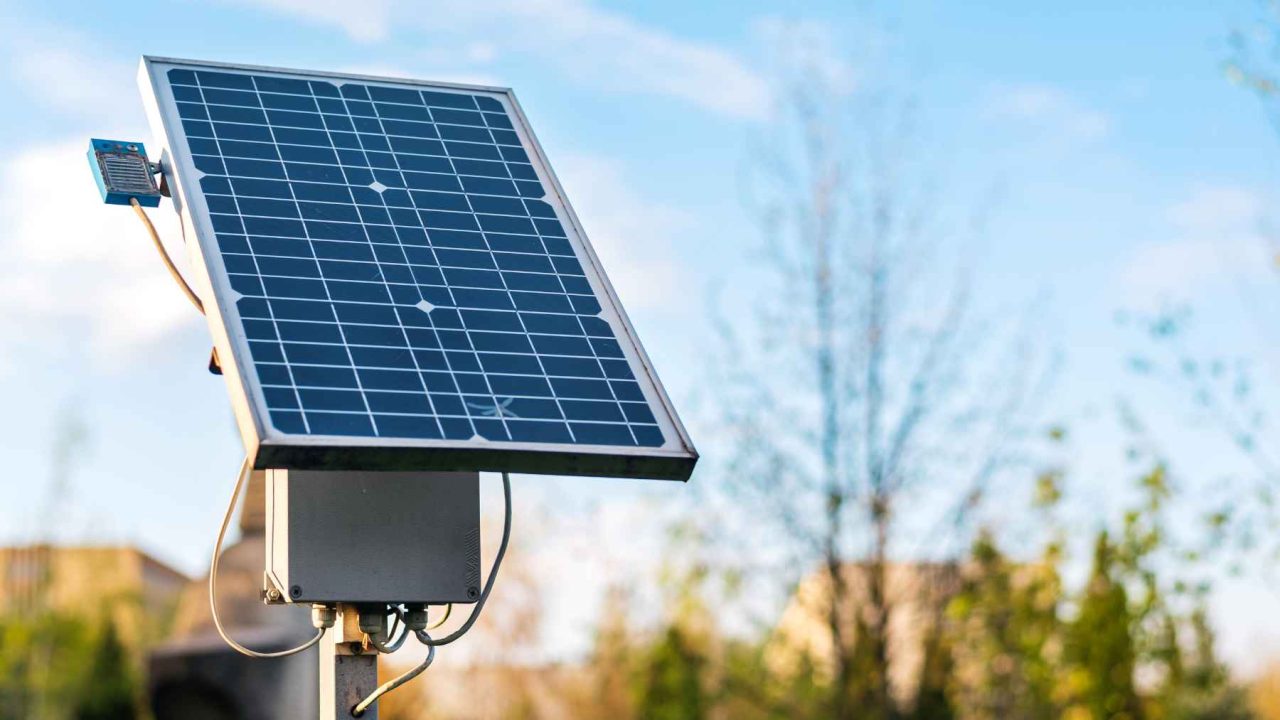
What if a solar panel could produce more usable energy than the number of light particles hitting it? That sounds like it should be impossible — and for a long time, scientists largely assumed it was. But on March 25, 2026, researchers from Kyushu University in Japan and Johannes Gutenberg University Mainz in Germany reported a laboratory result that challenges one of the most stubborn limits in solar energy science.
Their experiment achieved approximately 130% quantum yield — meaning roughly 1.3 usable excited energy states were captured for every single photon absorbed. In plain terms, they pulled more charge carriers out of light than the number of light packets that went in. That’s not a rounding error. That’s a fundamental shift in what we thought solar cells could do.
The finding doesn’t mean panels will be shipping with these specs next year. But it does crack open a door that researchers have been pushing against for decades — and the implications for solar energy’s future are hard to overstate.
Why Solar Panels Have Always Had a Hard Ceiling
A conventional solar cell works by absorbing photons — those tiny packets of light — and converting them into electrical charge. The problem is that standard silicon-based cells can only extract one unit of charge per photon, no matter how energetic that photon is. Any extra energy is essentially wasted as heat.
This ceiling is known in physics as the Shockley-Queisser limit, and it caps the theoretical efficiency of a single-junction solar cell at around 33%. Real-world panels perform well below that. The solar industry has made enormous strides in manufacturing cost and panel availability, but squeezing more electricity out of the same amount of sunlight has remained stubbornly difficult.
That’s the barrier this new research targets directly. Instead of accepting a one-photon-to-one-charge-carrier ratio, the team explored a process called singlet fission — a quantum mechanical phenomenon where a single absorbed photon can generate two separate excited states, called triplet excitons, effectively doubling the charge-generating potential of each particle of light.
What the Researchers Actually Did — and Why It’s So Hard
Singlet fission itself isn’t new. Scientists have known about it for years. The challenge has always been capturing those multiplied triplet excitons before they collapse and their energy is lost. Getting them to transfer usefully into a solar cell material has been the bottleneck holding the field back.
Associate Professor Yoichi Sasaki of Kyushu University described that challenge directly, noting that the team “needed an energy acceptor that selectively captures the multiplied triplet excitons after fission” — pointing to the precise technical hurdle that has frustrated researchers for years.
The international collaboration gave the project an unexpected advantage. Exchange student Adrian Sauer brought materials from his home laboratory at Johannes Gutenberg University Mainz that had been studied extensively there but hadn’t been applied in this context. That cross-pollination of existing research from two different scientific traditions turned out to be the key ingredient.
The result: a quantum yield of approximately 130%, confirmed in a lab setting on March 25, 2026.
Breaking Down What 130% Quantum Yield Actually Means
| Metric | Standard Solar Cell | New Research Result |
|---|---|---|
| Quantum yield | Up to ~100% | ~130% |
| Excited states per photon | 1 | ~1.3 |
| Key mechanism | Single-junction absorption | Singlet fission (triplet exciton capture) |
| Research stage | Commercial deployment | Laboratory result |
| Institutions involved | — | Kyushu University (Japan) & Johannes Gutenberg University Mainz (Germany) |
- A quantum yield above 100% means more charge carriers are generated than photons absorbed — something conventional solar physics does not allow for.
- The mechanism relies on singlet fission, where one photon produces two triplet excitons instead of one.
- The breakthrough came from successfully capturing those excitons with a selective energy acceptor material — the step that had previously eluded researchers.
- The collaboration between Japanese and German institutions was sparked in part by materials an exchange student brought from his home lab.
What This Could Mean for the Solar Panels of the Future
Right now, the rooftop panels most people are familiar with convert roughly 20–22% of incoming sunlight into electricity under real-world conditions. The theoretical maximum for a standard silicon cell sits around 33%. This research points toward a path where that ceiling gets meaningfully raised — not by improving manufacturing, but by changing the fundamental physics of how cells interact with light.
If singlet fission can be reliably harnessed in a practical solar cell design, panels could potentially extract significantly more energy from the same amount of sunlight hitting the same surface area. That matters enormously — both for the economics of solar power and for how much land or roof space a given installation requires.
The result is still a laboratory finding. Translating quantum yield measurements into commercially viable solar panels involves years of materials science, engineering, and durability testing. But the fact that researchers cleared this particular hurdle — capturing multiplied triplet excitons efficiently — removes one of the biggest theoretical objections to singlet fission-based solar cells.
What Comes Next for This Research
The immediate next steps involve understanding how reliably this result can be reproduced and whether the materials involved can be scaled up or integrated into existing solar cell architectures. The collaboration between Kyushu University and Johannes Gutenberg University Mainz demonstrated that unexpected scientific connections — like an exchange student carrying materials from one lab tradition into another — can accelerate progress in ways that planned research programs sometimes don’t.
Researchers in the broader singlet fission field will now be looking closely at how the team’s energy acceptor approach can be adapted or improved. The 130% quantum yield figure gives the field a concrete, published benchmark to build on — and a clear proof of concept that this approach works, at least under controlled laboratory conditions.
Solar energy has already transformed the global energy landscape over the past decade through falling costs and rapid deployment. A technology that extracts more from each photon of sunlight could push that transformation even further — making every panel that gets installed in the future more productive than anything available today.
Frequently Asked Questions
What does 130% quantum yield mean in simple terms?
It means the experiment captured approximately 1.3 usable energy carriers for every single photon of light absorbed — more than one charge-generating event per particle of light, which exceeds what conventional solar cells can achieve.
Which institutions conducted this research?
The research was a collaboration between Kyushu University in Japan and Johannes Gutenberg University Mainz in Germany, with results reported on March 25, 2026.
What is singlet fission and why does it matter?
Singlet fission is a quantum process where a single absorbed photon generates two excited states — called triplet excitons — instead of one, effectively doubling the charge-generating potential of each photon.
Who is Associate Professor Yoichi Sasaki?
Yoichi Sasaki is a researcher at Kyushu University who was involved in the study and described the challenge of selectively capturing multiplied triplet excitons after fission as the key technical bottleneck the team addressed.
Will this technology appear in consumer solar panels soon?
This result is currently a laboratory finding. Commercial applications would require extensive additional research, engineering, and testing — a process that typically takes many years.
What role did exchange student Adrian Sauer play?
Adrian Sauer brought materials from his home laboratory at Johannes Gutenberg University Mainz that had not previously been applied in this research context, and that contribution proved important to the collaboration’s success.


Leave a Reply