
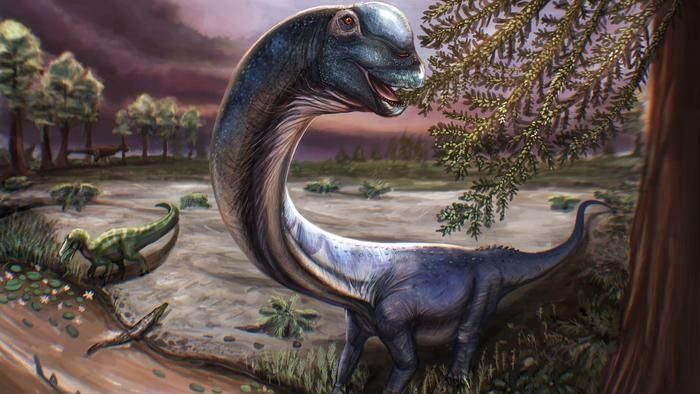
A creature the length of three school buses, weighing as much as five African elephants, once roamed a semi-arid landscape in what is now northeastern Thailand — and scientists have only just identified it. Meet Nagatitan chaiyaphumensis, the largest long-necked dinosaur ever found in Southeast Asia, and a species that researchers are calling the “last titan” of the region.
The discovery, published May 14 in the journal Scientific Reports, sheds new light on a chapter of prehistoric life in Asia that remains far less understood than its South American or North American counterparts. For paleontologists, this find is a significant piece of a much larger puzzle.
The fossils were first spotted in 2016 by a local resident near a drying pond in the Chaiyaphum province of northeastern Thailand — a chance observation that eventually led to one of the most remarkable dinosaur discoveries in the region’s history.
What Makes Nagatitan chaiyaphumensis So Significant
Nagatitan chaiyaphumensis belongs to a group of dinosaurs known as sauropods — the long-necked giants that dominated large swaths of the planet during the Mesozoic Era. This particular specimen is notable not just for its size, but for what it tells us about the diversity of prehistoric life in Southeast Asia.
The dinosaur lived between 120 million and 100 million years ago, during the Early Cretaceous period. At that time, the region it called home was a semi-arid environment — quite different from the lush tropical landscape of modern Thailand.
The fossils were recovered from the Khok Kruat Formation in Chaiyaphum province. This geological formation has previously yielded other dinosaur finds, but nothing on the scale of Nagatitan. The name itself reflects both its mythological roots and its geographic origin — combining “Naga,” a serpent deity from Southeast Asian legend, with the Latin word for giant.
“Our dinosaur is big by most people’s standards — it likely weighed at least 10 tonnes more than Dippy the Diplodocus (Diplodocus carnegii),” said study first author Thitiwoot Sethapanichsakul, a paleontologist at University College London.
Sethapanichsakul was quick to add important context, however. While enormous by most measures, Nagatitan is not the largest sauropod ever discovered. It weighs less than half as much as its South American relatives Patagotitan and Argentinosaurus — the true titans of the dinosaur world.
The Numbers Behind the Discovery
To understand just how large this animal was — and how it compares to other famous sauropods — the key figures tell the story clearly.
| Dinosaur | Estimated Length | Estimated Weight | Region |
|---|---|---|---|
| Nagatitan chaiyaphumensis | ~90 feet (27 meters) | ~30 tons (27 metric tons) | Southeast Asia (Thailand) |
| Diplodocus carnegii (“Dippy”) | Approx. 85 feet | ~20 tons (estimated) | North America |
| Patagotitan / Argentinosaurus | 100+ feet | 70+ tons (estimated) | South America |
Key confirmed details about Nagatitan chaiyaphumensis:
- Estimated length: approximately 90 feet (27 meters)
- Estimated weight: around 30 tons (27 metric tons)
- Time period: 120 million to 100 million years ago
- Discovery location: Khok Kruat Formation, Chaiyaphum province, northeastern Thailand
- Initial discovery: 2016, by a local resident near a drying pond
- Classification: Largest sauropod found in Southeast Asia to date
- Study published: May 14, in the journal Scientific Reports
- Lead researcher: Thitiwoot Sethapanichsakul, University College London
Why This Find Matters Beyond the Size Record
Record-breaking size naturally grabs attention, but the deeper significance of this discovery lies in what it reveals about prehistoric biodiversity in Southeast Asia. The region has historically been underrepresented in the global fossil record — partly due to geological conditions, and partly because large-scale paleontological excavations there are far less common than in places like the American West or Patagonia.
Finding a sauropod of this scale in Thailand suggests that the continent of Asia supported its own lineage of giant long-necked dinosaurs, evolving somewhat independently from their massive South American cousins. The “last titan” label is telling — it implies this was among the final representatives of a once-widespread group that eventually disappeared from the region.
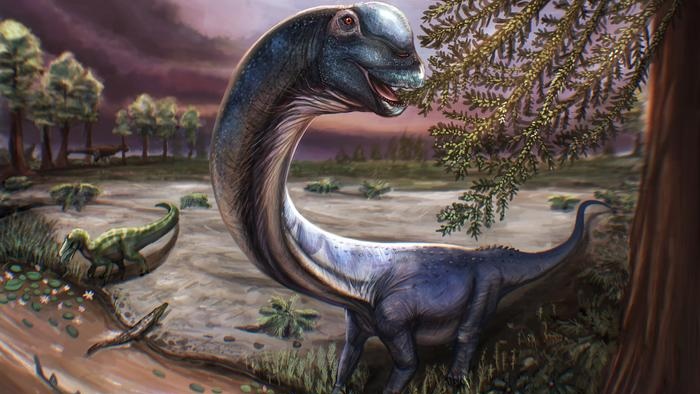
The semi-arid environment the animal lived in also raises interesting questions for researchers. Large sauropods typically required enormous quantities of vegetation to sustain their bulk. How they thrived in a drier landscape — and what plant life supported them — is a question that future research will likely explore.
The fact that fossils were found in a bone bed near what was once a pond also hints at the ecological conditions of the time. Animals in semi-arid regions often congregated near water sources, which can lead to the natural accumulation of remains in one location — creating exactly the kind of bone bed that made this discovery possible.
What Researchers Are Looking for Next
The initial find in 2016 set off years of careful excavation and analysis before the study could be published in 2025. That timeline reflects the painstaking nature of paleontological work — fossils must be carefully extracted, cleaned, catalogued, and compared against the global record before a new species can be formally named and described.
With Nagatitan now officially on the books, researchers will likely look to the Khok Kruat Formation for additional specimens. A single find, however impressive, rarely tells the complete story of a species. More fossils could reveal details about growth stages, social behavior, and how this animal fit into the broader ecosystem of Cretaceous Southeast Asia.
The discovery also raises the possibility that other large, undescribed sauropods may still be waiting beneath the soils of Thailand and neighboring countries. Southeast Asia remains one of the more promising — and underloved — frontiers in dinosaur paleontology.
Frequently Asked Questions
What is Nagatitan chaiyaphumensis?
It is a newly identified species of sauropod — a long-necked dinosaur — discovered in northeastern Thailand. It is the largest sauropod found in Southeast Asia to date.
How big was Nagatitan chaiyaphumensis?
The dinosaur is estimated to have been about 90 feet (27 meters) long and weighed around 30 tons (27 metric tons).
When and where were the fossils found?
A local resident first spotted the fossils in 2016 near a drying pond in Chaiyaphum province, northeastern Thailand. They were recovered from the Khok Kruat Formation.
Is it the largest dinosaur ever discovered?
No. While it outweighs the famous Diplodocus carnegii by at least 10 tonnes, it weighs less than half as much as South American giants like Patagotitan and Argentinosaurus.
When did this dinosaur live?
Nagatitan chaiyaphumensis lived between approximately 120 million and 100 million years ago, during the Early Cretaceous period, when the region was semi-arid.
Where was the study published?
The study was published on May 14 in the journal Scientific Reports, led by paleontologist Thitiwoot Sethapanichsakul of University College London.


Leave a Reply