
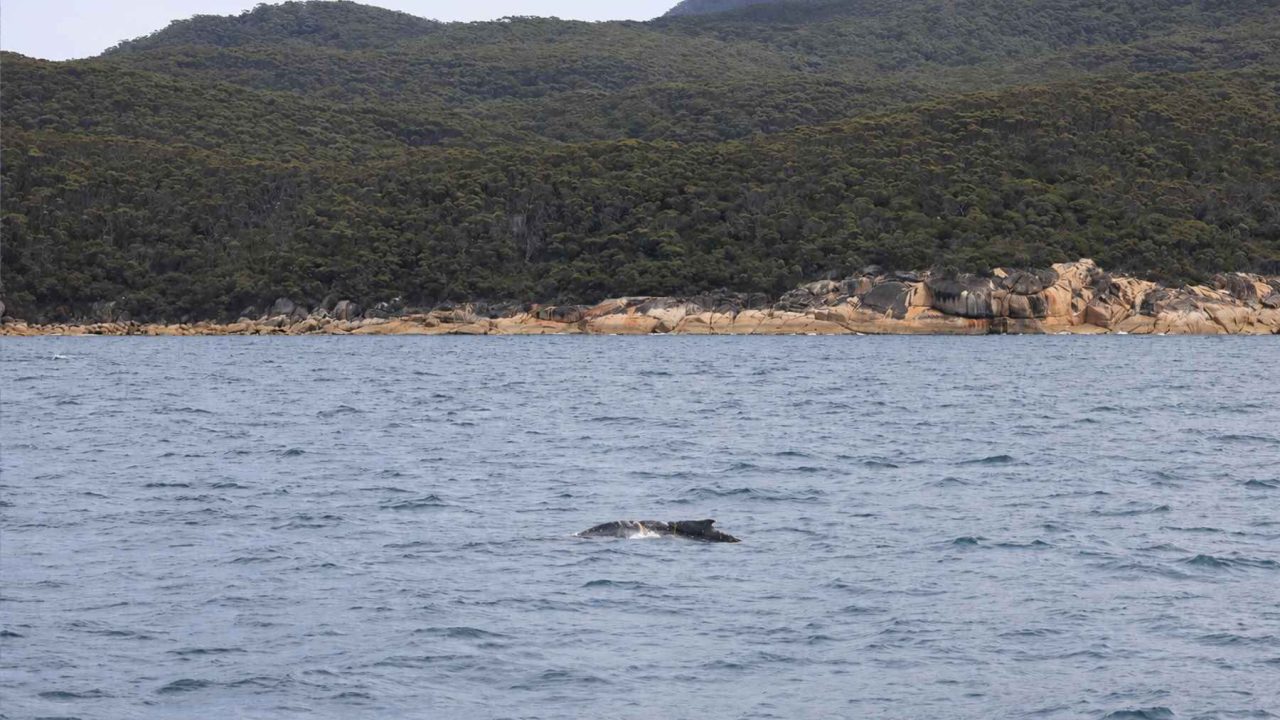
A thick rope wrapped around the base of a juvenile humpback whale’s dorsal fin — spotted by passengers on a tourist boat off Victoria’s Wilsons Promontory — has triggered an active search-and-rescue operation along Australia’s southeast coast. Aircrews are now scanning the water from above, hoping to relocate the animal before the entanglement causes further harm.
What makes this sighting particularly striking is not just the rope itself, but the animal’s condition. The young whale already appears underweight, and rescue officials are racing to find it before that drag — the constant pull of a rope through moving water — tips the balance against it.
For anyone on the water in the area, authorities are urging a simple but critical action: keep your distance and report any sightings immediately.
What Happened Off Wilsons Promontory
The sighting came from a tourist vessel operating near Wilsons Promontory, a rugged coastal headland in Victoria that sits at the southernmost tip of mainland Australia. Passengers on board spotted the juvenile humpback and noticed the rope clearly wound around the base of its dorsal fin — not loosely draped, but wrapped in a way that poses a real physical threat.
Rescue crews were alerted and are now working to relocate the whale so they can attempt a safe disentanglement. That process is far more complicated than it sounds. Approaching a whale at sea — especially a stressed one — requires precise coordination, specialized equipment, and the right conditions. Aircrews searching from above are trying to give ground teams the location intelligence they need to make that attempt possible.
Officials have also noted that the whale’s unique markings could help identify it as a rare or previously catalogued individual — which is part of why aerial observation is so valuable here. Humpback whales carry natural identifying patterns on their flukes and bodies that researchers use to track individuals across years and migration routes.
Why a Rope Is So Dangerous for a Young Whale
It might be easy to look at a photograph of a rope on a whale and underestimate the threat. But marine rescue experts consistently note that rope entanglement is one of the most serious hazards facing large whales in coastal waters.
A line that appears manageable on a dock behaves very differently once it is caught on a moving animal. As the whale swims, the rope tightens, creates drag, and can cut into tissue over time. For an adult whale in peak condition, that extra resistance is a serious burden. For a juvenile that already appears underweight, it can be catastrophic — slowing the animal down, preventing it from feeding efficiently, and ultimately exhausting it.
Officials have noted that the drag created by entanglement gear can be the difference between a young whale catching up with its pod and falling dangerously behind.
The Timing Adds Another Layer of Concern
Humpback whales along Australia’s east coast follow a well-documented seasonal migration pattern, and the timing of this sighting raises additional questions about the animal’s circumstances.
| Migration Phase | Typical Timing | Direction |
|---|---|---|
| Northbound migration (peak) | June through August | Toward warmer waters |
| Southbound return | September through November | Toward Antarctic feeding grounds |
| Total annual migration distance | Approximately 6,200 miles | Round trip |
According to a fact sheet from Australia’s Department of Climate Change, Energy, the Environment, and Water, the northbound migration is strongest from June through August, with most whales returning toward Antarctic feeding grounds from September through November. The timing of any individual whale’s movement can shift depending on water temperature and food availability.
A juvenile humpback spotted in this condition near Victoria raises the question of whether this animal is off-schedule, separated from others, or already weakened to the point where normal migration patterns have been disrupted. None of those possibilities are reassuring.
What Happens If the Whale Is Found
The aerial search is the critical first step. Without a confirmed location, rescue teams cannot safely attempt disentanglement. Once aircrews spot the animal, they can guide vessels to its position and assess whether a hands-on approach is feasible.
Disentanglement operations at sea involve trained responders using specialized cutting tools designed to sever rope without harming the whale. The work is done from small vessels, often while the whale is still moving, and it requires the animal to remain relatively calm — something that is never guaranteed.
- Aircrews are currently conducting aerial searches to relocate the whale
- Rescue teams are standing by for a disentanglement attempt once the animal is found
- Officials are asking anyone on the water near Wilsons Promontory to report sightings immediately
- Boaters are urged to keep a safe distance and avoid approaching the whale
- The whale’s natural markings may help identify it as a known or rare individual
The public reporting element matters more than many people realize. Whale rescue operations often depend on civilian sightings to maintain contact with a moving animal between official search windows. A boater who spots the whale and calls it in could be the link that makes a successful rescue possible.
The Bigger Picture Behind One Entangled Whale
This case is one instance of a problem that marine conservationists have documented at scale. Fishing rope, crab pot lines, and other commercial gear left in the water pose an ongoing entanglement risk to whales migrating through busy coastal corridors. Humpbacks, with their wide-ranging migrations and tendency to travel through areas of high marine activity, are especially vulnerable.
The fact that a tourist boat made this sighting is itself a reminder of how much of this work depends on people being present and paying attention on the water. Professional monitoring programs cannot cover every stretch of coastline. Recreational boaters, tour operators, and wildlife watchers regularly serve as the first line of observation — and in cases like this one, that observation can be the difference between a rescue attempt and a whale that is never found in time.
Frequently Asked Questions
Where was the entangled humpback whale spotted?
The juvenile humpback whale was spotted off Victoria’s Wilsons Promontory by passengers on a tourist boat.
What is wrapped around the whale?
A thick rope is wrapped around the base of the whale’s dorsal fin, creating drag and posing a serious physical threat to the animal.
Why are aircrews searching from above?
Aircrews are conducting aerial searches to relocate the whale so that rescue teams on the water can attempt a safe disentanglement, and because the whale’s markings could help identify it as a rare or previously recorded individual.
When do humpback whales normally migrate along Australia’s east coast?
According to Australia’s Department of Climate Change, Energy, the Environment, and Water, the northbound migration peaks from June through August, with the return south typically occurring from September through November.
How far do humpback whales migrate each year?
The annual migration can reach approximately 6,200 miles, with timing influenced by water temperature and food availability.
What should boaters do if they see the whale?
Officials are urging anyone on the water in the area to keep their distance from the whale and report any sightings as quickly as possible to assist the ongoing rescue effort.



Leave a Reply