
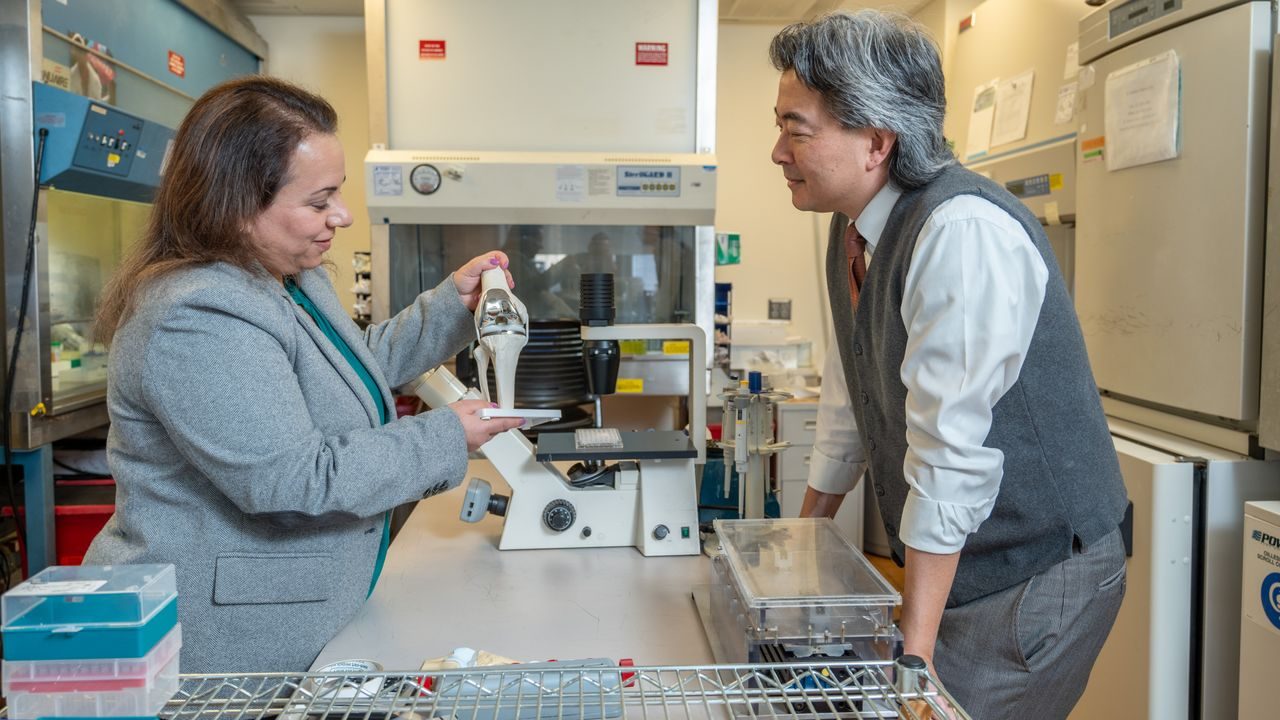
What if a knee replacement could actually become part of you — not just a mechanical substitute, but living tissue that integrates with your body the way natural bone and cartilage do? That’s the question driving a team of researchers at Columbia University and the University of Missouri, who are developing what they call a “living” knee implant that could fundamentally change how doctors treat severe knee damage.
The project, named NOVAKnee, is built around a 3D-printed biodegradable scaffold packed with stem-cell-derived bone and cartilage. The goal is straightforward but ambitious: create an implant that doesn’t just sit inside your body, but gradually becomes part of it. The researchers behind the project — Nadeen Chahine and Clark Hung — believe this technology could offer a genuinely better option for patients who currently have limited choices when their knees fail.
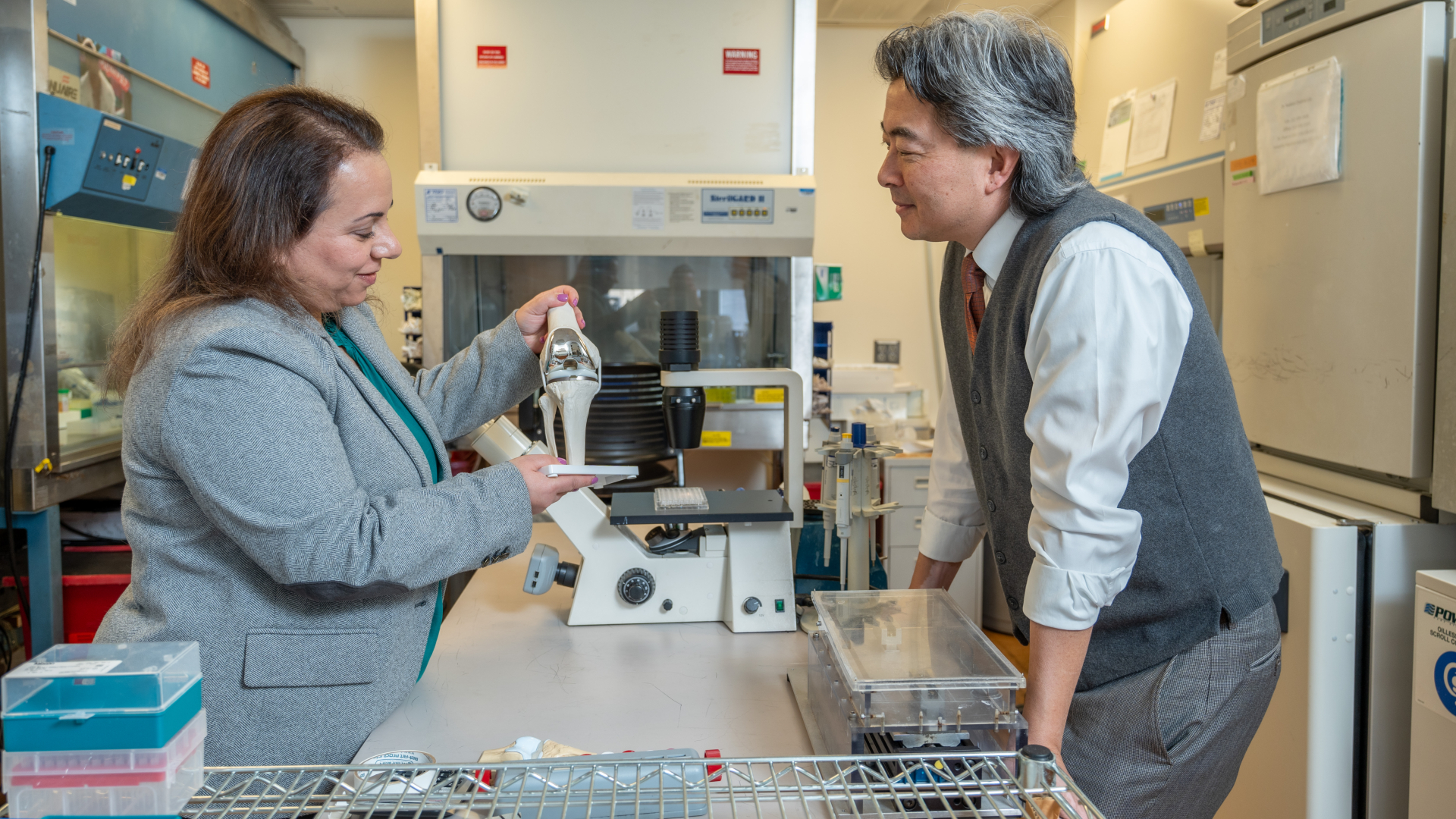
Traditional knee replacements — metal and plastic devices — have been the standard for decades. They work, but they come with real limitations. For many patients, especially younger ones, the prospect of a knee made from living materials that the body accepts and incorporates over time is not just appealing — it could be life-changing.
Why the Current Standard of Care Has a Real Problem
Knee replacement surgery is one of the most common orthopedic procedures performed worldwide. Metal and plastic implants have helped millions of people regain mobility, but they are not a permanent fix for everyone. They can wear out over time, and revision surgeries — replacing a failed implant — are significantly more complex and carry higher risks than the original procedure.
Younger patients face a particular dilemma. If someone in their 40s or 50s receives a traditional knee replacement, there’s a reasonable chance they’ll outlive the implant and need additional surgery later in life. The NOVAKnee concept directly addresses this problem by aiming to create something the body treats as its own — tissue that integrates, adapts, and potentially lasts far longer than any metal or plastic device could.
The researchers describe the process in terms that feel almost poetic for a medical technology: eventually, the implant becomes you. That’s not just a marketing phrase — it reflects the biological mechanism at the heart of the design. The biodegradable scaffold is meant to break down gradually as the stem-cell-derived tissue matures and takes hold, leaving behind living bone and cartilage rather than a foreign device.
How the NOVAKnee Living Knee Implant Actually Works
The technology combines several cutting-edge fields: 3D bioprinting, stem cell science, and tissue engineering. Here’s what is currently known about how the implant is constructed and designed to function:
- 3D-printed scaffold: The implant starts as a precisely shaped biodegradable scaffold, designed to match the geometry of a human knee joint.
- Stem-cell-derived tissue: The scaffold is seeded with stem-cell-derived bone and cartilage — the two primary tissue types that make up a functioning knee joint.
- Biodegradation over time: As the living cells establish themselves and grow, the scaffold gradually breaks down, ideally leaving behind integrated biological tissue.
- Body integration: The long-term aim is for the implant to fuse with the patient’s own biology, becoming indistinguishable from natural tissue.
| Feature | Traditional Knee Replacement | NOVAKnee (Living Implant) |
|---|---|---|
| Material | Metal and plastic | Biodegradable scaffold with stem-cell tissue |
| Body integration | Sits inside the body as a device | Designed to become living tissue |
| Longevity concern | Can wear out; revision surgery often needed | Aims to last as long as natural tissue |
| Development stage | Established, widely used | Currently in research and development |
| Research institutions | N/A | Columbia University and University of Missouri |
Who This Technology Could Help Most
The researchers describe the NOVAKnee as a potentially better option for “some patients” — a careful framing that reflects where the science currently stands. Not every knee replacement patient is the same, and not every patient would necessarily be a candidate for a living implant even if the technology reaches clinical use.
The patients who stand to benefit most are likely those for whom traditional implants are the most problematic: younger adults facing decades of life after surgery, people whose bodies have struggled to adapt to metal and plastic devices, and those who have already gone through one revision surgery and are facing another.
For these individuals, an implant that the body gradually absorbs and replaces with its own tissue isn’t just a medical novelty — it’s a fundamentally different relationship between patient and treatment. The implant wouldn’t be something you carry inside you indefinitely. It would be a temporary biological scaffold that hands off to your own cells.
Where the Research Stands Right Now
Chahine and Hung are still in the development phase of this technology. The NOVAKnee has not yet been reported as approved for human clinical trials, and the work being described reflects ongoing research rather than an available treatment. Tissue engineering at this scale — building a full knee joint’s worth of living bone and cartilage — is extraordinarily complex, and the path from laboratory prototype to surgical procedure involves years of testing and regulatory review.
That said, the fact that a named, functional concept exists with a specific design approach — 3D-printed biodegradable scaffolds seeded with stem-cell-derived tissue — puts this work ahead of many theoretical proposals in the field. The researchers at Columbia University and the University of Missouri are not describing a distant dream. They are describing a device they are actively building and refining.
The broader field of tissue engineering has been advancing steadily, and living implants for other parts of the body have already reached various stages of clinical development. Knee cartilage, given its complexity and the scale of need among patients worldwide, remains one of the most challenging and most sought-after targets.
Frequently Asked Questions
What is the NOVAKnee?
The NOVAKnee is a 3D-printed living knee implant developed by researchers at Columbia University and the University of Missouri, made from a biodegradable scaffold seeded with stem-cell-derived bone and cartilage.
Who is developing this living knee implant?
The implant is being developed by Nadeen Chahine and Clark Hung, researchers affiliated with Columbia University and the University of Missouri.
How is it different from a traditional knee replacement?
Traditional knee replacements use metal and plastic components that remain in the body as devices, while the NOVAKnee is designed to biodegrade as living tissue takes over, eventually integrating with the patient’s own biology.
Is the NOVAKnee available for patients yet?
No — the technology is currently in the research and development phase and has not been confirmed as available for clinical use or approved for human trials based on current reporting.
Who would benefit most from this type of implant?
The researchers describe it as a potentially better option for some patients, which likely includes younger adults and those for whom traditional implants have not been a long-term solution.
What materials make up the living implant?
The NOVAKnee consists of a biodegradable scaffold packed with stem-cell-derived bone and cartilage, designed to be shaped using 3D printing technology.



Leave a Reply