
Scientists assumed sharks simply didn’t belong in Antarctic waters. That assumption just changed — and what was caught on camera is forcing researchers to ask harder questions about what is really happening at the bottom of the world.
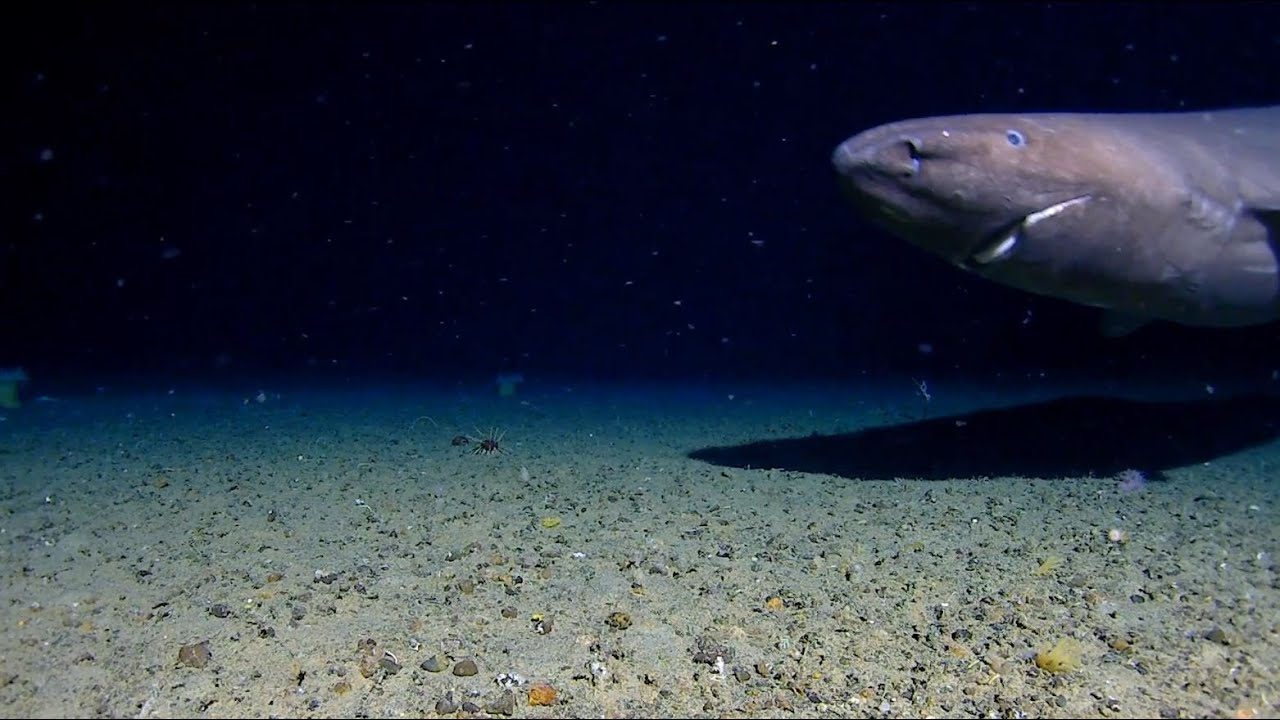
For the first time in recorded history, a shark has been filmed alive in the Southern Ocean surrounding Antarctica. The footage, captured by a deep-sea camera lowered into the frigid waters near the Antarctic Peninsula, marks a discovery that researchers describe as genuinely unexpected — and scientifically significant.
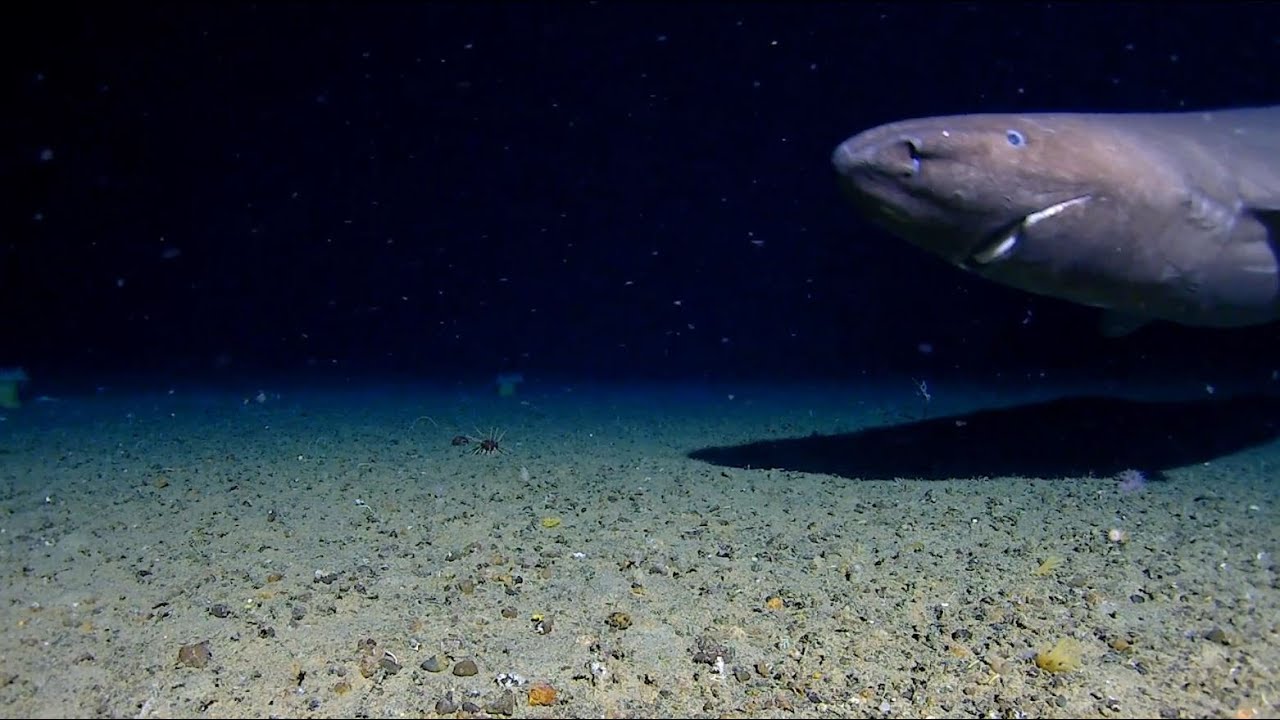
The animal on screen is large, unhurried, and entirely real. And its presence in one of the planet’s most extreme marine environments is raising questions that scientists are still working to answer.
What Was Actually Filmed — and Where
The shark appeared near the South Shetland Islands, a remote archipelago located roughly 75 miles north of the Antarctic Peninsula. It was spotted at a depth of approximately 1,608 feet, swimming through water measuring around 36 degrees Fahrenheit — conditions that most people would consider incompatible with shark life.
The footage estimates the animal at somewhere between 10 and 13 feet long. It belongs to the family Somniosidae, commonly known as sleeper sharks — a group of deep-sea sharks known for their slow movements and ability to endure cold, high-pressure environments. Sleeper sharks are part of the broader classification called elasmobranchs, which includes sharks, rays, and skates.
The discovery wasn’t made in real time. The moment was found buried inside roughly 400 hours of recorded deep-sea video, requiring painstaking review before researchers recognized what they were looking at.
Why the Scientists Were So Surprised
The team behind the footage was not expecting to find a shark. That wasn’t careless assumption — it reflected a long-standing principle in marine science.
“We went down there not expecting to see sharks because there’s a general rule of thumb that you don’t get sharks in Antarctica,” said deep-sea researcher Alan Jamieson. He described the animals as “tanks” — a reference to their physical resilience.
Oceanographer Jessica Kolbusz, working with the Minderoo-UWA Deep-Sea Research Centre at the University of Western Australia, was equally direct about what the footage represents.
“It was surprising since this is the first footage obtained of a Somniosidae or any elasmobranch in situ in the Southern Ocean,” Kolbusz said.
That phrase — in situ — matters. It means the shark was filmed in its actual natural environment, not collected as a specimen or detected through genetic sampling. This is a living animal, on camera, in Antarctic waters. That has never happened before.
Key Facts at a Glance
| Detail | Confirmed Information |
|---|---|
| Location | Near the South Shetland Islands, ~75 miles north of the Antarctic Peninsula |
| Depth spotted | Approximately 1,608 feet |
| Water temperature | Around 36°F |
| Estimated size | 10 to 13 feet long |
| Shark family | Somniosidae (sleeper sharks) |
| Research institution | Minderoo-UWA Deep-Sea Research Centre, University of Western Australia |
| Hours of footage reviewed | Approximately 400 hours |
| Historical significance | First filmed elasmobranch in the Southern Ocean in situ |
What This Could Mean for the Southern Ocean
The deeper concern here isn’t just about one shark. It’s about what its presence might signal.
The Southern Ocean has long been considered a biological boundary — a place where extreme cold and harsh conditions kept certain species out. Sleeper sharks are cold-tolerant by nature, but even so, their confirmed presence in Antarctic waters prompts serious scientific scrutiny about whether those boundaries are shifting.
Researchers are now confronting a question that goes beyond this single sighting: if a large apex predator from the deep sea is appearing in Antarctic waters, what does that say about the conditions down there? Are temperatures changing enough at depth to allow species previously excluded from this ecosystem to move in? Or has the shark always been there, unseen, in waters that have simply never been surveyed this thoroughly?
Both possibilities carry weight. The first suggests environmental change reaching even the most remote ocean on Earth. The second highlights how little we actually know about what lives in Antarctic depths — and how much of the deep sea remains essentially unexplored.
- Sleeper sharks are known for surviving extreme cold and deep-pressure environments
- The Southern Ocean has historically been considered off-limits for sharks as a general scientific assumption
- No elasmobranch — shark, ray, or skate — had ever been filmed in this region before this discovery
- The footage was found only after reviewing approximately 400 hours of deep-sea video
- The shark appeared in a region described as remote even by polar standards
What Researchers Are Watching Now
This sighting is a single data point, but it’s one that will almost certainly drive further investigation. Deep-sea survey work in Antarctic waters is logistically difficult and expensive — which is part of why so little footage exists from these depths in the first place.
The Minderoo-UWA Deep-Sea Research Centre’s work in the region is part of a broader effort to document what actually lives in the world’s most extreme ocean environments. The fact that 400 hours of footage needed to be reviewed before this moment surfaced suggests that systematic deep-sea monitoring in Antarctic waters is still in its early stages.
Whether this shark represents an isolated individual, a small population, or evidence of a broader range expansion is not yet known. What is known is that the long-held assumption — that sharks simply do not exist in Antarctica — can no longer be stated with confidence.
Frequently Asked Questions
What kind of shark was filmed in Antarctic waters?
The shark belongs to the family Somniosidae, commonly known as sleeper sharks — deep-sea sharks known for tolerating cold, high-pressure environments.
Where exactly was the shark spotted?
It was filmed near the South Shetland Islands, approximately 75 miles north of the Antarctic Peninsula, at a depth of about 1,608 feet.
Has a shark ever been filmed in the Southern Ocean before?
No. According to the researchers involved, this is the first footage ever obtained of a Somniosidae or any elasmobranch in the Southern Ocean in its natural environment.
Who made this discovery?
The footage was captured by researchers at the Minderoo-UWA Deep-Sea Research Centre at the University of Western Australia, including oceanographer Jessica Kolbusz and deep-sea researcher Alan Jamieson.
Does this mean sharks are moving into Antarctica because of climate change?
That has not been confirmed. Researchers have not yet determined whether the shark’s presence reflects environmental change or simply reveals how little deep-sea Antarctic waters have been surveyed until now.
How big was the shark?
The animal appeared to be roughly 10 to 13 feet long, based on the video footage.



Leave a Reply