
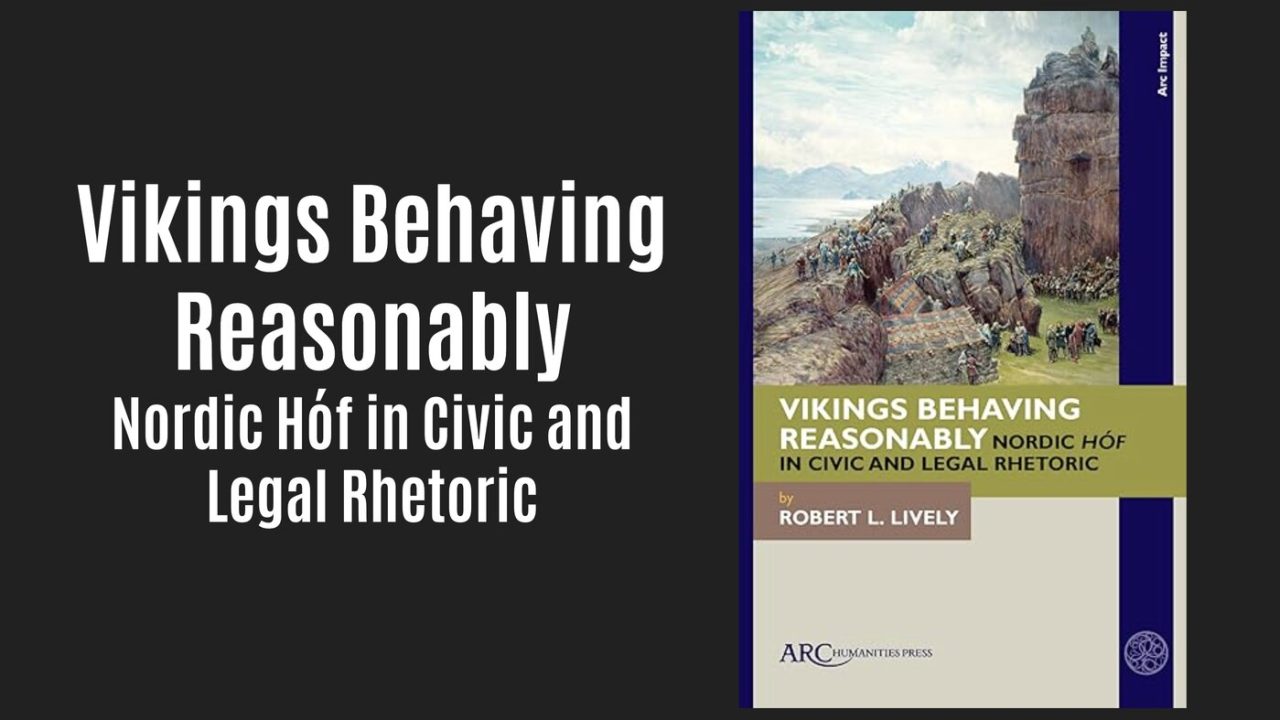
What if everything you thought you knew about Vikings was wrong? The popular image of Norse raiders as bloodthirsty barbarians driven by chaos and brute force has been a cultural fixture for centuries — but a new academic book argues that the reality was far more nuanced, and far more interesting.
Vikings Behaving Reasonably: Nordic Hóf in Civic and Legal Rhetoric, written by Robert L. Lively and published by ARC Humanities Press (ISBN: 9781802700633), makes a compelling case that Norse communities were governed not by violence and disorder, but by a deeply ingrained cultural ideal called hóf — a concept rooted in moderation, restraint, and reasoned dialogue.
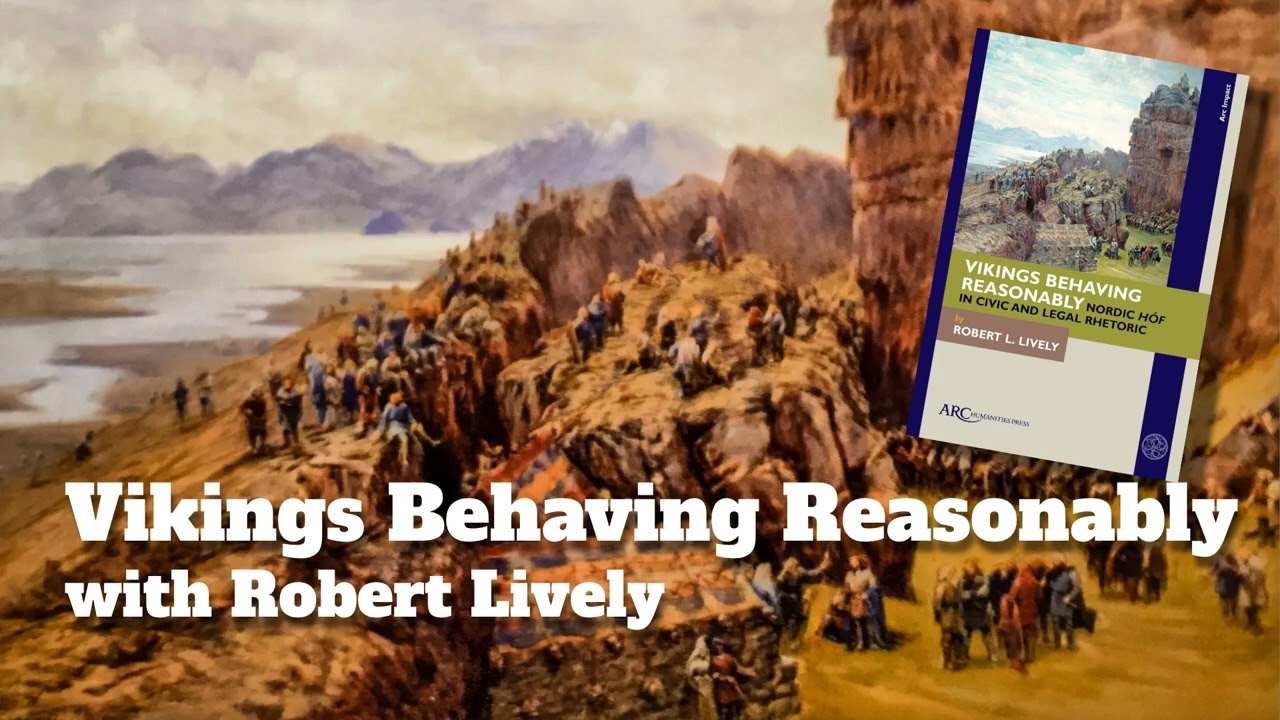
The book arrives at a moment when public interest in Viking history is at a sustained high, fueled by television dramas and popular documentaries that tend to favor spectacle over scholarship. Lively’s work pushes back against that narrative with evidence drawn from legal traditions, Icelandic sagas, and rhetorical analysis.
The Concept at the Heart of the Book: What Is Hóf?
Hóf is not a word most casual readers of Viking history will recognize — and that’s precisely the point. According to Lively, it represents a cultural expectation of moderation and restraint that Norse communities used to resolve disputes and maintain social order, often without the need for a strong central authority.
Think of it as a built-in social contract. Rather than defaulting to conflict, Norse communities had rhetorical and legal frameworks that encouraged measured responses, negotiation, and proportionality. The book examines how this ideal functioned not just as a private virtue, but as a public and civic one — embedded in the language and logic of legal proceedings.
This challenges the assumption, still common among general audiences, that Viking society was largely lawless. Scholars of medieval Scandinavia have long known otherwise, but Lively’s contribution is to approach the evidence through a rhetorical lens — asking not just what the laws were, but how communities talked about them, argued through them, and used them to hold society together.
How Lively Builds His Argument
The book draws on a notably wide range of disciplines to construct its case. As Lively explains in the text:
“Medieval Nordic studies rely on a variety of disciplines to create the mosaic of the Viking north. Scholars use a variety of methods, including historical records, runology, numismatics, saga studies, archaeology, manuscript studies, folklore, and rhetorical studies, to create a better picture of the Viking Age. Each field of study lays a tile in the mosaic — another place where scholars can examine a facet of medieval Scandinavia.”
That mosaic metaphor is apt. No single source or method tells the full story. What Lively adds is a specifically rhetorical perspective — examining civic and legal language as a window into how Norse people understood dispute resolution, community obligation, and the ethics of restraint.
The book includes four case studies drawn from Icelandic sagas, with particular attention to the island’s conversion to Christianity. These case studies are described as especially effective in demonstrating how the ideal of hóf operated in real social contexts — not as abstract philosophy, but as a practical tool for managing conflict.
What the Sources and Methods Actually Cover
| Discipline | Role in Viking Age Research |
|---|---|
| Historical Records | Primary documentation of events, laws, and governance |
| Runology | Analysis of runic inscriptions for cultural and legal insight |
| Numismatics | Study of coinage to understand trade and political structures |
| Saga Studies | Literary and historical analysis of Norse narrative traditions |
| Archaeology | Material evidence of daily life, settlements, and ritual |
| Manuscript Studies | Examination of written texts preserved from the medieval period |
| Folklore | Oral traditions that preserve cultural values and social norms |
| Rhetorical Studies | Lively’s own contribution — analyzing civic and legal language |
Lively positions rhetorical studies as the tile his book lays in the larger mosaic — a perspective that has been underrepresented in Viking Age scholarship and one that yields genuinely fresh insights about how Norse communities communicated, argued, and governed themselves.
Why This Book Matters Beyond the Academy
It would be easy to dismiss a book like this as niche scholarship with limited reach. But the questions it raises are surprisingly relevant to anyone interested in how societies function without centralized enforcement — how communities develop norms, maintain order, and resolve conflict through shared values rather than top-down authority.
The Norse legal tradition, as Lively presents it, was sophisticated and deeply participatory. Disputes were often resolved through dialogue rather than violence. That finding alone is worth sitting with, especially for readers whose mental image of Vikings begins and ends with longships and battle axes.
The four case studies rooted in Icelandic sagas give the book a narrative texture that pure legal history sometimes lacks. Iceland’s conversion to Christianity, in particular, was a moment of profound social tension — and the way that tension was managed, through rhetoric and negotiation rather than open warfare, is a telling illustration of hóf in action.
Who Should Read This — and What to Expect
The book is clearly aimed at an academic audience — readers with some grounding in medieval studies, Norse history, or rhetorical theory will get the most out of it. But it is also accessible enough to reward serious general readers who want more than the popular mythology of Viking culture.
- Readers interested in medieval Scandinavian history and legal traditions
- Students and scholars of rhetoric, civic discourse, and dispute resolution
- Anyone curious about how societies maintain order without strong central authority
- Fans of Icelandic sagas looking for deeper contextual analysis
- Those who suspect the Viking Age was more complex than popular culture suggests
The book is published by ARC Humanities Press, a publisher with a strong track record in medieval studies, which signals its intended audience and scholarly standard. It is not a popular history — but it is a genuinely important contribution to a field that deserves more attention than it typically receives outside university walls.
Frequently Asked Questions
What does hóf mean in the context of Viking society?
Hóf refers to a cultural ideal of moderation and restraint that Norse communities used to resolve disputes and maintain social order, often without relying on a strong central authority.
Who wrote Vikings Behaving Reasonably?
The book was written by Robert L. Lively and published by ARC Humanities Press with ISBN 9781802700633.
What are the case studies in the book based on?
The four case studies are drawn from Icelandic sagas, with a focus on Iceland’s conversion to Christianity as a key example of hóf operating in a real social and legal context.
What disciplines does the book draw on?
Lively draws on historical records, runology, numismatics, saga studies, archaeology, manuscript studies, folklore, and rhetorical studies to build his argument about Norse civic and legal culture.
Is this book suitable for general readers or only academics?
The book is primarily aimed at an academic audience, but serious general readers with an interest in Viking history or legal traditions should find it accessible and rewarding.
Does the book argue that Vikings were never violent?



Leave a Reply