
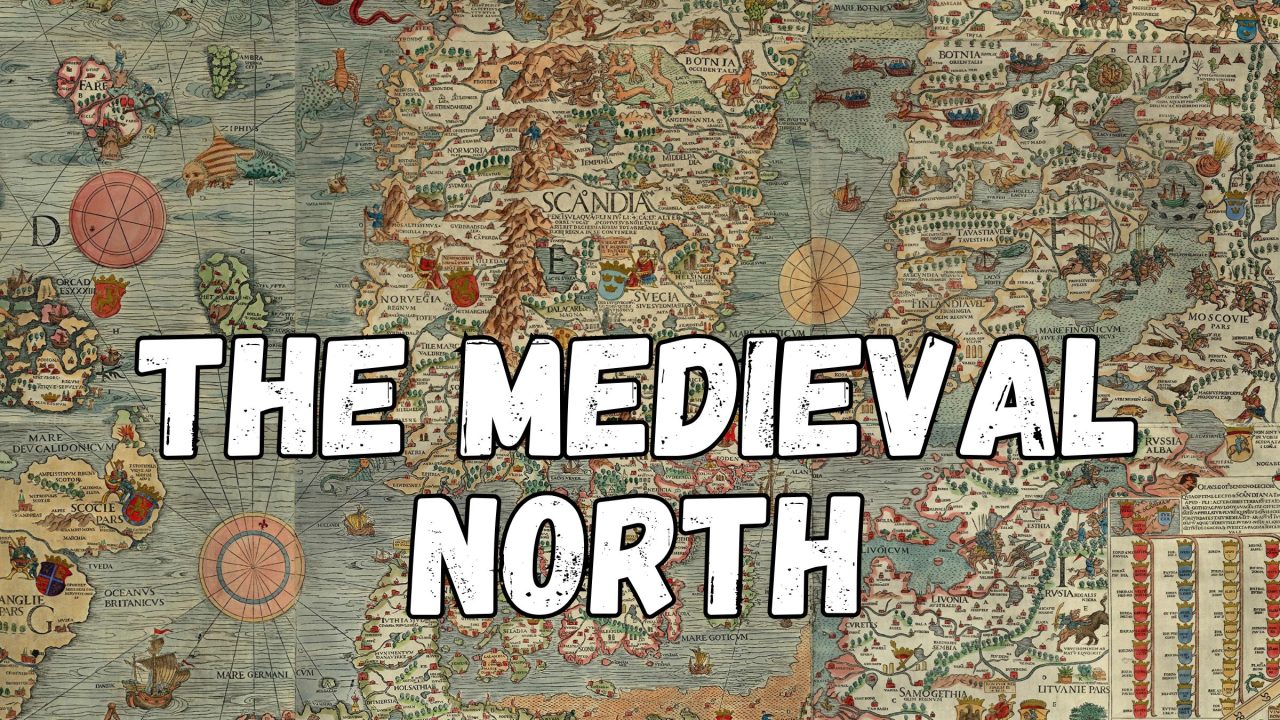
What happens when a medieval scholar tries to describe a world he has never seen? You get dragons guarding the northern seas, warrior women ruling distant islands, and a geography built as much from fear and wonder as from any real map. That is precisely what one eleventh-century writer produced — and historians are still wrestling with what it tells us about the medieval mind.
The work in question is the Gesta Hammaburgensis ecclesiae pontificum — the Deeds of the Bishops of the Church of Hamburg — written by Adam of Bremen, the master of canons at the Church of Bremen. Attached to it was a geographical appendix known as the Descriptio Insularum Aquilonis, or Description of the Islands of the North. Together, they offer one of the most vivid and contested portraits of the medieval North that survives from the period.
The text blends genuine observation with outright imagination, and scholars have been arguing about where one ends and the other begins ever since. Adam of Bremen himself is described by researchers as one of the most emblematic and controversial figures in the history of medieval northern Europe.
Why Adam of Bremen Wrote About the North
The Gesta was not written out of pure intellectual curiosity. It was a political document, commissioned for a specific and urgent purpose.
From the ninth century onward, the joint archdiocese of Hamburg-Bremen had claimed primacy over the northern conversion mission — the effort to bring Christianity to Scandinavia and the peoples of the far North. Missionary bishops like Ansgar, who preached in Scandinavia between 831 and 865, and Unni, who served between 916 and 936, had ventured into those territories. But their success was limited, and their church’s authority was under pressure from multiple directions.
Rival archdioceses — including Cologne and Mainz — contested Hamburg-Bremen’s claims. And in the late eleventh century, Scandinavian kings began demanding an archdiocese of their own, threatening to cut Hamburg-Bremen out of the picture entirely.
Facing these challenges, Archbishop Adalbert of Hamburg, who held office from 1043 to 1072, commissioned the Gesta as a piece of deliberate propaganda. It was designed to narrate the history of the bishops and archbishops of Hamburg and Bremen from the very beginning of their institution — building a case, in written form, for the church’s historical right to lead the northern mission.
Adam of Bremen wrote the text. The geographical appendix describing the northern islands was part of that same project, framing the North as a territory that Hamburg-Bremen knew, had engaged with, and could legitimately claim spiritual authority over.
Dragons, Amazons, and the Edge of the Known World
The Description of the Islands of the North is where the text becomes genuinely strange — and genuinely fascinating. Adam filled his account of the far North with creatures and peoples drawn from the deep well of classical and early medieval tradition: dragons patrolling the seas, Amazonian warrior women inhabiting distant islands, and landscapes that seem to sit at the very boundary of the inhabitable world.
This was not simply ignorance or fantasy for its own sake. It reflected a coherent medieval worldview in which the unknown edges of the earth were naturally populated by wonders and dangers. The further you traveled from the familiar Christian center of the world, the more monstrous and extraordinary things became. Distance itself was a kind of moral and cosmological category.
For Adam and his readers, describing the North this way was not a failure of geography. It was a statement about the nature of the world — and, implicitly, about the courage and importance of the church that sent missionaries into such terrifying territory.
Key Facts About the Text and Its Context
| Detail | Information |
|---|---|
| Author | Adam of Bremen, master of canons at the Church of Bremen |
| Full title | Gesta Hammaburgensis ecclesiae pontificum (Deeds of the Bishops of the Church of Hamburg) |
| Geographical appendix | Descriptio Insularum Aquilonis (Description of the Islands of the North) |
| Commissioned by | Archbishop Adalbert of Hamburg (in office 1043–1072) |
| Purpose | Propagandistic defense of Hamburg-Bremen’s primacy over northern missions |
| Notable rival claimants | Archdioceses of Cologne and Mainz; Scandinavian kings |
| Earlier missionaries referenced | Ansgar (831–865); Unni (916–936) |
| Creatures described in the North | Dragons, Amazons, and other wonders at the edge of the world |
What the Text Reveals About Medieval Ways of Knowing
Reading Adam of Bremen today, it is easy to focus on the fantastical elements and dismiss them as medieval naivety. That would be a mistake. The Descriptio is a window into how educated people of the eleventh century actually processed the unknown — and how they used geography as a tool of argument and authority.
The North was genuinely unfamiliar to most of Adam’s audience. Scandinavia was distant, partially converted, and politically complex. By describing it in terms of monsters and marvels, Adam was doing several things at once: entertaining his readers, drawing on respected classical traditions, and making the case that the North was a dangerous and challenging frontier that required the sustained attention of a powerful church institution.
The text also sits at the intersection of history and propaganda in a way that makes it difficult to use as straightforward evidence. Scholars have long debated what Adam actually knew from direct sources, what he borrowed from earlier writers, and what he invented or embellished to serve the political goals of his patron. That tension — between observation and imagination, between genuine knowledge and deliberate construction — is what makes the work so rich for historians.
Why This Medieval Text Still Matters
The Gesta and its geographical appendix remain primary sources for anyone studying the medieval North. They preserve information about Scandinavian geography, peoples, and religious history that exists nowhere else in such detail from this period. Even where Adam is wrong, or deliberately misleading, the text is valuable — it shows us what Hamburg-Bremen wanted people to believe about the North, and why.
The manuscript tradition of the work is also significant. A page from the Vienna codex 521, which includes the beginning of the Descriptio Insularum Aquilonis, survives and gives scholars a direct connection to how the text was transmitted and read across the medieval centuries.
For modern readers, the deeper lesson may be this: every era projects its fears and assumptions onto the places it does not fully understand. Adam of Bremen’s dragons and Amazons are gone, but the impulse that put them there — the need to make sense of the unfamiliar by filling it with meaning — is not.
Frequently Asked Questions
Who was Adam of Bremen?
Adam of Bremen was the master of canons at the Church of Bremen and the author of the Gesta Hammaburgensis ecclesiae pontificum, a history of the bishops of Hamburg-Bremen that included a geographical description of the northern islands.
Why was the Gesta Hammaburgensis written?
It was commissioned by Archbishop Adalbert of Hamburg (1043–1072) as a propagandistic work defending Hamburg-Bremen’s historical claim to primacy over the Christian mission to the North, amid challenges from rival archdioceses and Scandinavian kings.
What is the Descriptio Insularum Aquilonis?
It is the geographical appendix to Adam’s Gesta, describing the islands and peoples of the far North and populated with wonders such as dragons and Amazons alongside more grounded geographical observations.
Were the missionary efforts of Hamburg-Bremen successful before Adam wrote?
According to
Why did Adam include monsters and fantastical creatures in his description of the North?
This reflected a standard medieval understanding of the world’s edges as naturally filled with wonders and dangers — a tradition drawn from classical sources that also served to emphasize the importance and difficulty of the northern mission.
Is Adam of Bremen considered a reliable historical source?
Scholars regard him as both emblematic and controversial — valuable as a source on the medieval North, but recognized as a writer whose work blends genuine knowledge with imagination and deliberate political argument.


Leave a Reply