
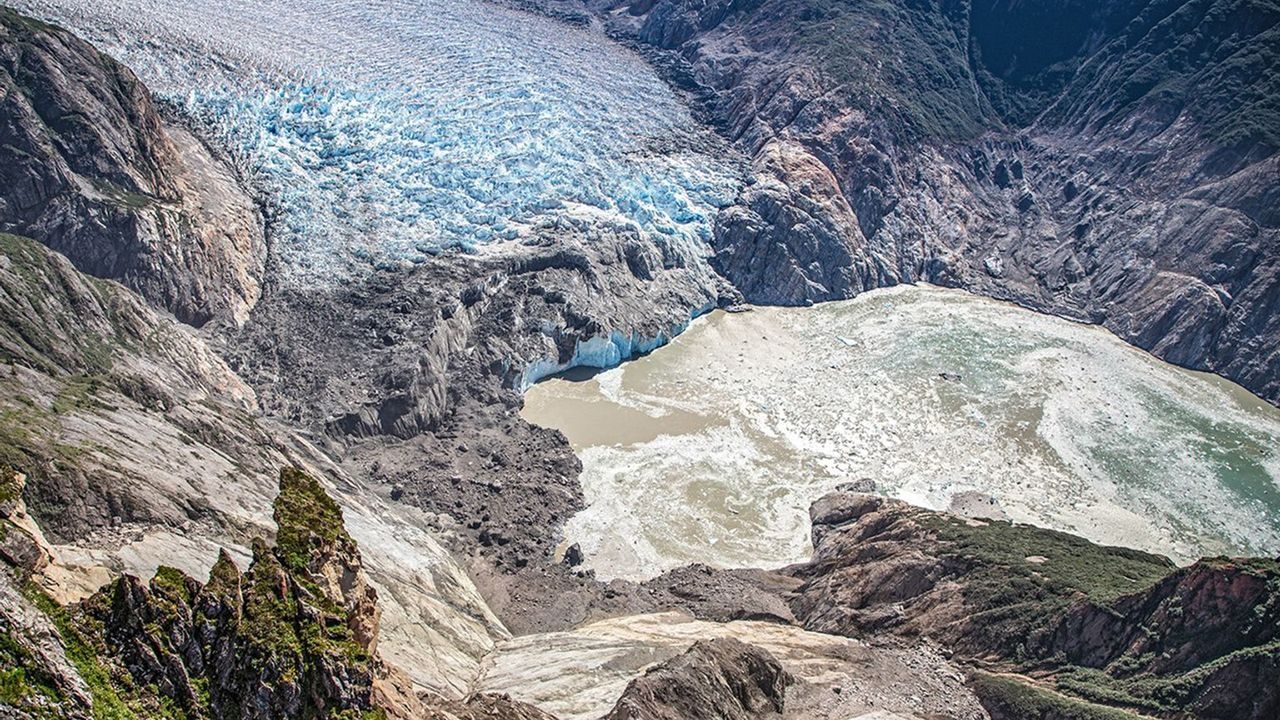
A wall of water taller than the roof of One World Trade Center tore through an Alaskan fjord on August 10, 2025 — and new research confirms it was one of the largest tsunamis ever recorded in human history.
The wave reached 1,578 feet (481 meters) up the rocky slopes of Tracy Arm fjord, south of Juneau, Alaska. For comparison, the top floor of One World Trade Center in New York sits at 1,368 feet (417 meters). This tsunami would have swallowed that building whole, not counting its spire.
The findings were published May 6 in the journal Science, and they paint a picture of a natural event so extreme it has only loose parallels anywhere in the modern scientific record.
What Triggered the 2025 Alaskan Tsunami
The event began when a massive landslide released 2.1 billion cubic feet (60 million cubic meters) of rock directly into the waters of Tracy Arm fjord. That volume is difficult to visualize — imagine filling roughly 24,000 Olympic swimming pools with rock and dropping them into a narrow channel of water in a matter of seconds.
Tracy Arm is the outlet fjord for the South Sawyer Glacier, which has been retreating rapidly in recent years. Researchers note that it remains unclear whether that glacial retreat destabilized the slope above the fjord, or whether heavy rains in the period leading up to the collapse were the more immediate trigger. It may well have been a combination of both.
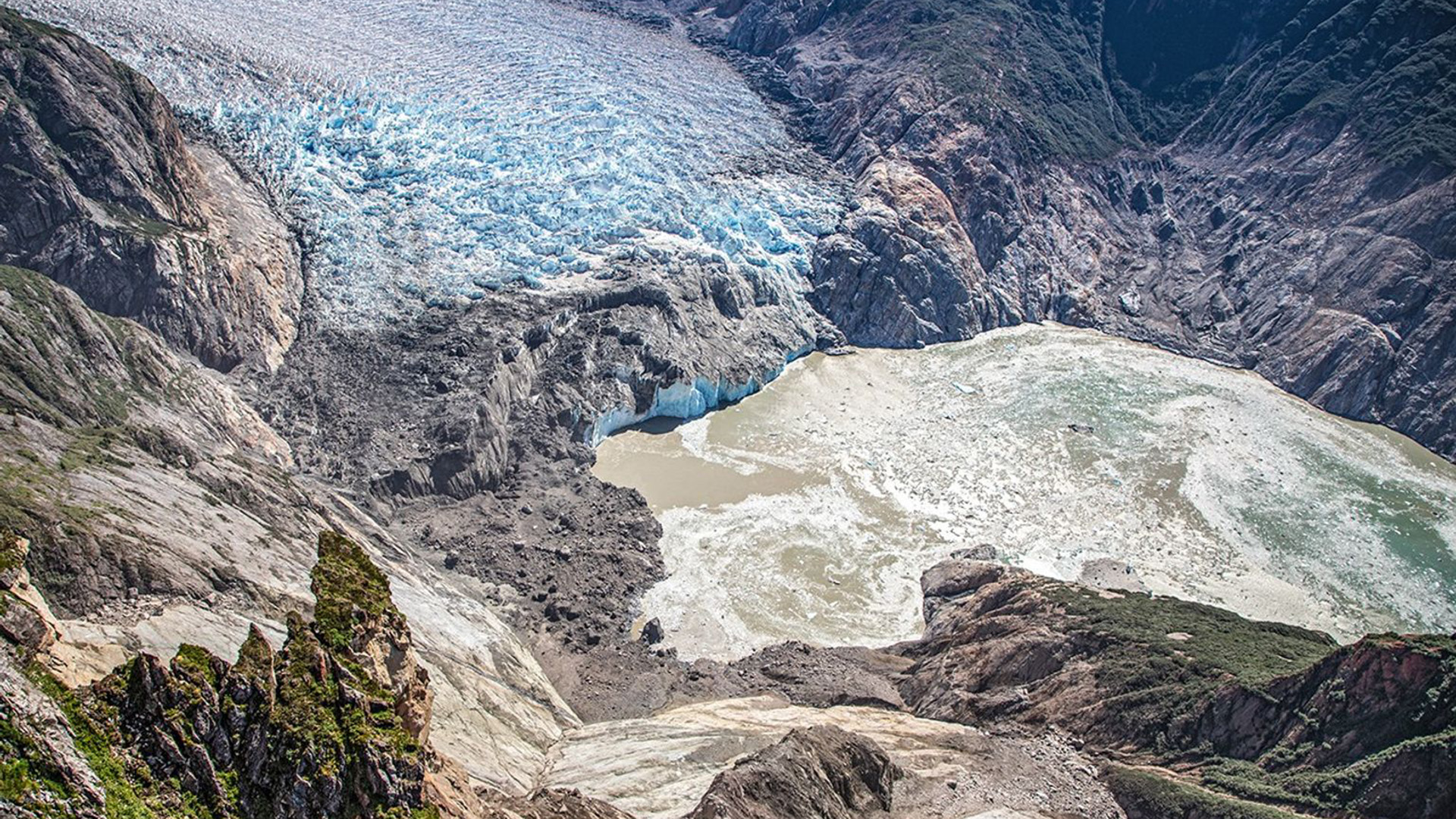
What is clear is that the resulting displacement of water generated a tsunami of extraordinary height — one that stripped vegetation from the fjord’s walls and left a landslide scar clearly visible in aerial photography captured by the U.S. Geological Survey just days later, on August 13, 2025.
The Key Numbers Behind One of the Tallest Tsunamis Ever Recorded
The raw statistics from this event are striking even by the standards of extreme natural phenomena. Here is what the research confirmed:
| Detail | Measurement |
|---|---|
| Tsunami runup height | 1,578 feet (481 meters) |
| Volume of landslide material | 2.1 billion cubic feet (60 million cubic meters) |
| Date of event | August 10, 2025 |
| Location | Tracy Arm fjord, south of Juneau, Alaska |
| One World Trade Center height (roof) | 1,368 feet (417 meters) |
| Duration of seiche (standing wave) | Over one day |
| Study publication date | May 6 (journal: Science) |
The tsunami did not just crash once and dissipate. It formed what scientists call a seiche — a standing wave that continued sloshing back and forth within the confined walls of the fjord for more than a full day after the initial landslide impact.
- A seiche behaves like water in a bathtub being rocked back and forth
- The narrow geometry of a fjord can trap and amplify these oscillating waves
- This is only the second time such a seiche has been scientifically recorded following a tsunami event
Why the Tracy Arm Seiche Makes This Event Historically Unusual
Most people think of a tsunami as a single catastrophic wave. What happened in Tracy Arm was more complex. After the initial wall of water surged up the fjord walls, the energy did not simply fade. It bounced. It rebounded. It kept moving.
The fact that researchers were able to document a sustained seiche lasting over a day makes this event scientifically significant beyond just its raw height. The first recorded instance of a post-tsunami seiche is already a rare entry in the scientific literature. A second confirmed case — especially one of this scale — gives researchers a far better foundation for understanding how energy behaves in enclosed coastal waterways after a catastrophic landslide-triggered wave.
Tracy Arm is a remote fjord, which almost certainly limited the direct human impact of the event. But its remoteness also makes the documentation of the seiche all the more notable — it required careful scientific observation to detect and confirm.
What This Means for Alaska’s Glacial Coastline
The South Sawyer Glacier’s retreat is not happening in isolation. Glaciers across Alaska have been pulling back for decades, exposing steep, unstable slopes that were previously supported — or at least insulated — by ice. As that ice disappears, the rock and sediment left behind can become increasingly prone to collapse.
The Tracy Arm event raises real questions about what the future looks like for fjords and coastal inlets near retreating glaciers. Researchers have not yet confirmed whether glacial retreat was the primary cause of this particular landslide, but the connection is difficult to ignore when a glacier that has been rapidly shrinking sits at the outlet of the very fjord where a record-breaking tsunami just occurred.
For communities, tourism operators, and researchers working along Alaska’s coastline, events like this serve as a stark reminder that the risks posed by glacial retreat extend well beyond the loss of ice itself.
What Researchers Are Still Working to Understand
The study published in Science represents an early but significant step in documenting and understanding the August 2025 event. Several important questions remain open, including the precise role of glacial retreat versus rainfall in destabilizing the slope, and what the long-term behavior of the seiche reveals about wave energy in enclosed fjords.
Aerial imagery from the U.S. Geological Survey, including photographs taken by USGS researcher John Lyons on August 13, 2025, has already provided visual documentation of both the landslide scar and the zone where vegetation was stripped from the fjord walls by the wave. That kind of on-the-ground and aerial evidence will continue to inform scientific analysis in the months ahead.
Whether this event accelerates monitoring efforts along other glacially active fjords in Alaska remains to be seen, but the data it has already produced is reshaping what scientists know about landslide-generated tsunamis and the extreme wave behavior they can produce.
Frequently Asked Questions
How tall was the 2025 Alaska tsunami?
The tsunami reached 1,578 feet (481 meters) up the slopes of Tracy Arm fjord, making it one of the tallest tsunamis ever recorded.
What caused the tsunami in Tracy Arm fjord?
A massive landslide dropped approximately 2.1 billion cubic feet (60 million cubic meters) of rock into the fjord on August 10, 2025, displacing the water and generating the wave.
Was the South Sawyer Glacier responsible for the landslide?
Researchers have not confirmed a direct cause. The glacier had been retreating rapidly, but recent heavy rainfall may also have played a role — or both factors may have contributed.
What is a seiche, and why does it matter here?
A seiche is a standing wave that oscillates back and forth in an enclosed body of water. The seiche recorded in Tracy Arm lasted over a day, and it is only the second such event ever documented following a tsunami.
Were people harmed by the tsunami?
Tracy Arm is a remote fjord, which likely limited direct human impact.
Where was the research published?
The study was published on May 6 in the peer-reviewed journal Science.



Leave a Reply