
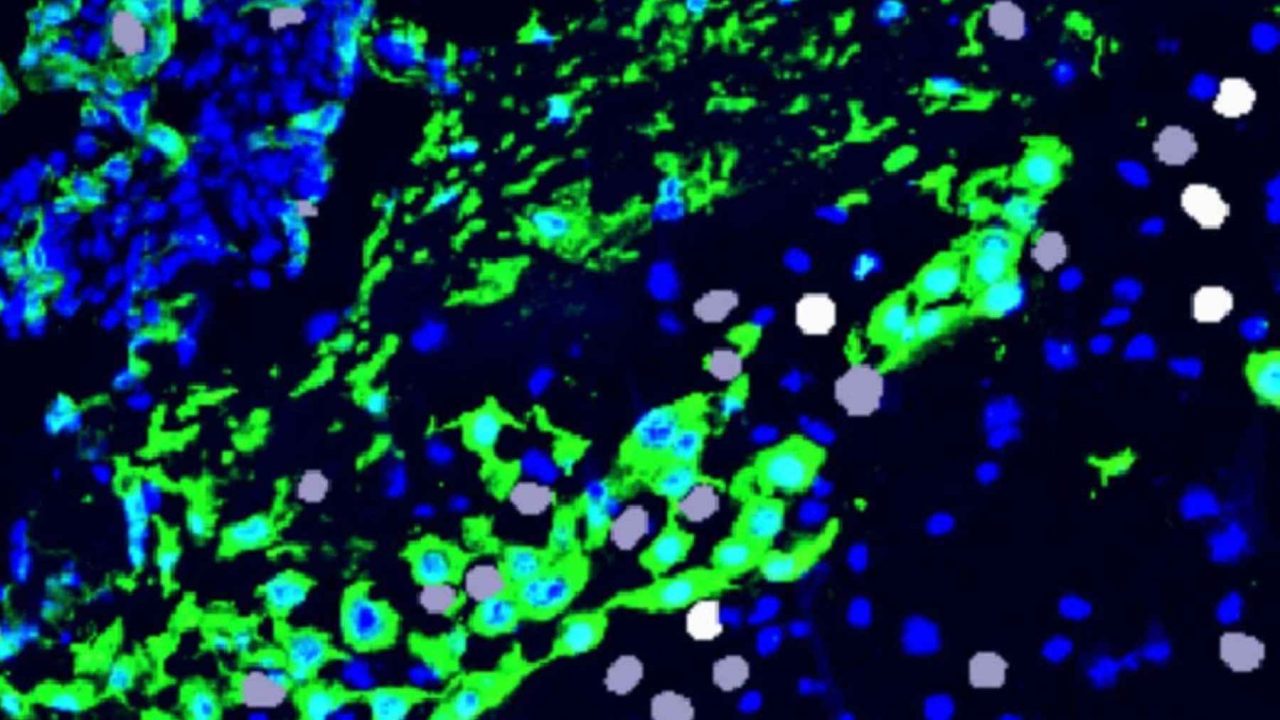
A cell that exists for only a brief window at the very start of human life — and then disappears entirely — has been identified for the first time by researchers at UC San Francisco. Nobody yet knows exactly what it does, but the discovery is already reshaping how scientists think about one of the most critical and least-understood stages of human development: the moment when a pregnancy takes hold.
The finding emerged from an unusually detailed new map of the maternal-fetal interface — the biological frontier where a mother’s body and a developing fetus meet, negotiate, and either cooperate or conflict. That interface has long been one of the most medically important and scientifically murky territories in human biology, and this new atlas is offering researchers a clearer view of it than ever before.
What they found there surprised them.
The Cell That Appears — and Then Vanishes
According to the UCSF research team, this newly identified cell type appears at the very start of pregnancy, seemingly plays some role in how the placenta connects to the mother’s blood supply, and then disappears without a trace. It is a previously unknown human cell type — meaning it has never been catalogued or described in scientific literature before.
The researchers believe it may function as a kind of gatekeeper, helping to manage the complex biological handshake between the placenta and the maternal circulatory system. But that role has not yet been confirmed. For now, the cell’s precise function remains an open question — one that scientists are treating as a priority.
What makes this especially striking is the timing. Most cells in the human body persist, divide, or transform over long periods. A cell type that appears only during a specific, narrow window — and then vanishes — is genuinely unusual. It suggests the cell may be doing something highly specialized and time-sensitive that the body only needs done once, at the very beginning of pregnancy.
How Scientists Built a Map of the Mother-Baby Interface
The discovery didn’t come from a single experiment. It came from building what researchers are describing as a high-resolution atlas of the tissues where mother and fetus meet.
To construct it, the team combined two powerful techniques:
- Single-cell sequencing — which identifies the genetic identity of individual cells, allowing researchers to classify what type of cell each one is
- Spatial mapping — which keeps cells anchored in their original physical location within tissue, so researchers can see not just what a cell is, but where it sits and which neighboring cells it may be communicating with
That combination is what makes the atlas genuinely new. Previous research could identify cells in isolation. This approach lets scientists see the full neighborhood — who’s talking to whom, and where conversations are happening inside uterine and placental tissue.
The scale of the project is also notable. The team analyzed approximately 200,000 individual cells, a number that allowed them to detect rare cell types that smaller studies would almost certainly have missed entirely.
Why the Maternal-Fetal Interface Matters So Much
The maternal-fetal interface is more than just a biological curiosity. It is the point where a pregnancy either succeeds or runs into serious trouble — and it is also the entry point for many of the environmental exposures that can affect a developing fetus.
Researchers note that this tissue is where the outside world reaches the developing baby. That includes chemicals that travel through the bloodstream, substances inhaled as smoke, and compounds found in products marketed as natural remedies. Understanding which cells live at that interface, what they do, and how they respond to external pressures is directly relevant to understanding pregnancy complications, fetal development, and long-term child health.
The newly discovered cell type, appearing right at the moment the placenta begins connecting to maternal blood vessels, sits at the center of all of that.
| Research Element | Detail |
|---|---|
| Institution | UC San Francisco (UCSF) |
| Discovery | Previously unknown human cell type |
| When the cell appears | At the very start of pregnancy |
| When the cell disappears | Shortly after appearing — it does not persist |
| Suspected role | Managing how the placenta connects to maternal blood supply |
| Confirmed function | Not yet determined |
| Number of cells analyzed | Approximately 200,000 |
| Methods used | Single-cell sequencing combined with spatial mapping |
| Tissue studied | Uterine and placental tissue at the maternal-fetal interface |
What This Could Mean for Pregnancy Research
The practical implications are still taking shape, but the research community’s interest is clear. A cell type that only exists at the start of pregnancy — and may be involved in how the placenta establishes its blood connection — could be relevant to a wide range of pregnancy complications that remain poorly understood.
Researchers have long struggled to explain why some pregnancies develop placental problems while others don’t, why certain environmental exposures seem to affect fetal development at very specific windows of time, and why some early pregnancies fail before a cause can be identified. A previously invisible cell type operating during that earliest phase could be a missing piece of several different puzzles.
The spatial mapping component of the atlas is particularly valuable here. Because researchers can now see where cells are located relative to each other — and infer which cells are likely signaling to which — they can begin building hypotheses about how this new cell type fits into the broader biological system of early pregnancy.
What Comes Next for This Research
The immediate next step is determining what this cell actually does. That will require follow-up studies specifically designed to probe its function — experiments that manipulate the cell’s presence or activity and observe what changes as a result.
The atlas itself is expected to serve as a resource for other researchers beyond the UCSF team. Maps of this kind — high-resolution, spatially anchored, and built at the scale of 200,000 cells — tend to generate years of follow-on research as different teams use them to answer different questions.
Scientists are also likely to look at whether this cell type behaves differently in pregnancies exposed to various environmental factors, given the research team’s stated interest in how chemicals, smoke, and other substances interact with the maternal-fetal interface.
For now, the honest answer to the obvious question — what does this cell do? — is that nobody knows yet. But finding it in the first place is itself a significant step.
Frequently Asked Questions
What is the newly discovered cell type?
It is a previously unknown human cell type identified by researchers at UC San Francisco that appears at the very start of pregnancy and is not found at any other point in life.
What does this new cell do?
Its exact function has not yet been confirmed. Researchers believe it may play a role in managing how the placenta connects to the mother’s blood supply, but this remains under investigation.
Where was the cell discovered?
The cell was found while researchers were mapping the maternal-fetal interface — the tissue where the mother’s body and the developing fetus meet — using uterine and placental tissue samples.
How did scientists find a cell that was previously invisible?
The team combined single-cell sequencing with spatial mapping and analyzed approximately 200,000 individual cells, a scale large enough to detect rare cell types that smaller studies would likely have missed.
Could this discovery affect how pregnancy complications are treated?
It is too early to say. Researchers first need to determine what the cell does before its potential clinical relevance can be assessed.
Will other scientists be able to use this research?
The atlas created by the UCSF team is expected to serve as a broader resource for pregnancy and developmental biology researchers, though specific sharing details have not been confirmed in the available reporting.


Leave a Reply