
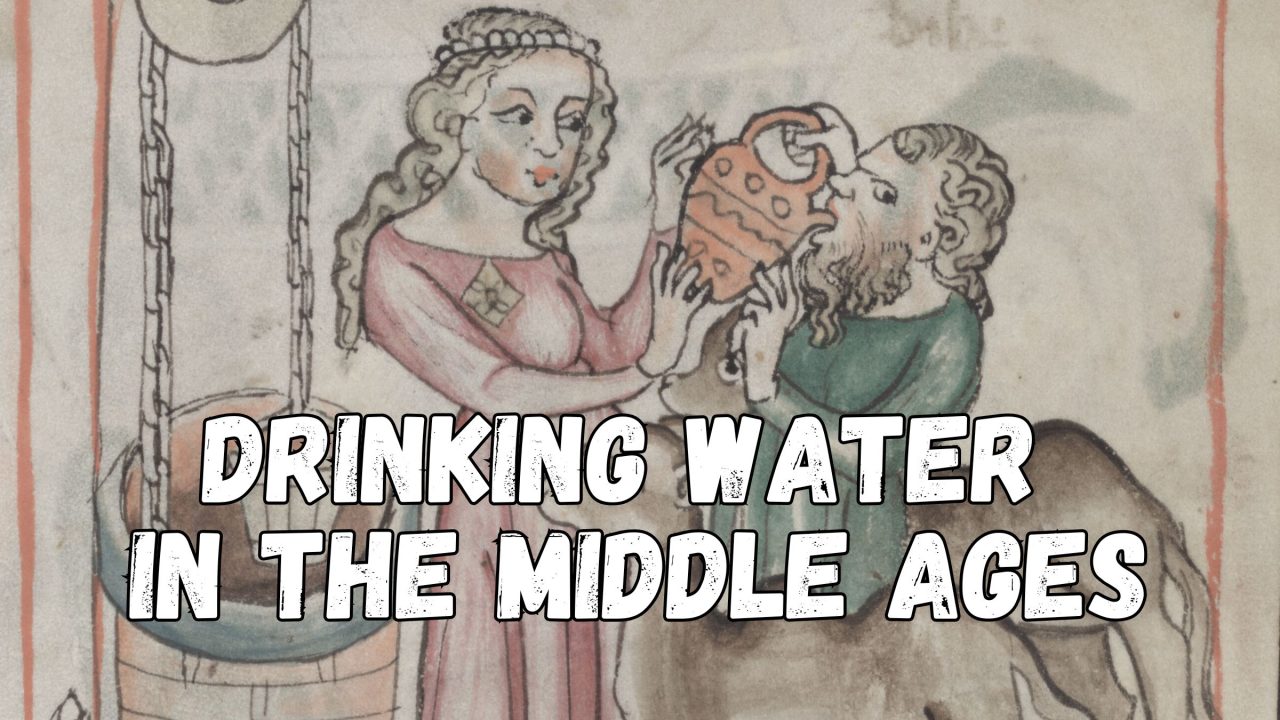
One of the most persistent myths about the Middle Ages is also one of the most wrong: that medieval people refused to drink water and survived instead on a steady diet of ale and wine. It sounds plausible. It gets repeated constantly. And according to medieval texts, city records, and religious writings, it is largely false.
People across the medieval period drank water regularly. They just cared — quite reasonably — about where it came from.
The truth behind this myth is more interesting than the myth itself, and it says a lot about how we misread the past when we stop looking at the actual evidence.
Where the Myth Comes From — and Why It Stuck
The idea that medieval people avoided water entirely has been repeated in books, documentaries, and casual conversation for decades. The logic goes something like this: medieval water sources were filthy, medieval people knew it, and so they sensibly swapped water for fermented drinks that were safer to consume.
There is a kernel of truth buried in there. Water quality was a genuine concern. Medieval people were not ignorant of the risks posed by contaminated sources, and they had good reason to be cautious about stagnant or murky water. But the leap from “be careful about your water source” to “never drink water at all” is a significant one — and it is not supported by the historical record.
Part of why the myth persists is that medieval writers simply did not spend much time praising water. Chronicles and letters of the period are far more likely to celebrate a generous host’s wine than to note that someone drank from a well. That silence has been misread as avoidance. In reality, it reflects something much more ordinary: water was unremarkable, and unremarkable things rarely get written about.
As net puts it, much like today, few writers would have praised their hosts for offering a cup of water instead of wine.
What Medieval People Actually Said About Drinking Water
When historians look beyond chronicles and personal letters — toward medical texts, health manuals, and religious writings — a clearer picture emerges. Medieval people did drink water. They thought carefully about it. And they had strong opinions about what made water good or bad.
One of the most striking examples comes from a ninth-century religious figure. Lupus Servatus, Abbot of Ferrieres, wrote with genuine enthusiasm about water as a wholesome drink:
“Let us make use of a healthy, natural drink which will sometimes be of benefit to both body and soul – if it is drawn not from a muddy cistern but from a clear well or the current of a transparent brook.”
That quote tells us several things at once. First, water was considered a legitimate and even beneficial drink. Second, the quality of the source mattered enormously — clean, flowing water from a well or brook was viewed very differently from stagnant water sitting in a cistern. Third, this was not a fringe view. An abbot writing for a religious community would not have recommended something his audience found completely alien.
The Real Medieval Approach to Water Safety
Medieval attitudes toward water were not about blanket avoidance. They were about source selection — a distinction that turns out to be both medically sensible and well-documented.
- Clear, flowing water from wells and brooks was considered healthy and desirable
- Stagnant or murky water from cisterns or standing pools was viewed with suspicion and often avoided
- Medical texts of the period addressed water quality directly, offering guidance on what to drink and what to avoid
- Religious writings referenced water as a natural and beneficial drink, not as a last resort
- City records reflect ongoing civic concern about water sources, suggesting communities actively managed access to clean water
This is not a population stumbling through life unaware of basic hygiene. It is a population making informed, if imperfect, decisions based on observable evidence — cloudy versus clear, still versus flowing, smelling bad versus smelling clean.
How This Compares to Ale and Wine
None of this means ale and wine were unimportant. They clearly were important — economically, socially, and nutritionally. Fermented drinks provided calories, were relatively safe to consume, and carried significant cultural weight. A feast without wine was no feast at all.
| Drink | Medieval Perception | Noted Concerns |
|---|---|---|
| Water (clear, flowing) | Healthy, natural, beneficial to body and soul | Source quality was critical — murky or stagnant water was avoided |
| Water (stagnant/cistern) | Risky, associated with illness | Widely discouraged in medical and practical guidance |
| Ale | Common, nutritious, socially central | Widely consumed across all social classes |
| Wine | Prestigious, frequently praised in writing | More associated with wealthier classes and religious contexts |
The key point is that water and ale were not in competition in the way the myth suggests. People drank both, depending on availability, occasion, and circumstance. The idea that every medieval person walked past a clean brook and chose warm ale instead simply does not reflect what the sources show.
Why Getting This History Right Actually Matters
Myths about medieval life tend to cluster around the idea that people in the past were either ignorant or reckless — that they stumbled through history making obviously bad decisions that we, with our modern knowledge, would never make. The water myth fits neatly into that framework.
But the evidence points in a different direction. Medieval people observed their environment carefully. They noticed that some water sources made people sick and others did not. They recorded those observations in medical texts and acted on them in civic policy. They drank water from sources they trusted, and they avoided water from sources they did not.
That is not ignorance. That is practical reasoning — applied to the same fundamental problem of clean water access that billions of people around the world still navigate today.
The myth, in the end, reveals more about our assumptions than it does about the Middle Ages.
Frequently Asked Questions
Did medieval people really never drink water?
No. Medieval texts, city records, and religious writings confirm that people regularly drank water throughout the Middle Ages, particularly from clean wells and flowing brooks.
Why do so many people believe medieval people avoided water?
Medieval writers rarely mentioned drinking water because it was unremarkable — they were far more likely to praise wine or ale. That silence has been misread as evidence of avoidance rather than normalcy.
What did medieval people think made water safe to drink?
The source of the water was the central concern. Clear water from a well or a flowing brook was considered healthy, while murky or stagnant water from cisterns was viewed as risky and often avoided.
Who was Lupus Servatus, and why does his quote matter?
Lupus Servatus was a ninth-century Abbot of Ferrieres who explicitly recommended water as a healthy, natural drink beneficial to body and soul — provided it came from a clean source. His writing is direct evidence that water consumption was accepted and encouraged in medieval religious communities.
Did medical texts in the Middle Ages address water quality?
Yes. According to
Were ale and wine considered healthier than water in the Middle Ages?
Fermented drinks like ale and wine were certainly common and culturally important, but the historical record does not support the idea that water was universally rejected in their favor — particularly when clean water was available.




Leave a Reply