
Imagine waking up one morning to find your GPS has gone dark, your weather app is frozen, and half the internet is running at a crawl. No explosion, no crater — just a building-sized rock hitting a satellite in exactly the wrong place. That scenario, once the stuff of science fiction, is now being taken seriously by planetary scientists who say the next major asteroid threat to Earth may not target a city at all.
A group of astronomers, in a recent interview reported by Abby Abazorius, warned that within the next decade scientists will likely identify a handful of building-sized asteroids on a collision course with the Earth-Moon system sometime before the end of this century. The finding is reshaping how the scientific community thinks about planetary defense — and who, exactly, is at risk.
The answer may surprise you. According to associate professor Julien de Wit and his colleagues, these incoming rocks would “probably lead to zero direct human casualties.” But that is far from the whole story.
The Asteroids That Actually Keep Scientists Up at Night
Hollywood has trained us to fear the mile-wide, civilization-ending asteroid. Those exist. But they are extraordinarily rare — striking Earth only once every tens of millions of years. The far more common, and in some ways more complicated, threat comes from what researchers call “decameter-scale” asteroids: objects roughly a few dozen to a few hundred feet across, about the size of a midrise building.
These are not dinosaur killers. They are not going to level a continent. But they are large enough to cause serious damage — and frequent enough that scientists now believe several are already on trajectories that could bring them into the Earth-Moon system within our lifetimes.
De Wit’s team, which includes researchers Artem Burdanov, Richard Teague, and Saverio Cambioni, describes a scientific community in the early stages of what Cambioni calls “an asteroid revolution” — a fundamental shift in how fast and how precisely astronomers can detect, track, and respond to incoming objects.
Why Satellites Are the Real Target
Here is the part of this story that most coverage misses. The direct human death toll from a decameter-scale asteroid impact could realistically be zero. If the rock lands in an ocean or an unpopulated area — which covers the vast majority of Earth’s surface — no one dies. So why are researchers alarmed?
The concern is infrastructure. Modern civilization runs on a web of satellites sitting in orbit above us: GPS navigation, financial transaction systems, weather forecasting, military communications, and the backbone of global internet connectivity. A building-sized asteroid does not need to hit the ground to cause disruption. Its path through the Earth-Moon system, or a fragmentation event, could pose a direct threat to that orbital layer.
De Wit specifically flagged the potential for these smaller objects to disrupt space infrastructure — a risk that carries enormous real-world consequences even when no human is standing in the impact zone. Think about what a single day without functioning GPS would mean for aviation, shipping, emergency services, and everyday navigation. Now multiply that by weeks of potential satellite damage.
What the Researchers Are Actually Warning
The team’s message is not one of panic — it is one of preparation. Their push is toward a faster response pipeline: better detection tools, quicker data sharing between observatories, and a more coordinated international system for evaluating threats and deciding on countermeasures.
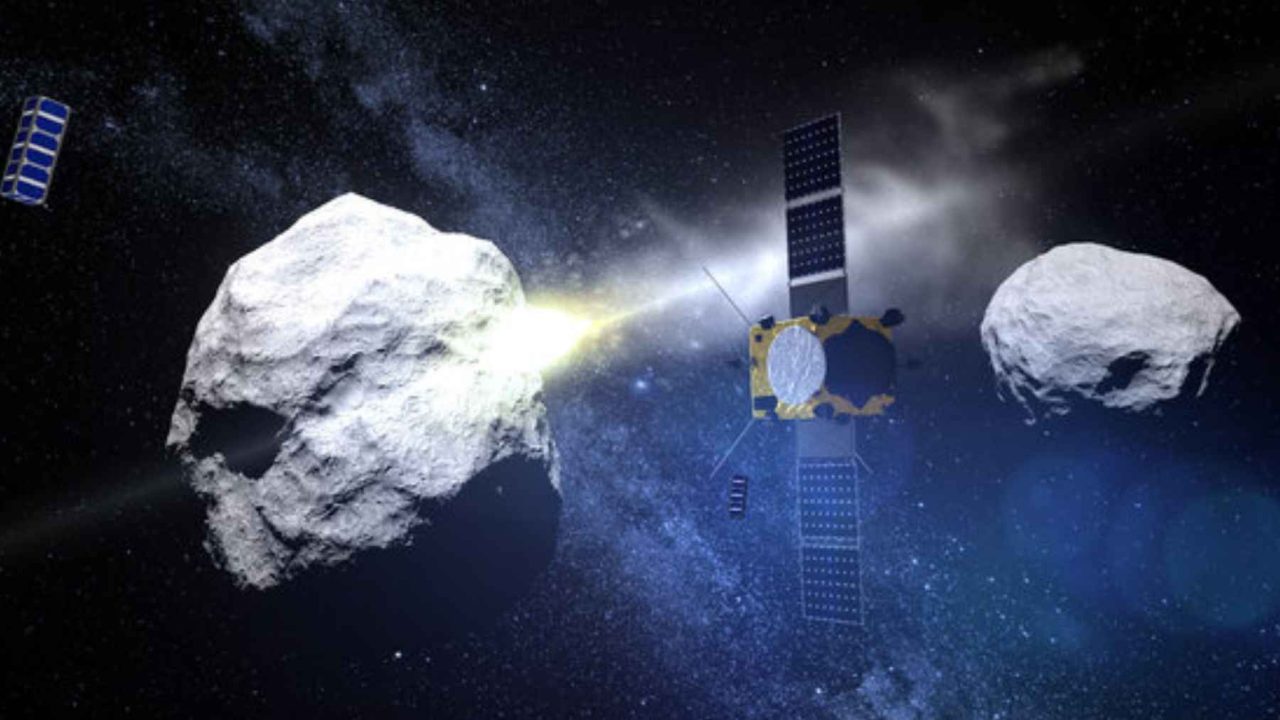
The science of deflecting asteroids is no longer theoretical. NASA’s DART mission, which successfully altered the orbit of a small asteroid in 2022, proved that humanity has at least one working tool in the planetary defense toolkit. But detection remains the bottleneck. You cannot deflect what you have not found.
That is the core of what de Wit’s team is pressing for: close the gap between when a threatening asteroid is spotted and when a response can be launched. For larger objects, scientists may have years or decades of warning. For smaller, faster-moving decameter-scale rocks, the window could be much shorter.
Breaking Down the Threat Level: What We Know
| Asteroid Type | Approximate Size | Impact Frequency | Primary Risk |
|---|---|---|---|
| Civilization-ending | Mile-wide or larger | Every tens of millions of years | Mass extinction |
| Decameter-scale | Few dozen to few hundred feet | More frequent; several expected this century | Satellite and space infrastructure disruption |
The researchers say new observations make it likely that within the next decade, scientists will identify a handful of these building-sized asteroids on a path toward the Earth-Moon system before the century ends. That is not a vague, distant possibility — it is a near-term scientific expectation.
Who Gets Affected and How
If you rely on a smartphone, use a bank, fly on a plane, or depend on weather forecasts — you are in the group of people whose daily life could be disrupted by a decameter-scale asteroid impact on space infrastructure. That is essentially everyone in the developed world, and increasingly, the developing world too.
The researchers are not suggesting mass evacuations or emergency bunkers. What they are calling for is institutional readiness: the scientific infrastructure to detect these objects early, the international cooperation to respond quickly, and the technical capability to deflect or redirect them if necessary.
Planetary defense, as Cambioni and his colleagues frame it, is no longer a niche scientific curiosity. It is a practical field with real engineering challenges and real timelines. The question is not whether a decameter-scale asteroid will enter the Earth-Moon system before 2100 — scientists now believe that is likely. The question is whether humanity will be ready when it does.
What Comes Next in Planetary Defense
The research team is pushing for a faster and more coordinated detection and response pipeline. The emphasis is on speed: identifying threatening objects earlier, sharing data across international observatories more efficiently, and building the decision-making frameworks needed to authorize a deflection mission before the window closes.
Cambioni’s phrase — “an asteroid revolution” — captures the mood in the field. Detection technology is improving. Deflection has been demonstrated. What remains is building the institutional muscle to connect those capabilities into a functioning planetary defense system before the next significant object shows up on the radar.
Frequently Asked Questions
Are these five asteroids already identified and tracked?
Not yet. The researchers say new observations make it likely that within the next decade, scientists will identify a handful of building-sized asteroids on a path toward the Earth-Moon system sometime this century — meaning they have not all been found yet.
Would these asteroids kill people on the ground?
According to associate professor Julien de Wit, decameter-scale asteroids would “probably lead to zero direct human casualties,” though they could still cause serious disruption to space infrastructure.
What is a decameter-scale asteroid?
It refers to an asteroid roughly a few dozen to a few hundred feet across — comparable in size to a midrise building — making it far smaller than the mile-wide rocks depicted in disaster movies.
What is the biggest real-world risk from these smaller asteroids?
The researchers specifically highlight the threat to space infrastructure, including the satellites that underpin GPS, communications, weather forecasting, and financial systems.
Has any asteroid ever been successfully deflected?
What are scientists calling for to address this threat?
The research team, including Burdanov, Teague, and Cambioni, is pushing for a faster response pipeline: better detection, quicker data sharing, and stronger international coordination to identify and respond to incoming objects before it is too late.



Leave a Reply