
What if picking up a pair of binoculars and spending years watching birds is quietly doing something remarkable to your brain — not just your patience or your knowledge, but the actual physical structure of how your mind works?
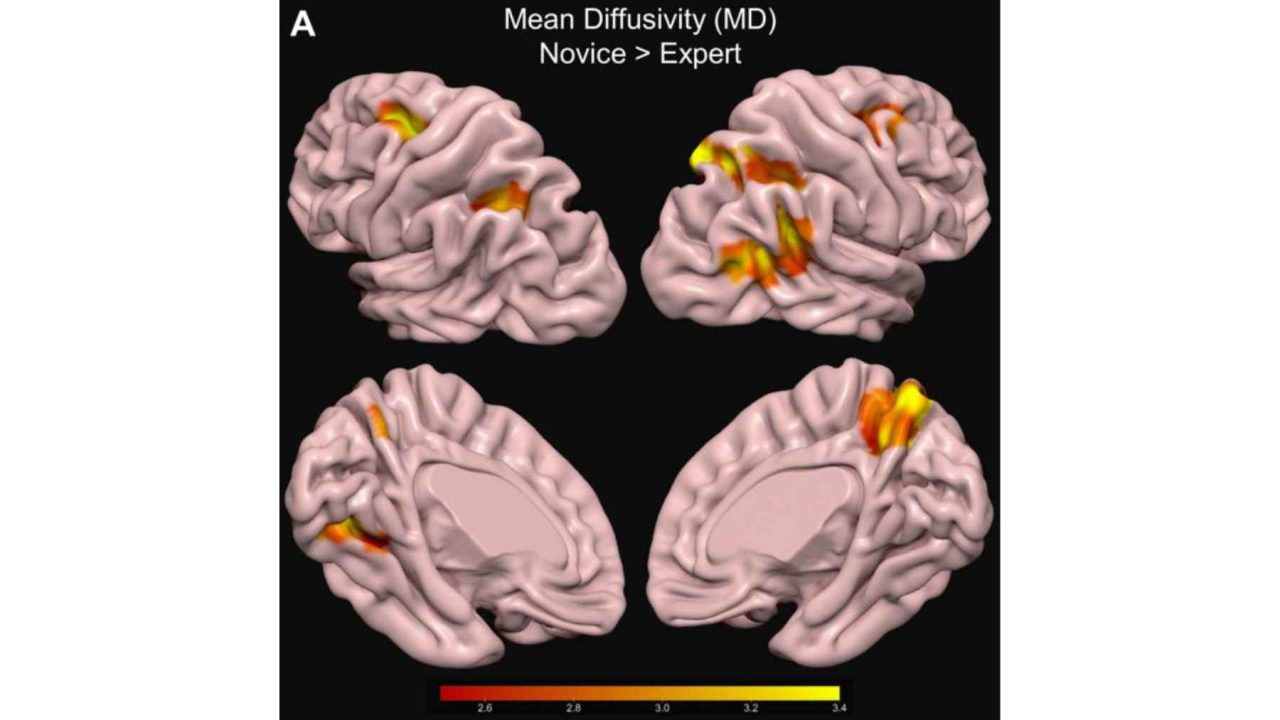
A new brain imaging study suggests that may be exactly what is happening. Researchers compared expert birders with beginners across a wide age range and found consistent differences in the brain regions responsible for attention, visual detail processing, and memory. The findings point to something neuroscientists find genuinely surprising: that a hobby most people associate with quiet weekends in the park may be one of the more demanding cognitive workouts a person can give themselves.
The study adds to a growing body of research on neuroplasticity — the brain’s documented ability to reorganize and adapt in response to repeated experience. And birding, it turns out, may be an unusually good lens through which to study that process.
Why Birdwatching Is Harder on the Brain Than It Looks
Ask anyone who has tried to tell two nearly identical sparrows apart in the field, and they will tell you the same thing: it is nothing like flipping through a field guide at home. The bird is moving. The light is wrong. You have maybe three seconds before it disappears into the brush.
That split-second pressure is exactly what makes birding such a useful subject for brain researchers. To identify a bird accurately, a person has to simultaneously notice fine visual details — a wing stripe, a beak curve, a flash of color — hold those details in working memory, compare them against a mental library of species, and make a rapid decision. All of this happens in real time, often while filtering out a huge amount of competing visual noise.
Scientists describe this as a highly compressed cycle of perception, memory retrieval, and decision-making. The brain is not just passively observing. It is actively predicting, filtering, and locking onto the details that matter while discarding the ones that do not. Over years of practice, researchers believe, that process leaves measurable traces in the brain’s structure and function.
What the Brain Imaging Research Found
The study compared expert birders — people with years of serious identification experience — against beginners, and it tracked differences across a wide age range. The pattern that emerged was consistent: experienced birders showed differences in the brain regions associated with visual attention, fine detail recognition, and memory.
This is where the neuroplasticity angle becomes significant. The brain’s capacity to change in response to experience is well established in scientific literature, but studies that demonstrate it through a real-world skill — rather than a laboratory task — are comparatively rare. Birding offers researchers something valuable: a skill that is practiced repeatedly, over long periods, in complex and unpredictable environments.
The implication is that the brain differences observed in expert birders are not simply the result of being born with sharper visual attention. They appear to reflect what years of focused, detail-oriented practice actually does to the brain over time.
A Closer Look at What Changes — and Why It Matters
| Brain Function Area | What Birding Demands | Observed Difference in Experts |
|---|---|---|
| Visual Attention | Spotting tiny details like wing stripes or beak shape at speed | Differences noted in attention-related brain regions |
| Working Memory | Holding visual details in mind while making an identification | Associated memory regions showed consistent variation |
| Detail Recognition | Distinguishing near-identical species under poor conditions | Enhanced fine-detail processing patterns observed |
| Cognitive Filtering | Knowing what to ignore and what to lock onto quickly | Brain learns to prioritize relevant visual signals |
The research did not just look at young or middle-aged participants. The wide age range in the study is one of its more important features. It raises a question that many readers will find personally relevant: does this kind of cognitive engagement offer protective benefits as the brain ages?
While the study stops short of making definitive claims about aging and brain health, the pattern of differences observed across age groups suggests that the engagement required by serious birding may support the kinds of brain functions that tend to decline over time.
What This Could Mean for People Who Birdwatch — and People Who Don’t
The practical takeaway here is not that everyone needs to become a competitive lister or memorize hundreds of species calls. The more modest point is that the cognitive demands birding places on the brain — sustained attention, rapid visual discrimination, memory under pressure — are real and measurable.
For anyone already involved in birding, the research offers a new way to think about what the hobby is actually doing. It is not just relaxing. It is training the brain in ways that show up on imaging scans.
For people who have never considered it, the findings are a reminder that cognitively demanding hobbies — ones that require noticing, remembering, and deciding, rather than passively consuming — may carry benefits that go well beyond the activity itself. A walk through a local park with a field guide and a genuine effort to identify what you are hearing and seeing is, according to this line of research, a form of mental exercise with real neurological stakes.
The brain, researchers have long argued, responds to what you ask of it. Birding, it appears, asks quite a lot.
Where the Research Goes From Here
The study is part of a broader scientific interest in how real-world expertise — developed through hobbies, professions, and sustained practice — shapes the brain differently than abstract laboratory training. Birding is a particularly clean subject for this kind of research because the skill is specific, the expertise levels are easy to distinguish, and the practice happens consistently over many years.
Researchers have not yet established whether the brain differences observed in expert birders are fully reversible if someone stops birding, or whether the changes accumulate gradually in a linear way with years of practice. Those are the kinds of questions likely to drive the next phase of this research.
What the current findings do establish is that the connection between birdwatching and brain structure is real enough to show up clearly in imaging data — and that it is consistent across age groups. That alone is enough to make neuroscientists pay closer attention to what happens when someone spends years looking very carefully at birds.
Frequently Asked Questions
What did the brain imaging study on birdwatching find?
The study found consistent differences in the brain regions linked to attention, visual detail processing, and memory when comparing expert birders with beginners across a wide age range.
What is neuroplasticity, and how does birding relate to it?
Neuroplasticity is the brain’s documented ability to change and reorganize in response to experience. Birding is considered a useful way to study it because it demands sustained attention, rapid memory retrieval, and fine visual discrimination over many years of practice.
Do you have to be a serious birder for these brain effects to occur?
The study focused on expert birders compared to beginners, so the strongest observed differences were associated with years of serious identification practice rather than casual observation.
Does birdwatching help protect the brain as people age?
The study included a wide age range and found consistent patterns across groups, but it has not made definitive claims about brain protection in aging. The findings suggest the possibility, but further research is needed.
What specific skills does birding train the brain to do?
Birding trains the brain to spot fine visual details quickly, hold information in working memory, filter out irrelevant visual noise, and make rapid identification decisions — all within seconds.
Can someone start birdwatching later in life and still see cognitive benefits?
Based on the general principles of neuroplasticity discussed in the research, this remains an open and actively studied question.



Leave a Reply