
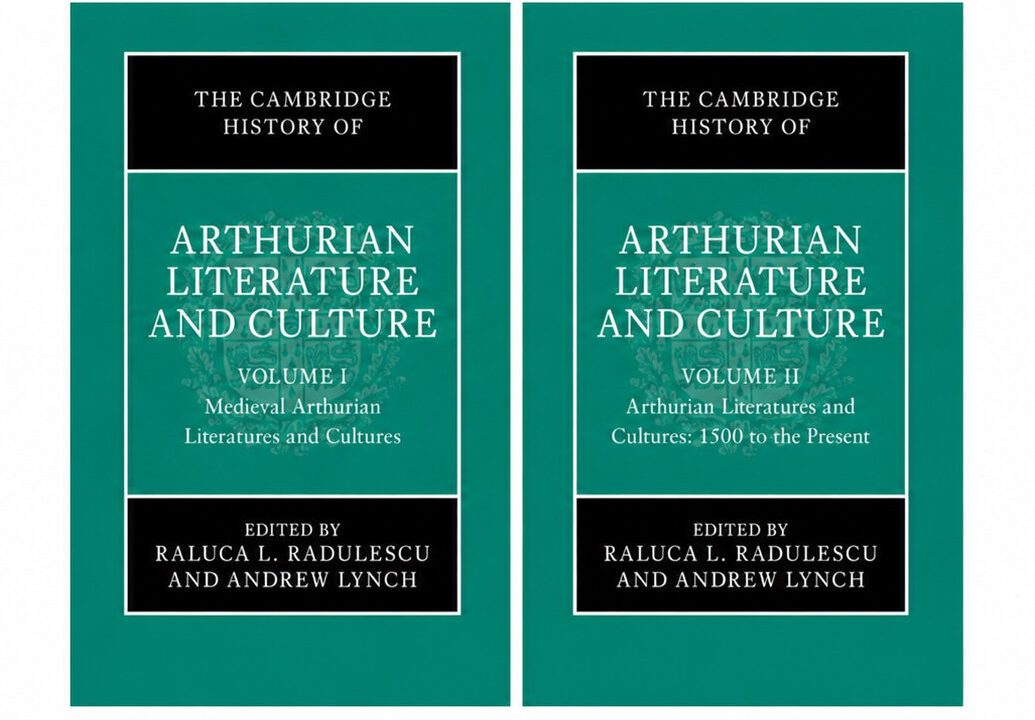
Fifty-seven chapters. Approximately 1,500 pages. Two volumes spanning more than a thousand years of storytelling. The newly published Cambridge History of Arthurian Literature and Culture is being described by scholars as the most comprehensive study of Arthurian legend ever assembled in a single integrated work.
King Arthur has haunted the human imagination for centuries — from early medieval manuscripts to Hollywood blockbusters and digital media. But until now, no single scholarly reference had traced that entire arc from beginning to present day. This new publication from Cambridge University Press aims to change that.
The work was co-edited by Raluca Radulescu, Professor of Medieval Literature and Director of the Centre for Arthurian Studies at Bangor University. It forms part of the prestigious Cambridge History series, a collection widely regarded for producing authoritative references intended to shape research fields for decades to come.
What Makes This Arthurian History Different
Scholars have studied Arthurian legend for generations, but the field has historically been fragmented — divided by era, language, geography, and academic discipline. Literary historians focused on medieval texts. Film scholars examined modern adaptations. Historians debated the origins of the legend. Rarely did all of those threads come together in one place.
According to the editors, the Cambridge History of Arthurian Literature and Culture is the first large-scale history of Arthurian studies to cover every period from the early Middle Ages to the twenty-first century within a single integrated work. That scope alone sets it apart from anything previously published in the field.
The collection doesn’t just trace the legend chronologically — it examines it across multiple disciplines simultaneously. Contributors draw on literature, history, politics, art, and media studies to build a picture of how and why the Arthurian tradition has persisted and evolved across so many different cultures and centuries.
The Scale and Scope of the Project
The numbers behind this publication reflect just how ambitious the undertaking was. Here is a breakdown of what the work contains:
| Feature | Detail |
|---|---|
| Publisher | Cambridge University Press |
| Series | Cambridge History series |
| Volumes | Two |
| Total pages | Approximately 1,500 |
| Number of chapters | 57 |
| Co-editor | Professor Raluca Radulescu, Bangor University |
| Period covered | Early Middle Ages to the twenty-first century |
The project was years in the making, according to Professor Radulescu. The sheer number of contributors and the breadth of disciplines involved required careful coordination across an extended period of research and writing.
From Medieval Manuscripts to Modern Screens — How the Legend Travels
One of the most striking aspects of this new history is how far it reaches geographically. Most popular treatments of Arthurian legend focus on Britain and Western Europe — the world of Camelot, the Round Table, and the quest for the Holy Grail as imagined in medieval French and English texts.
This work goes considerably further. Contributors examine the influence of Arthurian tradition across regions including:
- Europe, including its medieval origins and literary transformations
- Africa
- Australia
- South America
That global reach reflects a growing recognition in academic circles that Arthurian stories did not stay confined to their origins. They traveled with colonialism, migration, translation, and eventually mass media — and they were reshaped by every culture that encountered them.
The work also follows the legend into contemporary formats. Film, digital media, and twenty-first century literature all receive attention alongside the medieval manuscripts that started it all. For scholars of modern culture, that breadth is just as valuable as the historical depth.
Why This Matters Beyond the Academy
It would be easy to dismiss a 1,500-page scholarly reference as relevant only to university libraries and specialist researchers. But the Arthurian legend is one of the most persistently popular story traditions in the Western world — and arguably well beyond it.
Films, television series, novels, video games, and countless cultural references continue to draw on Arthur, Guinevere, Merlin, Lancelot, and the world they inhabit. Every time a new adaptation appears — whether a gritty BBC drama or a big-budget Hollywood production — it is drawing on a tradition with roots stretching back more than a thousand years.
Understanding that tradition in full, including where it came from, how it changed, and why it keeps returning, is genuinely useful for anyone working in storytelling, cultural criticism, or the history of ideas. This publication gives researchers the tools to do exactly that.
Professor Radulescu’s role as Director of the Centre for Arthurian Studies at Bangor University places this project at the heart of one of the field’s leading academic institutions. The Cambridge History series itself carries significant weight — volumes in the series are typically treated as foundational references that define how a subject is studied for years, sometimes decades, afterward.
What Comes Next for Arthurian Studies
Publications of this scale tend to reshape the conversations that follow them. By bringing together 57 chapters from contributors working across literature, history, art, politics, and media studies, the Cambridge History of Arthurian Literature and Culture effectively maps the current state of the field while also pointing toward questions that remain open.
For students approaching Arthurian legend for the first time, the work offers a structured way in. For established scholars, it provides a reference point that consolidates decades of dispersed research. And for the broader reading public curious about why a legendary British king continues to appear in everything from medieval poetry to streaming television, it offers something rarer still — a serious, sustained answer.
The legend has survived this long because it keeps finding new audiences and new meanings. A history that can hold all of that together is, by any measure, a significant achievement.
Frequently Asked Questions
What is the Cambridge History of Arthurian Literature and Culture?
It is a two-volume, approximately 1,500-page scholarly reference published by Cambridge University Press, covering the Arthurian legend from the early Middle Ages to the twenty-first century across 57 chapters.
Who co-edited the work?
The work was co-edited by Raluca Radulescu, Professor of Medieval Literature and Director of the Centre for Arthurian Studies at Bangor University.
What makes this history different from previous Arthurian studies?
According to the editors, it is the first large-scale history of Arthurian studies to cover every period from the early Middle Ages to the present day in a single integrated work, drawing on multiple disciplines including literature, history, politics, art, and media studies.
Which regions of the world does the work cover?
The work examines Arthurian traditions across Europe, Africa, Australia, and South America, reflecting the global reach of the legend beyond its British and European origins.
Does the history cover modern media such as film and digital content?
Yes. The collection traces the legend through to its modern appearances in literature, film, and digital media, alongside its medieval origins.</p


Leave a Reply