
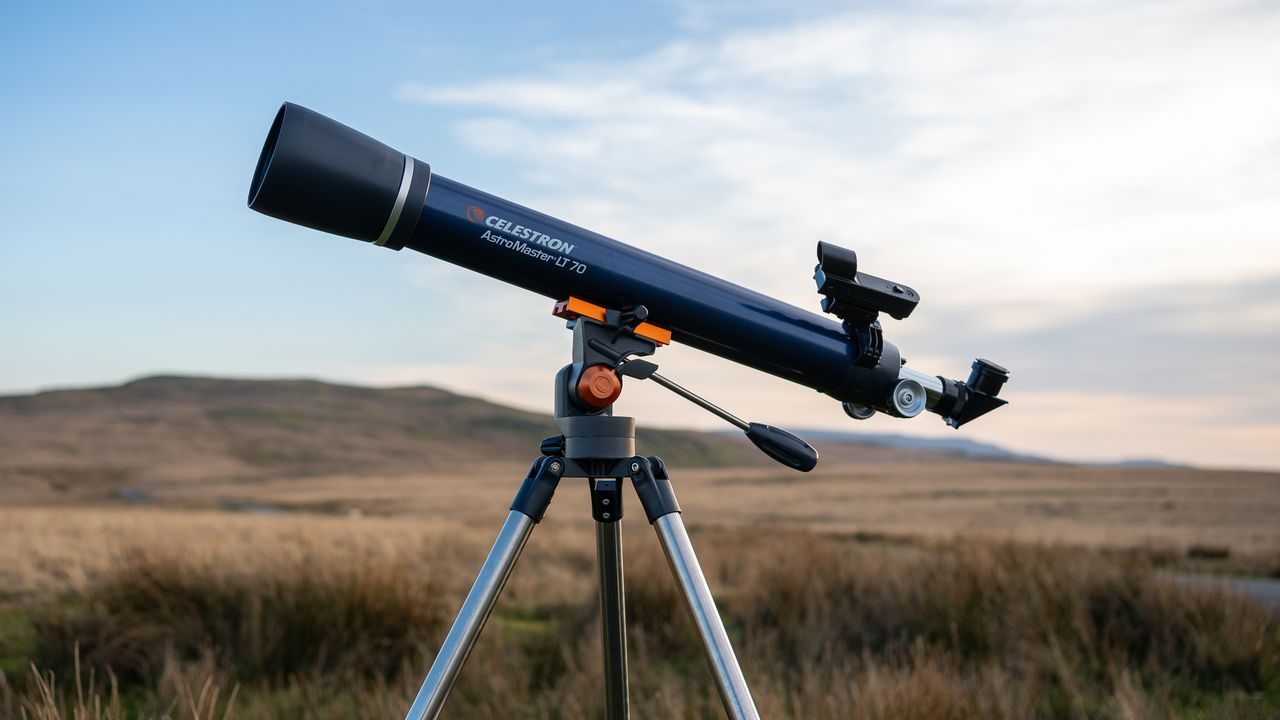
For anyone curious about stargazing but not ready to spend hundreds of dollars on a serious telescope, the Celestron AstroMaster LT 70AZ sits in an interesting spot. It’s affordable, lightweight, and requires no tools to set up — but it also comes with real limitations that could leave enthusiastic beginners wanting more within a surprisingly short time.
Reviewed as part of a group test of beginner telescopes by Live Science, the AstroMaster LT 70AZ was compared directly against the Celestron StarSense Explorer LT 70AZ. Both share similar optics, but the AstroMaster has a longer focal length — and that makes a measurable difference when you’re trying to get a sharp look at the planets.
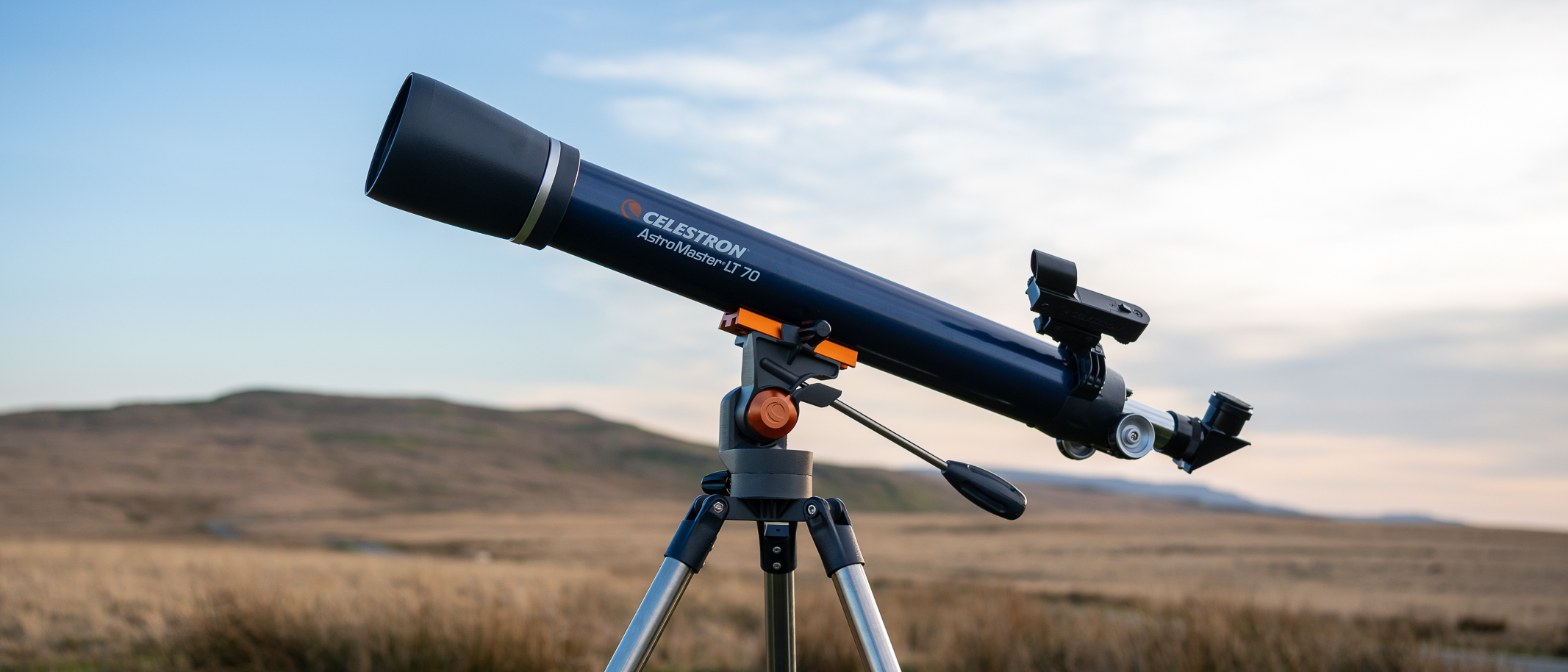
So is it worth buying? That depends entirely on what you expect from your first telescope — and how quickly you think you’ll outgrow it.
What the Celestron AstroMaster LT 70AZ Actually Is
The AstroMaster LT 70AZ is a refractor telescope — meaning it uses lenses rather than mirrors to gather and focus light. With a 70mm aperture and a focal length of 900mm, it produces a focal ratio of f/13, which is on the longer, narrower end for a beginner scope.
That long focal length is what gives it an edge for planetary viewing. Higher magnification is easier to achieve cleanly, and the optics tend to perform well when you’re focused on bright objects like the Moon, Saturn, or Jupiter. Two eyepieces are included in the kit — a 10mm eyepiece delivering 90x magnification and a 20mm eyepiece delivering 45x — giving you a reasonable starting range right out of the box.
The total kit weighs 10.8 pounds (4.9 kg), which makes it genuinely portable. You can carry it to a darker patch of sky away from city lights without much effort, and setup requires no tools at all.
The Key Specs at a Glance
| Specification | Detail |
|---|---|
| Optical Design | Refractor |
| Aperture | 70mm (2.76 inches) |
| Focal Length | 900mm |
| Focal Ratio | f/13 |
| Highest Useful Magnification | 165x |
| Included Eyepieces | 10mm (90x), 20mm (45x) |
| Total Kit Weight | 10.8 lbs (4.9 kg) |
Where It Performs Well — and Where It Struggles
The AstroMaster LT 70AZ genuinely shines when you point it at the Moon. The longer focal length helps resolve fine surface detail, and at 90x magnification, the craters and lunar highlands look impressive for a scope at this price point. Planetary viewing — particularly bright planets like Jupiter and Saturn — is similarly rewarding for a beginner.
But the mount tells a different story. Reviewers noted that the alt-azimuth mount isn’t the steadiest, and there are no tracking or slow motion controls included. That means when you find an object in the eyepiece, you’ll be nudging the telescope manually to keep up with the sky’s rotation. For beginners just learning to navigate the night sky, that can become frustrating quickly.
Deep-sky viewing — think nebulae, distant galaxies, or star clusters — is also not this telescope’s strong suit. The 70mm aperture simply doesn’t gather enough light to make faint objects pop, and without tracking, holding a target steady long enough to appreciate it is a real challenge.
Where it differs from its sibling, the StarSense Explorer LT 70AZ, is in the approach to finding objects. The StarSense Explorer uses your smartphone to identify stars and guide you toward targets. The AstroMaster takes a more traditional, hands-on route — you learn to navigate the sky yourself. For some beginners, that’s exactly what they want. For others, the StarSense approach may feel more rewarding early on.
Who This Telescope Is Really For
The AstroMaster LT 70AZ is best suited to a specific kind of beginner: someone on a tight budget who wants to learn the basics of astronomy from scratch, is primarily interested in the Moon and planets, and doesn’t mind the manual, learn-as-you-go experience.
Here’s a quick breakdown of who it suits — and who it probably doesn’t:
- Good fit: Budget-conscious beginners who want an affordable entry point into astronomy
- Good fit: Anyone focused on lunar and planetary viewing rather than deep-sky objects
- Good fit: People who want a lightweight, portable scope they can take to different locations
- Less suitable: Anyone hoping to observe nebulae, galaxies, or faint deep-sky objects
- Less suitable: Beginners who want guided star-finding assistance built into the system
- Less suitable: Anyone who expects to stick with one telescope for years — this one is easy to outgrow
That last point is worth sitting with. The Live Science verdict puts it plainly: the AstroMaster LT 70AZ is a decent entry point, but most users will likely want to upgrade sooner rather than later. That’s not a fatal flaw — plenty of astronomers start here — but it’s something to factor into your purchase decision.
What to Expect When You Set It Up
One genuine advantage of this telescope is how quickly you can go from unpacking to observing. No tools are required for assembly, which removes a common frustration with entry-level equipment. For a first-time user, that low barrier to getting started matters.
The total kit weight of under 11 pounds also means you’re not committed to one backyard spot. Taking it to a park, a rooftop, or a darker location outside of town is entirely practical. Portability is one area where this telescope genuinely delivers on its promise.
What it won’t do is hold your hand through the learning curve. Without slow motion controls or any form of tracking, you’ll need patience and a willingness to practice. For some, that’s part of the appeal. Astronomy has always rewarded people who take the time to actually learn the sky.
Frequently Asked Questions
Is the Celestron AstroMaster LT 70AZ good for beginners?
Yes, it’s a solid entry-level option for beginners on a budget, particularly those interested in viewing the Moon and planets. However, it lacks tracking controls and is easy to outgrow as your skills develop.
What can you see with the Celestron AstroMaster LT 70AZ?
It performs well for lunar and planetary viewing. It is not well suited for deep-sky objects like nebulae or distant galaxies, due to its 70mm aperture and lack of tracking.
How does the AstroMaster LT 70AZ compare to the StarSense Explorer LT 70AZ?
Both telescopes are optically similar, but the AstroMaster has a longer focal length, giving it an edge for planetary viewing. The StarSense Explorer uses a smartphone to help identify and locate stars, while the AstroMaster relies on traditional manual navigation.
What eyepieces are included with the AstroMaster LT 70AZ?
The telescope comes with two eyepieces: a 10mm eyepiece providing 90x magnification and a 20mm eyepiece providing 45x magnification.
Does the Celestron AstroMaster LT 70AZ have tracking?
No. The telescope uses a basic alt-azimuth mount with no tracking or slow motion controls, meaning you must manually adjust the telescope to follow objects as the sky moves.
How heavy is the Celestron AstroMaster LT 70AZ?
The total kit weighs 10.8 pounds (4.9 kg), making it a genuinely portable option for observers who want to move between locations.




Leave a Reply