
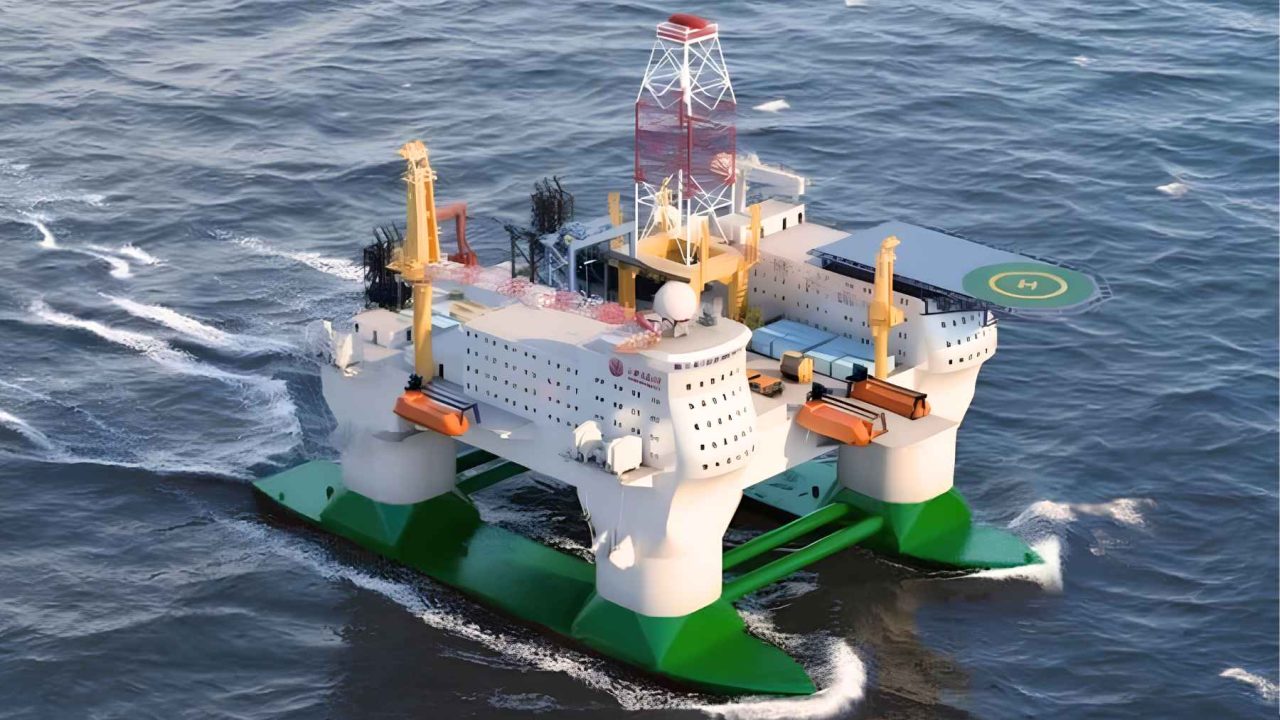
A floating structure designed to withstand a nuclear blast, capable of moving at 30 knots, and built to house researchers in some of the world’s most contested waters — that is what China says it is constructing right now. And whether you take the official explanation at face value or read between the lines, the project is unlike anything that has ever been built before.
Chinese state media announced on March 28, 2026, that construction had officially begun on what is being described as a “deep and far sea all-weather resident floating research facility.” The project is led by Shanghai Jiao Tong University and has been designated a national major science infrastructure initiative. Unofficially, it has been nicknamed the “far-sea floating island.”
The same reports call it a world-first ultra-large offshore research platform. That framing — science first, everything else second — is the official line. But the combination of nuclear-blast resistance, high-speed mobility, and deep-sea operating range has prompted a much broader conversation about what this structure is actually designed to do.
What China Is Actually Building
On paper, this is a research platform. A floating laboratory designed to keep scientists working in deep and far-sea environments regardless of weather conditions, around the clock, across all seasons. That is a genuinely useful thing to build. Ocean science depends on consistent, long-term data collection, and most existing research vessels can only stay at sea for limited stretches before weather, fuel, or crew fatigue forces them back to port.
A permanently stationed floating platform changes that equation entirely. Better ocean data means better typhoon forecasts. Better typhoon forecasts mean earlier warnings for coastal communities. In parts of Asia where storm season is a matter of life and death, that is not a small thing.
But the specifications that have been reported go well beyond what most research stations require. Nuclear-blast resistance is not a feature you add to a weather monitoring station. A top speed of 30 knots — fast enough to outrun most surface threats — is not a typical requirement for a floating laboratory. These details are what have observers paying close attention.
The Specifications That Are Hard to Ignore
The source reporting describes a structure that reads less like a research vessel and more like a hardened military asset with a science brief attached. Here is what has been confirmed from official Chinese state media reports and coverage of the project:
| Feature | Detail |
|---|---|
| Project lead | Shanghai Jiao Tong University |
| Official designation | National major science infrastructure project |
| Official name | Deep and far sea all-weather resident floating research facility |
| Nickname | Far-sea floating island |
| Construction announced | March 28, 2026 |
| Top speed | 30 knots |
| Structural design | Resistant to nuclear explosions |
| Classification | World-first ultra-large offshore research platform |
The combination of those last two rows is what makes this project genuinely unusual. No existing civilian research platform anywhere in the world is built to survive a nuclear blast. That specification points toward a very different set of assumptions about what this structure might face — and where it might be deployed.
Why the Location Question Matters So Much
The phrase “deep and far sea” in the official project name is doing a lot of work. China’s deep and far-sea interests are not abstract — they include the South China Sea, the East China Sea, and waters that have been the subject of ongoing territorial disputes with neighboring countries and, by extension, the United States Navy.
A mobile, hardened, high-speed platform operating in those waters would represent something genuinely new. It would not be a fixed island — which international law has clear rules about — but it would not be a conventional vessel either. It would occupy a kind of legal and strategic grey zone that existing frameworks were not designed to address.
Supporters of the project argue that the science case is real and significant. Ocean monitoring, climate research, and typhoon prediction all require exactly the kind of persistent, all-weather platform this structure is designed to be. Those are not manufactured justifications — they are genuine scientific needs that the region’s research community has identified for years.
Critics, however, contend that the military-grade specifications reveal a dual-use intent that the “research facility” label does not fully account for. A structure that can survive a nuclear detonation and move at 30 knots is, by any reasonable measure, built for conflict scenarios as well as calm-weather data collection.
What This Means for the Region — and for Everyone Else
The environmental implications alone are worth taking seriously. A large mobile platform operating continuously in deep ocean environments will interact with marine ecosystems in ways that are not yet fully understood. The waters where this platform is likely to operate are among the most ecologically significant on the planet — rich in biodiversity, heavily fished, and already under pressure from climate change and industrial activity.
For coastal nations in the region, the arrival of a permanent or semi-permanent Chinese presence in contested waters — even one flying a science flag — changes the strategic landscape. It adds another layer of complexity to an area already dense with competing claims and military posturing.
For the broader international community, this project raises questions that go beyond any single country’s interests. When scientific infrastructure is built to military-grade specifications and deployed in disputed territory, the line between research and strategic positioning becomes genuinely difficult to draw.
What Comes Next
Construction has officially begun, according to the March 2026 announcement. No completion timeline has been publicly confirmed in the available reporting. Shanghai Jiao Tong University leads the project under the national major science infrastructure designation, which suggests significant state backing and prioritization.
Whether international observers — including maritime law bodies and neighboring governments — will formally respond to the project’s development remains to be seen. The structure’s eventual deployment location will likely determine how seriously that response is taken.
What is already clear is that nothing quite like this has been attempted before. A floating, nuclear-hardened, 30-knot research platform is a genuinely new kind of object in the world — and the world has not yet figured out exactly what category to put it in.
Frequently Asked Questions
Who is leading the construction of China’s floating research platform?
The project is led by Shanghai Jiao Tong University and has been designated a national major science infrastructure initiative by the Chinese government.
When did construction officially begin?
Chinese state media reported that construction started on March 28, 2026.
What is the platform’s reported top speed?
The platform has been reported to be capable of traveling at 30 knots, which is significantly faster than a typical research vessel.
Is this structure genuinely designed to resist nuclear explosions?
According to reports citing the project’s specifications, the structure is designed with nuclear-blast resistance — a feature that goes well beyond standard civilian research infrastructure.
What is the official purpose of the platform?
China describes it as a “deep and far sea all-weather resident floating research facility” intended for ocean science, climate monitoring, and related research activities.
Has a completion date been announced?
No public completion timeline has been confirmed in available reporting at this time.



Leave a Reply