
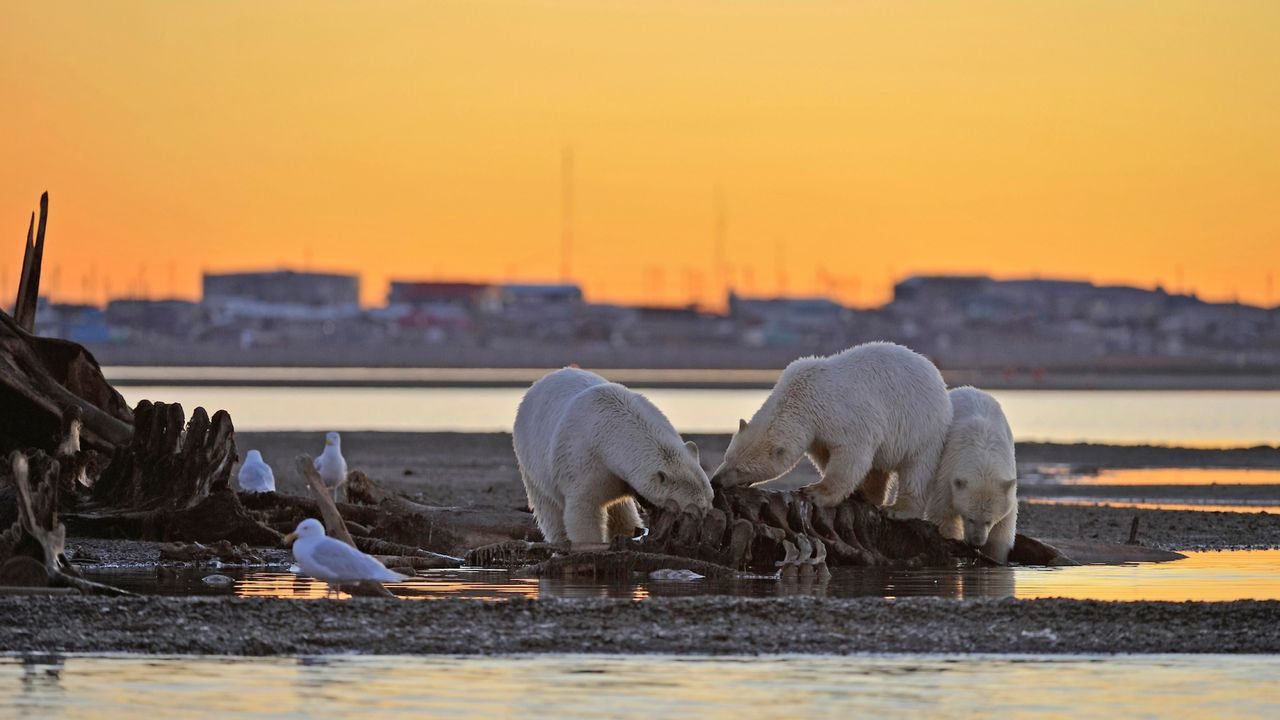
Polar bears are showing up at human camps more often — and researchers say it’s not simply because hungry bears are getting desperate. The reality is more complicated, and more concerning, than that.
As Arctic sea ice continues to shrink due to climate change, polar bears are spending longer stretches of time on shore, away from the frozen hunting grounds they depend on to catch seals. That shift is bringing them into closer contact with people. But a decade-long research project in northern Manitoba suggests the reasons behind these encounters go beyond simple hunger — and understanding the difference matters enormously for both human safety and bear conservation.
The findings come from trail camera research conducted between 2011 and 2021 at field camps in Wapusk National Park and the Churchill Northern Studies Centre (CNSC) on the west coast of Hudson Bay — one of the most closely watched polar bear regions on Earth.
Why Polar Bears Keep Showing Up Where Humans Are
Polar bears are, by nature, intensely curious animals. That curiosity is part of what makes them such effective hunters in a demanding environment — they investigate anything unusual, any new smell, any structure that wasn’t there before. It also means that human camps, field stations, and research facilities aren’t just attracting bears that are starving and desperate. They’re attracting bears that are simply being bears.
This distinction is at the center of the research. The working assumption for many years has been that bears approach human sites primarily because they’re nutritionally stressed — that ice loss is forcing them to take risks they otherwise wouldn’t. That framing puts the entire problem in one box: climate change creates hungry bears, hungry bears approach people, conflicts increase.
But the trail camera data collected across a decade suggests the picture is more layered than that. Not all bears approaching human structures are visibly thin or in obvious nutritional distress. Curiosity, learned behavior, and the sheer novelty of human-built structures appear to play significant roles as well.
How the Research Was Actually Conducted
The project began at the direct invitation of Parks Canada, after their newly constructed field camps at Broad River and Owl River in Wapusk National Park received more polar bear visits than anyone anticipated. Those camps had been deliberately positioned away from the coast specifically to reduce the likelihood of bear encounters — which made the frequency of visits surprising enough to warrant a formal study.
Researchers placed trail cameras at three camps within the park and, later, at the nearby Churchill Northern Studies Centre. The cameras ran continuously from 2011 through 2021, capturing a detailed record of when bears visited, how often, and under what apparent conditions.
| Research Location | Type of Site | Study Period |
|---|---|---|
| Broad River Camp, Wapusk National Park | Parks Canada field camp | 2011–2021 |
| Owl River Camp, Wapusk National Park | Parks Canada field camp | 2011–2021 |
| Third Wapusk National Park camp | Parks Canada field camp | 2011–2021 |
| Churchill Northern Studies Centre (CNSC) | Research facility | Added later in study period |
The west coast of Hudson Bay was chosen — or rather, it chose itself — because it’s one of the most intensively studied polar bear habitats in the world, and because the region is already experiencing measurable changes in sea ice timing and duration.
The Part of This Story Most Reports Are Missing
Much of the public conversation about polar bears and climate change focuses on body condition — the idea that thinner bears equal more desperate bears equal more dangerous encounters. That’s not wrong, but it may be incomplete.
The research points to something that complicates simple narratives: bear visits to human sites don’t map neatly onto hunger alone. If curiosity and learned behavior are driving a significant portion of these encounters, then even a healthy, well-fed bear population could produce frequent and potentially dangerous human-bear interactions as bears spend more time on shore.
This has real implications for how wildlife managers, park authorities, and researchers think about conflict prevention. Strategies built entirely around the assumption that only stressed bears approach people may underestimate the actual risk — and miss opportunities to reduce encounters through other means, such as better site design, deterrents, or adjusting where human infrastructure is placed relative to bear movement corridors.
What This Means for People Living and Working in Bear Country
For the researchers, park rangers, and staff who live and work in places like Churchill, Manitoba — already famous as a polar bear capital — these findings have immediate practical weight. Wapusk National Park and the surrounding region are not abstract research sites. They’re places where people do real work, and where a surprise bear encounter can turn dangerous fast.
The fact that camps positioned specifically to avoid bears still attracted frequent visits underlines how difficult it is to simply move infrastructure out of harm’s way. Polar bears are mobile, wide-ranging, and — as this research reinforces — naturally drawn to investigate anything new in their environment.
As climate change continues to extend the ice-free season on Hudson Bay, more bears will spend more time on land, and more of them will encounter human sites. Whether those bears are hungry or simply curious, the interactions carry risk for both species. Bears that become too comfortable around people often end up being destroyed as a public safety measure — a outcome that serves no one.
What Researchers Are Watching Next
The decade of trail camera data from Wapusk and the CNSC represents one of the longer continuous records of polar bear behavior near human structures gathered anywhere in the Arctic. Researchers are expected to continue examining what factors — season, bear age and sex, body condition, weather, sea ice timing — most strongly predict when and why bears approach human sites.
The broader goal is to build a clearer model of human-bear conflict risk that goes beyond the hunger narrative and accounts for the full range of reasons a polar bear might walk up to a camp in the middle of the night. Getting that model right matters more with each passing year, as warming temperatures reshape the landscape both bears and people share.
Frequently Asked Questions
Why are polar bears approaching human camps more often?
Researchers say it’s a combination of factors including natural curiosity, learned behavior, and more time spent on shore as Arctic sea ice shrinks — not just hunger from nutritional stress.
Where did this polar bear research take place?
The study used trail cameras at three field camps in Wapusk National Park in Manitoba and at the Churchill Northern Studies Centre, on the west coast of Hudson Bay, between 2011 and 2021.
Were the camps built in areas meant to avoid polar bears?
Yes — Parks Canada positioned the Broad River and Owl River camps away from the coast specifically to reduce polar bear encounters, but the camps still received more bear visits than expected, which prompted the research.
Does this mean all bears approaching humans are hungry?
Not according to the research. The data suggests that curiosity and other behavioral factors drive many encounters, meaning even bears not in nutritional distress may approach human structures.
What risk does this create for polar bears themselves?
Bears that become habituated to human sites and lose their natural wariness are often destroyed as public safety threats — making increased human-bear contact a conservation concern, not just a safety one.
Will polar bear encounters near human sites increase in the future?
Based on current climate trends extending the ice-free season on Hudson Bay, researchers expect more bears to spend more time on land, making encounters with human infrastructure increasingly likely.



Leave a Reply