
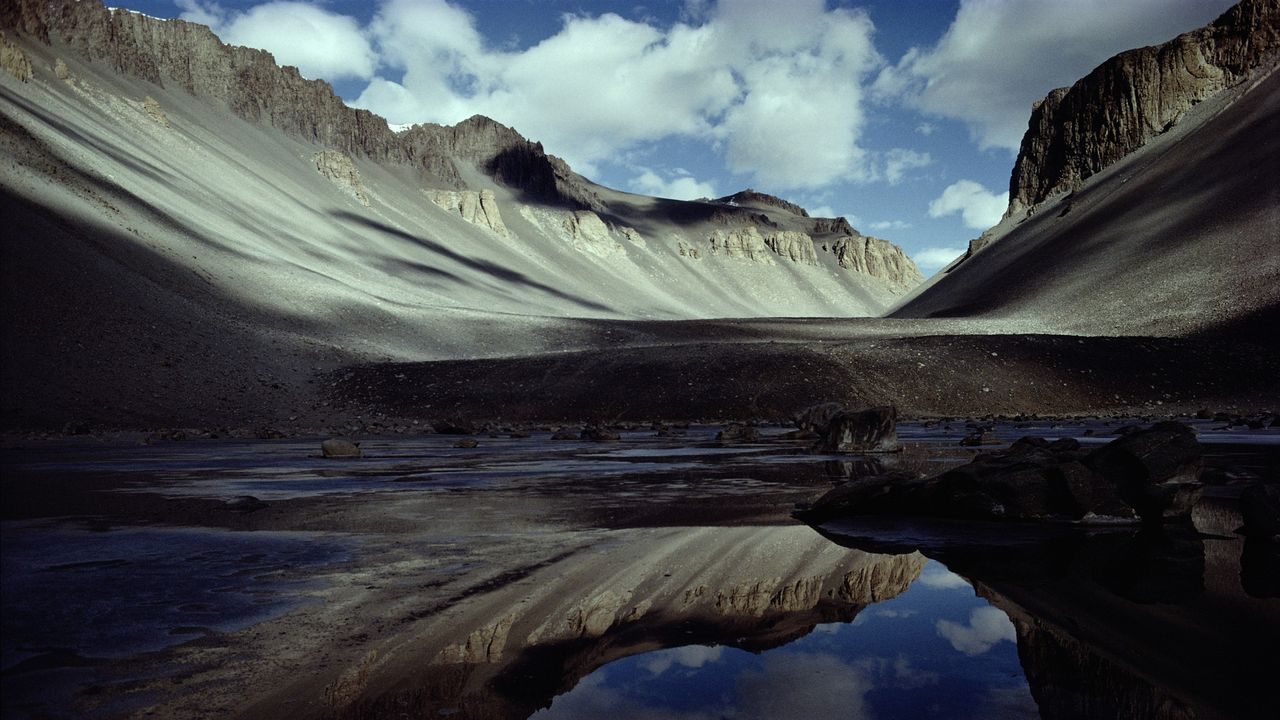
Temperatures in Antarctica’s McMurdo Dry Valleys regularly plunge to minus 58 degrees Fahrenheit (minus 50 degrees Celsius) — cold enough to freeze almost anything solid. Almost. Tucked into that brutally hostile landscape sits a small, shallow pond that simply refuses to freeze, no matter how low the mercury drops.
Don Juan Pond is one of the most remarkable bodies of water on Earth. At a salinity above 40%, it has a thick, syrupy consistency that defies the extreme cold around it. While neighboring lakes in the same valley lock up in ice for most of the year, Don Juan Pond stays liquid. Scientists have been fascinated by it for decades — and not just because of what it tells us about Antarctica.
What makes this place genuinely extraordinary is what it might tell us about another world entirely.
What Don Juan Pond Actually Is
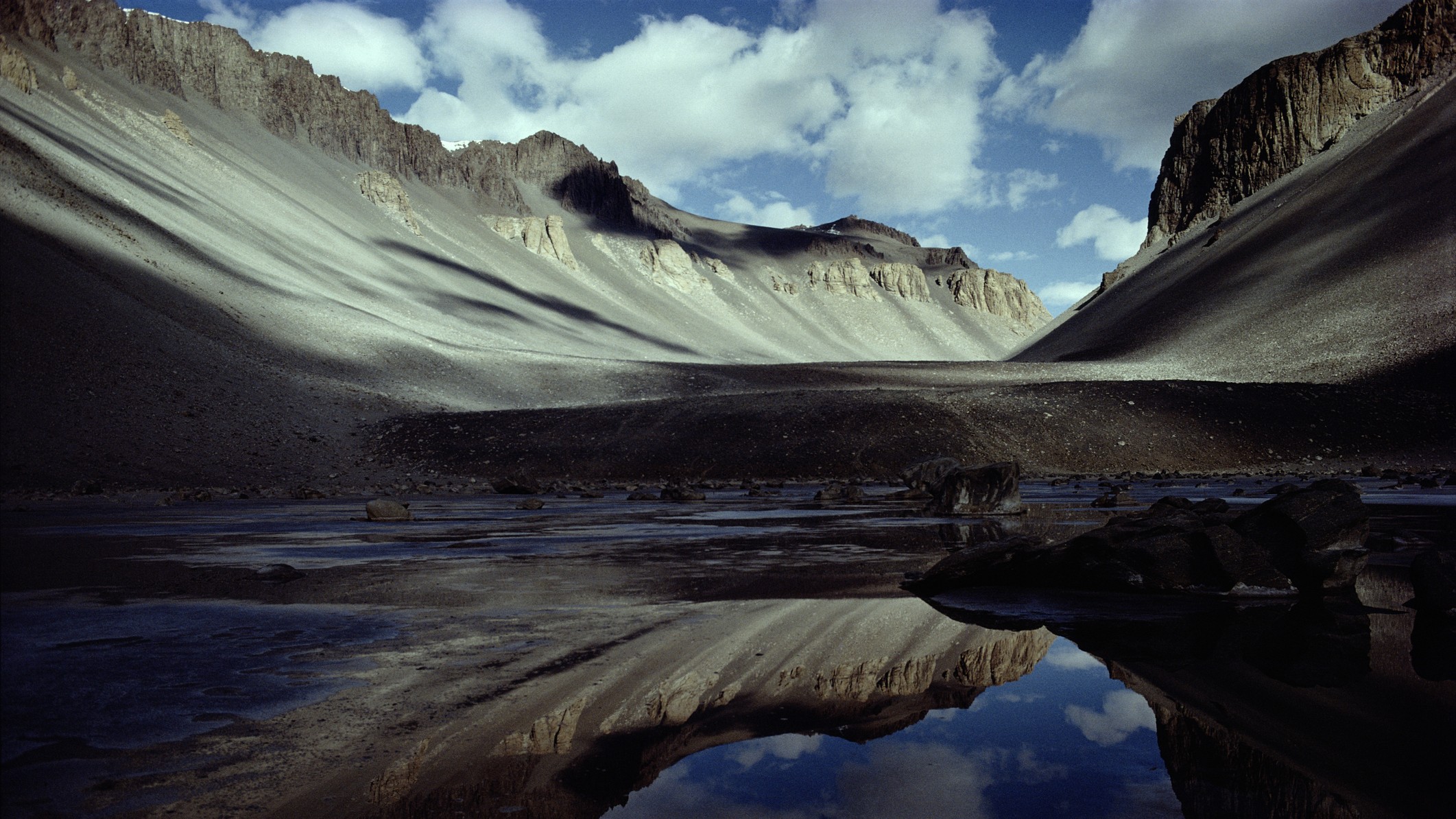
Don Juan Pond sits in Antarctica’s McMurdo Dry Valleys, one of the coldest and driest places on the planet. Despite the dramatic name, it’s a modest body of water in physical terms — just 4 inches (10 centimeters) deep and slightly smaller than the combined area of six football fields.
What it lacks in size, it more than makes up for in chemistry. The pond’s salinity exceeds 40%, placing it among the saltiest bodies of water anywhere on Earth. For comparison, the ocean averages around 3.5% salinity. The Dead Sea, famous for being so salty that people float effortlessly in it, sits at roughly 30% salinity. Don Juan Pond blows past both of them.
That extraordinary salt concentration is the reason the pond stays liquid. Salt dramatically lowers the freezing point of water, and at 40% salinity, the water simply cannot freeze under the temperatures that grip the Dry Valleys — even at minus 58°F. The result is a body of water with an almost syrupy texture, sitting exposed and unfrozen in one of the most inhospitable corners of the planet.
How Don Juan Pond Got Its Name
The pond was discovered in 1961 during a reconnaissance expedition, when two U.S. Navy helicopter pilots spotted it from the air. Their names were Donald Roe and John Hickey, and the pond was named in their honor — a combination of their first names giving rise to “Don Juan.”
Other lakes exist in the McMurdo Dry Valleys, but none come close to matching Don Juan Pond’s salinity. As a result, those other lakes freeze solid for most of the year, making Don Juan Pond a genuine anomaly in an already unusual landscape.
Don Juan Pond by the Numbers
| Feature | Detail |
|---|---|
| Location | McMurdo Dry Valleys, Antarctica |
| Coordinates | -77.5625, 161.1915 |
| Depth | 4 inches (10 centimeters) |
| Surface area | Slightly smaller than six football fields combined |
| Salinity | Above 40% |
| Minimum local temperature | Minus 58°F (minus 50°C) |
| Discovered | 1961 |
| Named after | Donald Roe and John Hickey, U.S. Navy helicopter pilots |
- Don Juan Pond is one of the saltiest bodies of water on Earth
- It never freezes, even at temperatures far below zero
- Its water has a syrupy, thick consistency due to extreme salt content
- Other lakes in the same valley freeze solid for most of the year
- The McMurdo Dry Valleys are considered one of Earth’s most Mars-like environments
Why Scientists Think Don Juan Pond Matters Beyond Antarctica
The scientific interest in Don Juan Pond goes well beyond its unusual chemistry. According to NASA, the conditions in the McMurdo Dry Valleys closely resemble conditions on Mars. The Red Planet is bitterly cold, extremely dry, and rich in a variety of salts — characteristics that mirror the environment surrounding Don Juan Pond.
That parallel has made the pond a natural laboratory for researchers trying to understand whether life — or at least liquid water — could exist on Mars. If a body of water can remain liquid in one of the harshest environments on Earth because of its salt content, the same chemistry could theoretically keep water liquid beneath the Martian surface or in sheltered regions of the planet.
For astrobiologists, Don Juan Pond represents a proof of concept. It demonstrates that liquid water doesn’t require comfortable Earth-like temperatures to persist. It just needs the right chemistry. That’s a significant finding when the search for habitable environments elsewhere in the solar system often begins with the question: where is the water?
A Place That Keeps Raising New Questions
Despite decades of study, Don Juan Pond continues to generate scientific debate. Researchers have investigated the sources of its salts, the mechanisms that keep it replenished, and whether any microbial life could survive in such an extreme environment. The pond’s combination of extreme cold, high salinity, and persistent liquid state makes it unlike almost any other place on Earth.
The McMurdo Dry Valleys themselves are already considered one of the most alien landscapes on our planet — a cold desert largely free of snow and ice, scoured by dry winds, and almost entirely devoid of visible life. Within that setting, Don Juan Pond stands out as something even stranger: a patch of liquid water that refuses to obey the rules everyone else follows.
For scientists studying the boundaries of where life can exist, and for those planning future missions to Mars, this small, shallow, salty pond in a remote Antarctic valley continues to matter far beyond its modest size.
Frequently Asked Questions
Why doesn’t Don Juan Pond freeze in such extreme cold?
The pond’s salinity exceeds 40%, which dramatically lowers the freezing point of water. Even at temperatures of minus 58°F (minus 50°C), the salt concentration prevents the water from freezing solid.
How deep is Don Juan Pond?
Don Juan Pond is just 4 inches (10 centimeters) deep, making it extremely shallow despite its scientific significance.
How did Don Juan Pond get its name?
It was named after two U.S. Navy helicopter pilots — Donald Roe and John Hickey — who spotted the pond during a reconnaissance expedition in 1961.
How salty is Don Juan Pond compared to other famous salty bodies of water?
Don Juan Pond has a salinity above 40%, which is significantly higher than the Dead Sea at roughly 30% and far above the ocean’s average of around 3.5%.
Why do scientists connect Don Juan Pond to Mars?
According to NASA, the McMurdo Dry Valleys share key characteristics with Mars — extreme cold, dryness, and high salt content — making Don Juan Pond a useful natural model for studying whether liquid water could exist on the Red Planet.
Are there other lakes near Don Juan Pond in the McMurdo Dry Valleys?
Yes, other lakes exist in the Dry Valleys, but none match Don Juan Pond’s salinity level. As a result, those other lakes freeze solid for most of the year, while Don Juan Pond remains liquid.


Leave a Reply