
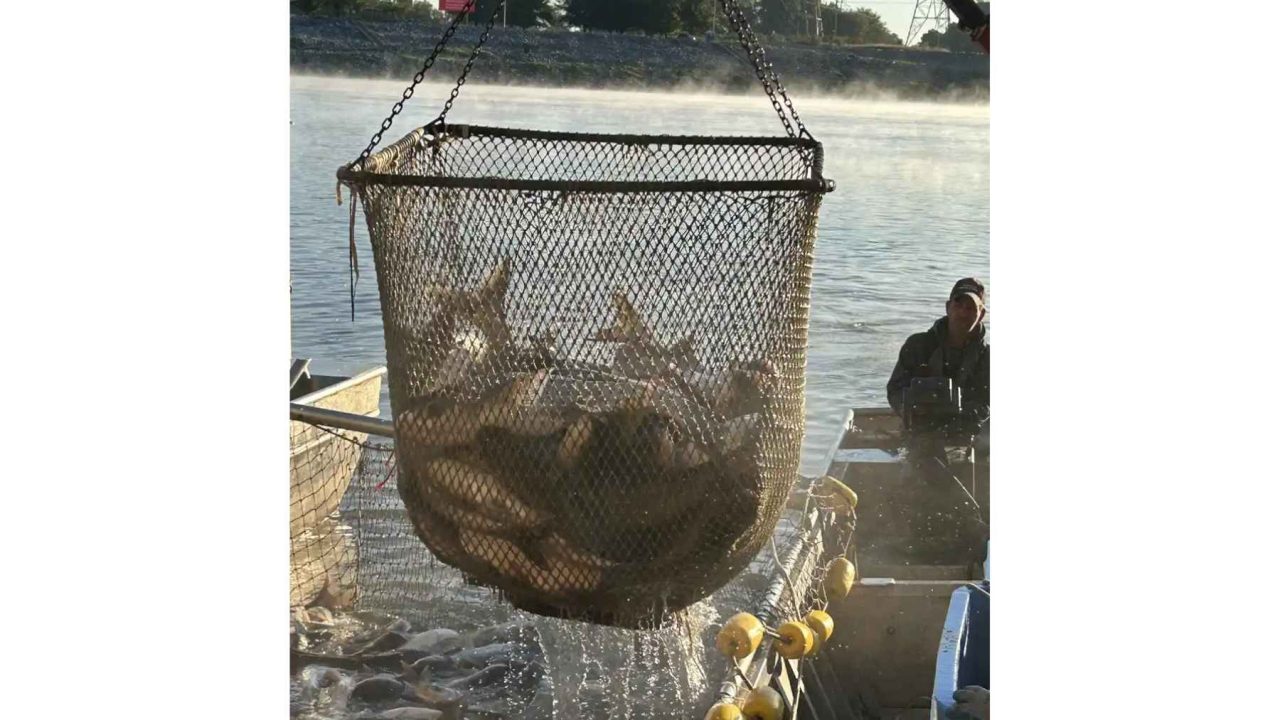
More than 109,000 pounds of invasive carp have been pulled from the Kansas River since organized removal efforts began in 2022 — and the single biggest haul came just last year. That number tells a story not just about one river in the middle of the country, but about how quickly an invasive species can establish itself, and how hard it is to push back once it does.
The scale of the problem is hard to picture until you see the yearly totals laid out side by side. Wildlife biologists have been fighting this battle methodically, expanding their reach downstream and relying on existing infrastructure to slow the spread. Progress is being made, but the river is a living system, and the work is far from over.
For anyone who lives near the Kansas River, paddles it, fishes it, or simply cares about what healthy waterways look like, this is a story worth following closely.
How Invasive Carp Take Over a River — and Why It Happens So Fast
Invasive carp — a category that includes silver carp and other related species — are not subtle invaders. They are aggressive feeders, fast reproducers, and highly adaptable. Once established in a river system, they compete directly with native fish for food and space, often winning that competition simply through sheer numbers and appetite.
Silver carp are also notorious for their behavior around boat motors. They leap out of the water when startled by engine vibrations, which creates a genuine safety hazard for anyone on the water. That detail might sound almost comical, but it represents a real and documented problem on rivers where carp populations have exploded.
The Kansas River has been dealing with this pressure for years. Organized removal efforts launched in 2022 represent a coordinated attempt to turn the tide before the population becomes impossible to manage. The question wildlife managers are now trying to answer is whether sustained removal can actually change the trajectory of a river ecosystem — or whether it is simply a holding action.
The Numbers Behind the Kansas River Invasive Carp Removal Effort
The year-by-year removal data tells an interesting story on its own. The totals have not followed a straight upward line, which is actually meaningful. Removal efforts expanded in 2025, with crews working further downstream than in previous years — about 15 additional miles — which likely contributed to the record catch that year.
| Year | Pounds of Invasive Carp Removed |
|---|---|
| 2022 | 25,339 lbs |
| 2023 | 25,949 lbs |
| 2024 | 21,649 lbs |
| 2025 | 36,863 lbs |
| Total | 109,800 lbs (approx.) |
The 2025 figure of 36,863 pounds works out to roughly 18 U.S. tons of fish removed in a single year. That is the largest annual haul since efforts began, and it pushed the cumulative total past the 100,000-pound milestone.
Key factors shaping the removal effort include:
- Organized removal operations running continuously since 2022
- Downstream expansion of approximately 15 miles in 2025
- The Bowersock Dam in Lawrence serving as a physical barrier to limit upstream spread
- Annual totals tracked and reported to help guide future strategy
What a Dam Can — and Cannot — Do Against an Invasive Species
The Bowersock Dam in Lawrence plays a quiet but significant role in this story. By acting as a physical barrier, it helps prevent carp from pushing further upstream into parts of the river that have not yet been heavily colonized. That kind of containment is enormously valuable — it means removal crews are not constantly chasing a moving front line.
But barriers are not a complete solution. During periods of high water, the effectiveness of any dam as a fish barrier can be reduced. Officials have noted that even partial containment can buy meaningful time for management efforts to take hold, but it is not a permanent fix on its own.
The combination of physical barriers and active removal is the current strategy — and so far, the numbers suggest it is producing results, even if the work is slow and the scale of the problem remains large.
What This Means for Native Species and the People Who Use the River
The practical stakes of invasive carp removal go well beyond the fish themselves. When carp dominate a river system, native species suffer. They lose access to food sources and habitat, and their populations can decline sharply. Sustained removal pressure, if maintained over time, can create openings for native fish to recover — reclaiming the food and space that carp had monopolized.
For people who use the Kansas River recreationally, the benefits are more immediate and visceral. Boaters who have experienced silver carp launching themselves out of the water near a running motor understand exactly why reducing carp populations matters on a practical, day-to-day level. Fewer carp in the water means a safer, more enjoyable experience on the river.
Anglers stand to benefit as well. Healthier native fish populations mean better fishing, and a river ecosystem that is not overwhelmed by a single invasive species is simply a more resilient and productive one across the board.
What Comes Next for the Kansas River
The 100,000-pound milestone is significant, but wildlife managers are clear that it is a waypoint, not a finish line. Removal efforts are expected to continue, and the expansion downstream in 2025 suggests that the operational footprint of the program may grow further in coming years.
The central challenge going forward is consistency. Rivers are not controlled environments. Fish populations shift, water levels change, and the pressure from invasive species does not pause between removal seasons. Maintaining steady effort over years — not just months — is what separates a successful management program from one that simply delays the inevitable.
Whether native species show measurable recovery will take time to assess. Progress in ecosystems like this has to be tracked carefully and over long periods. But the data so far shows that organized, sustained removal can move the numbers — and that matters.
Frequently Asked Questions
How many pounds of invasive carp have been removed from the Kansas River in total?
Wildlife biologists have removed approximately 109,000 pounds of invasive carp from the Kansas River since organized removal efforts began in 2022.
Which year saw the largest single-year removal of invasive carp?
2025 was the record year, with crews removing 36,863 pounds — roughly 18 U.S. tons — the largest annual haul since the program launched.
What role does the Bowersock Dam play in controlling invasive carp?
The Bowersock Dam in Lawrence acts as a physical barrier that helps limit the upstream spread of invasive carp, though its effectiveness can be reduced during high water events.
Why are silver carp considered dangerous to boaters?
Silver carp leap out of the water when startled by boat motor vibrations, creating a documented safety hazard for people on the river.
Did removal crews expand their operations in 2025?
Yes — crews expanded their work downstream by approximately 15 miles in 2025, which likely contributed to the record removal total that year.
Will invasive carp removal help native fish recover?
Officials have noted that sustained removal pressure can allow native species to reclaim food and habitat, though measurable ecosystem recovery takes time and must be tracked carefully over multiple years.

Leave a Reply