
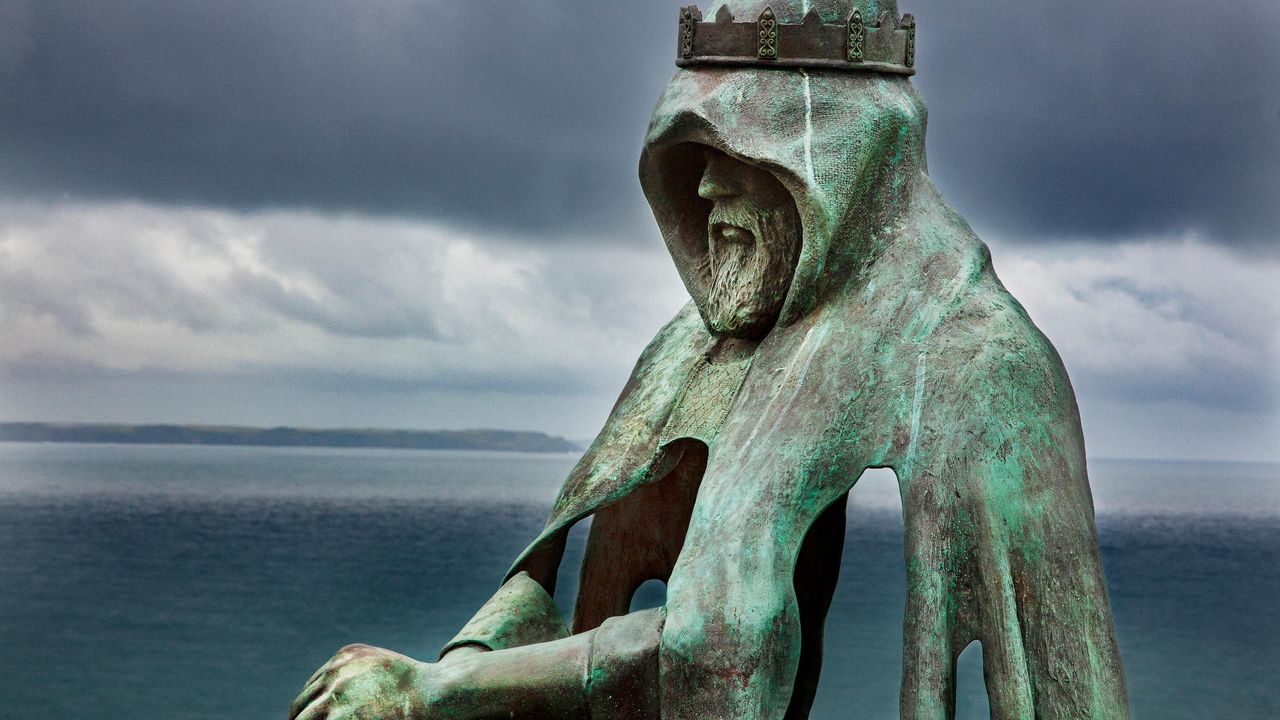
Few questions in history have captivated scholars, storytellers, and curious minds quite like this one: Did King Arthur actually exist? For centuries, the legend of a noble British king who ruled from Camelot, commanded the Knights of the Round Table, and inspired a quest for the Holy Grail has endured as one of the most powerful myths in Western culture. But behind the romance and the magic, historians and archaeologists have long wrestled with whether any of it is rooted in real events — or real people.
The legend is certainly vivid. Stories tell of Arthur slaying giants, uniting fractured kingdoms, and presiding over a golden age of chivalry. Some accounts place his birth or conception at Tintagel, a dramatic clifftop site in Cornwall, England, that archaeological evidence shows genuinely flourished between the fifth and seventh centuries. A large castle was built there in the 13th century, long after the supposed Arthurian era — which raises its own questions about how history, myth, and political ambition tend to get tangled together.
So what do we actually know? And how much of the Arthur story is legend built on a kernel of historical truth?
The Legend of King Arthur — What the Stories Actually Claim
The tales surrounding King Arthur are sweeping and often contradictory, shaped by centuries of retelling across different cultures and time periods. At their core, they share a few consistent elements: a powerful British king, a court of noble knights, a round table designed so no man sat above another, and a kingdom centered on the mythical city of Camelot.
The stories also include some of the most recognizable quests and episodes in medieval literature — the search for the Holy Grail, battles against supernatural enemies, and the tragic fall of a golden kingdom. Arthur is frequently portrayed as a once-and-future king, a figure who did not truly die but sleeps, waiting to return when Britain needs him most.
Some traditions specifically connect Arthur to Tintagel in Cornwall, describing it as the place where he was conceived or born. That detail has given the site an almost sacred status in Arthurian lore — and it has made Tintagel one of the most-visited and most-studied archaeological locations in Britain.
What Tintagel Actually Tells Us
Tintagel is real, and it is genuinely significant. Archaeological evidence confirms the site was active and apparently prosperous between the fifth and seventh centuries — precisely the period when a historical Arthur, if he existed, would have lived. Finds from the site suggest it had connections to the wider Mediterranean world, pointing to a place of some wealth and importance in post-Roman Britain.
The castle that most visitors associate with Tintagel today, however, came much later. It was constructed in the 13th century — roughly 700 years after the supposed Arthurian age. That timeline matters, because it reflects a recurring pattern in the Arthur story: later generations repeatedly attached his name and legend to real places and real history, making it extremely difficult to separate genuine early medieval memory from deliberate mythmaking.
| Aspect of Tintagel | Detail |
|---|---|
| Location | Cornwall, England |
| Period of flourishing | Fifth to seventh centuries |
| Castle construction | 13th century |
| Arthurian connection | Said in legend to be Arthur’s birthplace or place of conception |
Why the Historical Question Is So Hard to Answer
The core problem with pinning down a historical King Arthur is that the written sources are sparse, late, and often contradictory. Britain in the fifth and sixth centuries was a fragmented, post-Roman world with limited written records. What documentation does exist was largely produced by monks and chroniclers writing well after the events they described — and with their own political and religious agendas shaping what they chose to record.
Arthur’s name does appear in early medieval Welsh poetry and later chronicles, but scholars continue to debate whether these references point to a single historical individual, a composite of several real war leaders, or a figure who was largely or entirely mythological from the beginning. The absence of contemporary documentation — a letter, an inscription, a coin bearing his name from his own supposed lifetime — is a significant obstacle for anyone arguing for a strictly historical Arthur.
- No contemporary written records from Arthur’s supposed lifetime confirm his existence
- Early medieval Britain had limited documentation due to the collapse of Roman administrative structures
- Later chronicles referencing Arthur were written centuries after the events described
- Archaeological sites like Tintagel show genuine fifth-century activity but no direct proof of Arthur
- The 13th-century Tintagel castle postdates the Arthurian era by roughly 700 years
Why the Legend Endures — and Why It Matters
Even if a strictly historical King Arthur never existed, the legend itself is a serious historical artifact. The stories reflect real anxieties and hopes from the periods in which they were written and rewritten — fears about invasion, longing for a lost golden age, ideals about just kingship and noble conduct. The fact that the legend has been continuously reshaped across more than a thousand years says something important about the needs it fulfills.
For archaeologists and historians, sites like Tintagel remain genuinely valuable regardless of the Arthur question. They offer a window into post-Roman Britain — a period that is still poorly understood and rich with unanswered questions about how people lived, traded, and organized themselves after the withdrawal of Roman power.
The search for Arthur, in that sense, has driven real scholarship and real discovery. Whether or not the man himself existed, the legend has pointed researchers toward corners of history that might otherwise have gone unexplored.
Where the Research Stands Today
Most mainstream historians and archaeologists remain cautious. The prevailing view is that there may have been a real fifth or sixth century British war leader whose deeds formed the seed of the later legend — but that the Arthur of Camelot, the Round Table, and the Holy Grail is overwhelmingly a literary and mythological creation built up over many centuries.
Tintagel continues to be excavated and studied, and new finds periodically reignite the debate. The site’s genuine fifth-century significance keeps it at the center of Arthurian research, even as scholars are careful to distinguish between what the archaeology actually shows and what the legend claims.
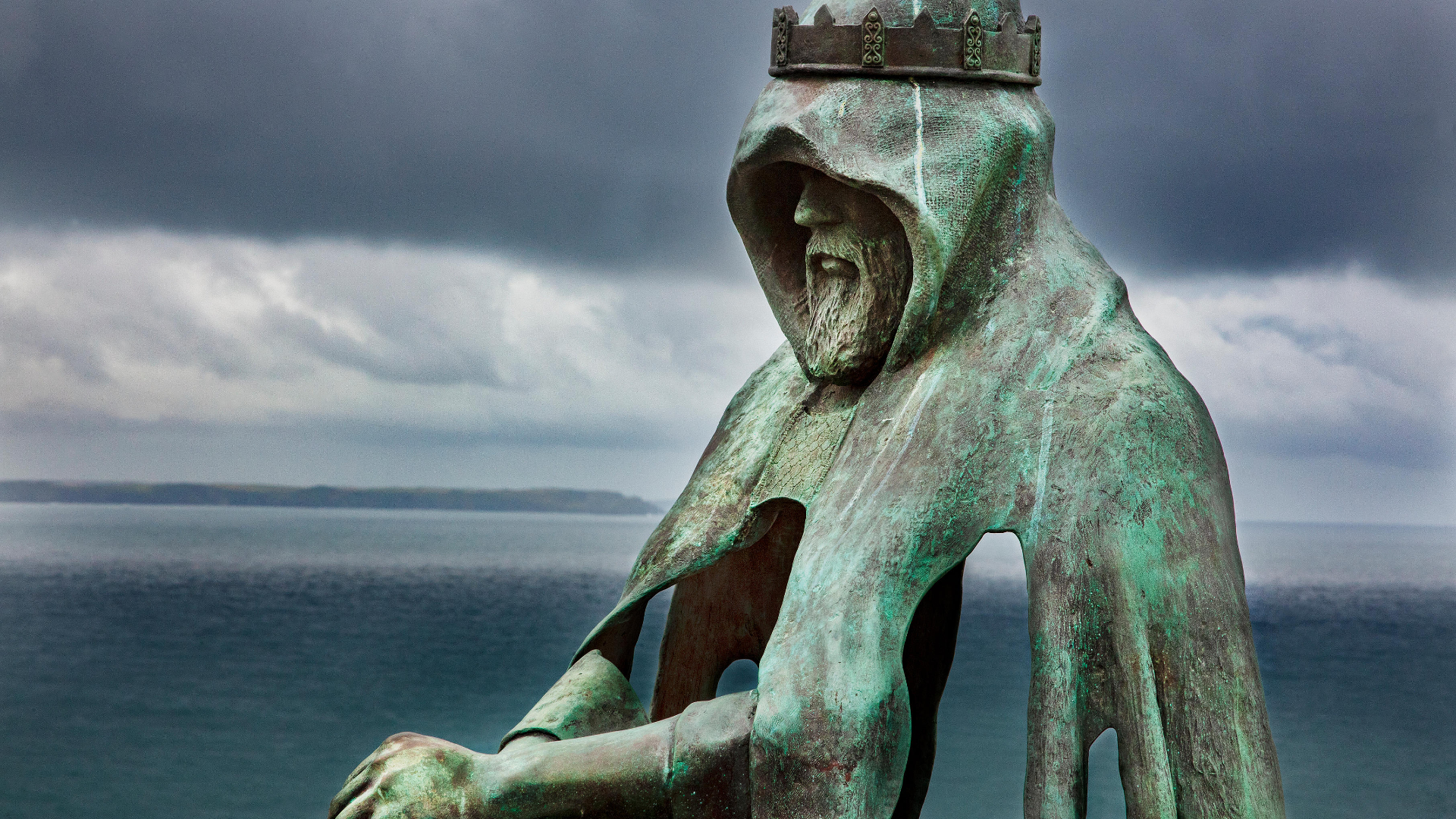
The honest answer to whether King Arthur really existed is: we don’t know for certain — and that uncertainty, after all this time, may be part of what keeps the story alive.
Frequently Asked Questions
Did King Arthur really exist?
Most historians believe there may have been a real early medieval British leader whose deeds inspired the legend, but the Arthur of Camelot and the Round Table is widely considered a literary creation built over centuries.
What is Tintagel and why is it connected to King Arthur?
Tintagel is a site in Cornwall, England, that flourished between the fifth and seventh centuries. Some Arthurian legends describe it as the place where Arthur was conceived or born.
When was Tintagel Castle built?
The castle at Tintagel was constructed in the 13th century, roughly 700 years after the period in which a historical Arthur would have lived.
Is there any archaeological proof that King Arthur existed?
No direct archaeological evidence — such as a contemporary inscription or document bearing his name — has been confirmed. Sites like Tintagel show genuine fifth-century activity but no direct proof of Arthur specifically.
What are the main elements of the King Arthur legend?
The core legend includes Arthur ruling from Camelot, commanding the Knights of the Round Table, organizing a search for the Holy Grail, and slaying a giant, among many other tales.
Why do scholars keep studying the King Arthur question?
Even without proof of Arthur himself, sites like Tintagel offer valuable insights into post-Roman Britain — a poorly documented but historically important period — making the research worthwhile regardless of the mythological question.




Leave a Reply