
He survived exile, assassination orders, and decades of obscurity — only to die just two days after finally returning to England. The story of Edward the Exile is one of the most dramatic near-misses in royal history, and it’s far from the only one.
Medieval England’s throne was never simply inherited and forgotten. It was fought over, contested, and sometimes lost by men who came within a heartbeat of wearing the crown. Some were undone by a single battle. Others died at exactly the wrong moment. A few were simply outmaneuvered by rivals who wanted the prize more — or were willing to be more ruthless in taking it.
The story of who almost became King of England is, in many ways, just as revealing as the story of who actually did.
The Men History Nearly Crowned
net highlights ten men from medieval England who came remarkably close to the throne but never quite reached it. Their stories cut across centuries of English history, spanning exile, sudden death, political betrayal, and battlefield defeat.
What unites them is a particular kind of historical tragedy — the sense that one small change, one different decision, one battle won or lost, might have rewritten everything. These weren’t fringe claimants with weak cases. Many had legitimate, even compelling, claims to the crown.
The case of Edward the Exile is perhaps the most poignant. His father was King Edmund Ironside, who died in 1016 following a struggle for the English throne against Cnut the Great. Edward was only a few months old at the time.
Cnut, unwilling to leave potential rivals alive, ordered that Edward and his brother Edmund be sent abroad — with instructions that they be killed. Instead, remarkably, the children were spared. They were taken first to Sweden, then secretly sent to the court of Kyiv, where they came under the protection of Yaroslav the Wise. Eventually, the brothers made their way to Hungary, where Edward spent most of his life in exile and married a Hungarian noblewoman named Agatha.
Two Days From the Throne
Decades passed. Then, King Edward the Confessor — who had no children of his own — learned that his long-lost nephew was still alive. He invited Edward back to England in 1057, apparently intending to make him his heir.
Edward the Exile arrived in England. Two days later, he was dead.
The circumstances remain unclear to this day. Historians have noted that his sudden death, coming almost immediately after his return, has sometimes been suspected to involve foul play — though nothing has ever been confirmed. Whatever the cause, the throne that had been waiting for him for decades slipped away in an instant.
His young son, Edgar the Ætheling, would go on to become another near-king in his own right — a second generation of almost-royals produced by the same extraordinary family.
A Pattern of Near-Misses Across Medieval England
The story of Edward the Exile illustrates a broader pattern that defined medieval English succession: the throne was always closer — and more fragile — than it appeared.
Their routes to near-kingship varied considerably:
- Some died unexpectedly, as Edward the Exile did, at the worst possible moment
- Others were overthrown after briefly holding power or being positioned to hold it
- Some were only a single battle away from claiming the crown
- A few were undone by exile, like Edward himself — sent abroad as children to remove them from the political equation
What makes these stories compelling isn’t just the drama. It’s what they reveal about how unstable medieval succession actually was — and how much of English history turned on accidents, illnesses, and moments of violence that could easily have gone another way.
Key Facts About Edward the Exile’s Remarkable Journey
| Detail | Information |
|---|---|
| Father | King Edmund Ironside |
| Year father died | 1016 |
| Age at time of exile | A few months old |
| Ordered exile by | Cnut the Great |
| Refuge found with | Yaroslav the Wise (Kyiv), then Hungary |
| Wife | Agatha, a Hungarian noblewoman |
| Year of return to England | 1057 |
| Days survived after return | Two |
| Son and heir | Edgar the Ætheling |
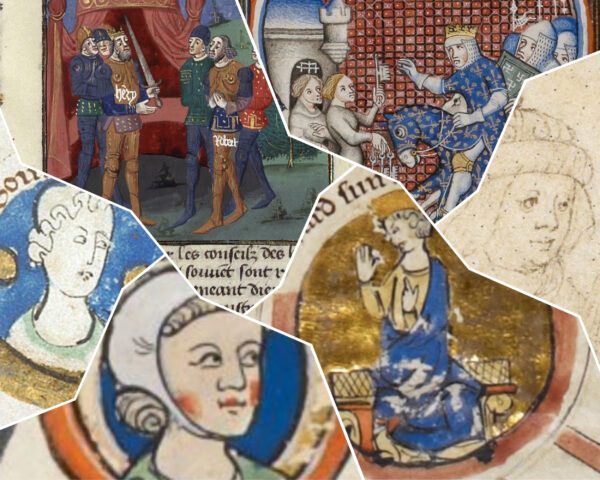
| Historical source image | 13th-century genealogical scroll, British Library Royal MS 14 B V |
Why These Stories Still Matter
It’s easy to read medieval history as a series of kings and battles — a fixed sequence of rulers who were always going to rule. The reality was far messier. The men who nearly became King of England remind us that history doesn’t move in straight lines.
Edward the Exile spent roughly forty years in hiding across Sweden, Kyiv, and Hungary before anyone in England even knew he was still alive. His entire life was shaped by a political decision made when he was an infant. When his moment finally came, it lasted 48 hours.
Edgar the Ætheling — Edward’s son, and another of the ten near-kings identified in the source — inherited that same precarious position. The pattern didn’t end with one generation.
For anyone interested in medieval England, these near-misses offer something the standard royal timeline can’t: a sense of how differently everything could have turned out, and how many lives were shaped — and ended — by proximity to a crown they never quite wore.
Frequently Asked Questions
Who was Edward the Exile?
Edward the Exile was the son of King Edmund Ironside, sent abroad as an infant after his father’s death in 1016. He spent decades in exile in Sweden, Kyiv, and Hungary before being invited back to England in 1057 as a potential heir to Edward the Confessor.
Why was Edward the Exile sent out of England?
Cnut the Great, who took the English throne after Edmund Ironside’s death, ordered Edward and his brother Edmund sent abroad with instructions that they be killed — to eliminate potential rival claimants. They were spared and instead found refuge abroad.
How did Edward the Exile die?
He died just two days after arriving back in England in 1057. The exact circumstances remain unclear, and some historians have suspected foul play, though nothing has been confirmed.
Who was Edgar the Ætheling?
Edgar the Ætheling was Edward the Exile’s young son, who himself became another near-king of England after his father’s sudden death — representing a second generation of the same family to come close to the throne without ever claiming it.
How many men nearly became King of England in the medieval period?
Where can I find the historical image of Edward the Exile?
Edward the Exile is depicted on a 13th-century genealogical scroll held at the British Library, catalogued as Royal MS 14 B V.

Leave a Reply