
Bamboo toilet paper has been widely marketed as the eco-friendly alternative to conventional tissue — but new research suggests it may actually carry a larger carbon footprint than the standard roll sitting in most American bathrooms right now. That finding is turning one of the bathroom’s most popular green swaps on its head.
At the same time, a quieter revolution is already underway. Thousands of households are moving away from paper altogether, switching to bidets and water-based washing to cut both costs and waste. Together, these two shifts are forcing a real rethink of what “clean” actually means in the bathroom — and which choices are genuinely better for the planet.
If you have ever stood in a store aisle wondering whether bamboo tissue was worth the premium price, the answer is more complicated than the packaging suggests.
What the New Bamboo Study Actually Found
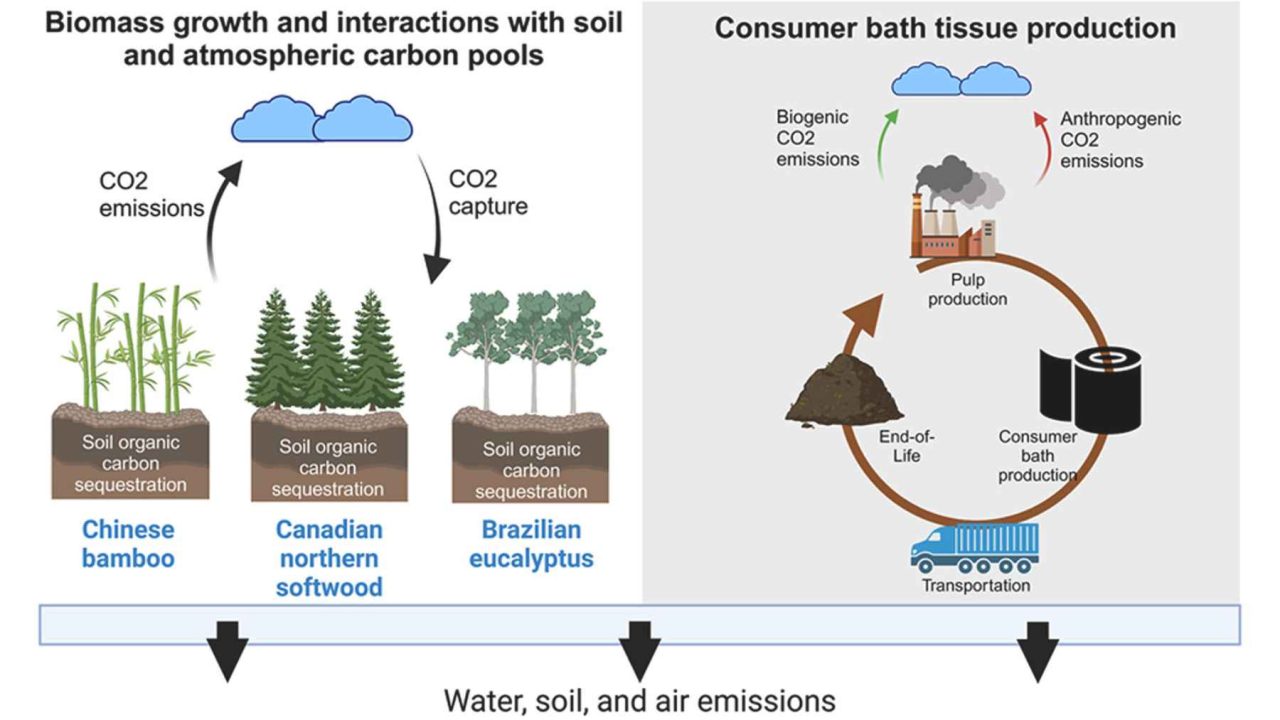
Researchers at North Carolina State University conducted a full life-cycle assessment of consumer bath tissue, comparing products head to head from raw material extraction all the way through to disposal — what scientists call a cradle-to-grave analysis.
They measured standard US tissue made from Brazilian eucalyptus pulp and Canadian softwood pulp against bamboo-based tissue manufactured in China and shipped across the ocean to American consumers.
The results were striking. A ton of typical US wood-based bathroom tissue — produced using a common manufacturing technology known as light dry creped — generated roughly 1,824 kilograms of carbon dioxide equivalent across its full life cycle. Bamboo tissue made in China and delivered to the US came in at approximately 2,400 kilograms of CO2 equivalent for the same amount of product.
That is a difference of more than 575 kilograms per ton — nearly a 32 percent higher climate cost for the product many shoppers have been paying extra to buy specifically because they believed it was greener.
Why the Numbers Look This Way
The gap largely comes down to one factor that eco-labeling rarely highlights: shipping distance. Bamboo grows abundantly in China, but getting that finished product to a bathroom shelf in the United States requires crossing an ocean. That transoceanic freight adds a substantial emissions burden that the renewable nature of bamboo as a raw material does not fully offset.
This does not mean bamboo tissue is inherently worse for the environment in every context. A product grown and sold locally would carry a very different footprint. But for the version most American consumers are actually buying — imported from China — the life-cycle numbers tell a sobering story.
It is a useful reminder that “natural” and “sustainable” are not always the same thing, and that where a product is made and how far it travels matters enormously in any honest environmental accounting.
Toilet Paper Alternatives at a Glance
Here is how the key options compare based on what the research and broader context reveal:
| Product Type | CO2e per Ton (approx.) | Key Factor |
|---|---|---|
| US wood-based tissue (light dry creped) | ~1,824 kg CO2e | Domestic production, established supply chain |
| Bamboo tissue (China, imported to US) | ~2,400 kg CO2e | Transoceanic shipping adds significant emissions |
| Bidet / water-based washing | Significantly lower paper use | Eliminates or drastically reduces paper consumption |
The bidet option stands apart because it sidesteps the paper question almost entirely. Thousands of households are already making this switch, drawn by the combination of lower ongoing costs, reduced waste, and — advocates argue — a more thorough clean.
The Real-World Impact on Your Bathroom and Your Budget
For everyday consumers, the research has a few practical takeaways worth sitting with.
- Bamboo tissue marketed as eco-friendly may not deliver on that promise if it is imported from China — the shipping emissions erode much of the environmental benefit.
- Conventional US-made tissue, while still resource-intensive, currently carries a lower cradle-to-grave carbon cost than its imported bamboo counterpart.
- Bidets and water washing represent the most radical reduction in paper use and are gaining traction among households looking to cut both their environmental footprint and their grocery bills.
- Origin matters — a bamboo product made and sold locally would have a very different environmental profile than one shipped across the Pacific.
The broader message is that sustainable shopping requires more than reading the front of the package. Life-cycle thinking — accounting for everything from raw materials to manufacturing energy to freight — tells a very different story than marketing copy does.
Where This Conversation Is Headed
The North Carolina State University research adds serious academic weight to a debate that has mostly played out in lifestyle blogs and social media threads. As more rigorous life-cycle assessments reach the public, shoppers and retailers alike will face harder questions about what eco-friendly labeling actually means and who is responsible for verifying it.
Meanwhile, the slow but steady adoption of bidets in Western households — long standard in much of Europe, Asia, and South America — suggests that the toilet paper market itself may be facing genuine long-term disruption. The shift is not happening overnight, but it is happening.
Whether driven by environmental concern, cost savings, or simple hygiene preference, more people are questioning an assumption that has gone largely unchallenged for generations. The humble toilet paper roll, it turns out, has a complicated story behind it.
Frequently Asked Questions
Is bamboo toilet paper actually worse for the environment than regular toilet paper?
According to research from North Carolina State University, bamboo tissue imported from China to the US carries a higher carbon footprint — roughly 2,400 kg CO2e per ton — compared to about 1,824 kg CO2e per ton for standard US wood-based tissue, largely due to transoceanic shipping emissions.
What technology was used to measure the carbon footprint of toilet paper?
Researchers used a full life-cycle assessment, sometimes called a cradle-to-grave analysis, which tracks environmental impact from raw material extraction through manufacturing, shipping, and disposal.
What raw materials are used in standard US toilet paper?
According to the study, typical US wood-based bathroom tissue is made from Brazilian eucalyptus pulp and Canadian softwood pulp, processed using a method called light dry creped manufacturing.
Are bidets a genuinely cleaner and cheaper alternative to toilet paper?
Advocates argue that water-based washing eliminates or dramatically reduces paper use, lowering both costs and waste — though specific cost savings figures were not detailed in
Does bamboo toilet paper have a lower footprint if it is made locally?
The research specifically examined bamboo tissue manufactured in China and shipped to the US. A locally produced bamboo product would carry a different emissions profile, as transoceanic freight is a major driver of the higher carbon cost found in the study.
Who conducted the bamboo toilet paper research?
The life-cycle assessment was carried out by researchers at North Carolina State University, comparing multiple types of consumer bath tissue across their full environmental impact from production to disposal.



Leave a Reply