
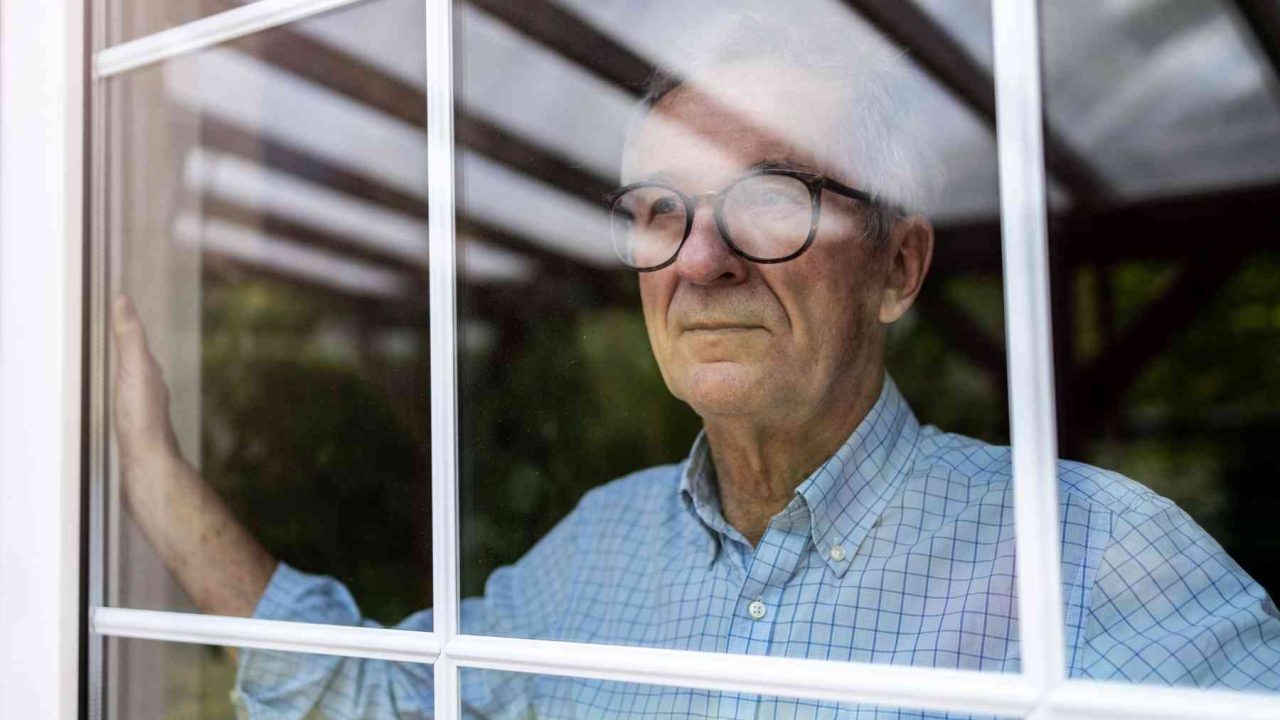
What if reaching your 60s without a tight circle of close friends says less about who you are — and more about how much you’ve given to everyone else?
That’s the picture emerging from research on aging, caregiving, and loneliness. For decades, the assumption has been that socially isolated older adults are somehow deficient — cold, difficult, or simply bad at relationships. But a closer look at the science suggests something more complicated and, frankly, more human is often going on.
In many cases, people who arrive at their sixth decade without close friendships didn’t push people away. They wore themselves out holding everyone else up.
The Research That Challenges What We Think We Know About Loneliness After 60
A study published in The Journals of Gerontology, Series B examined 223 dementia caregivers with an average age of approximately 61. Researchers tracked whether the number of close friends a person had, the quality of their daily social interactions, and the burden of caregiving were connected to loneliness — not just in general terms, but in real time, moment to moment.
The findings were clear without being simple. Caregivers who had more close friends tended to report lower levels of momentary loneliness. Interactions with friends, specifically, were linked to feeling less lonely — particularly among those carrying the heaviest caregiving loads.
That last part matters. It wasn’t just social contact in general that helped. It was friendship — the kind built on mutual support and genuine connection — that made a measurable difference in how lonely someone felt on any given day.
What the study also makes visible, though, is the flip side: people who have spent years as the primary emotional support for others — a parent with dementia, a struggling spouse, an adult child in crisis — often find that their own friendships quietly erode. Not because they stopped caring about people, but because they had nothing left to give.
How Years of Supporting Others Can Quietly Hollow Out Your Social Life
There’s a particular kind of exhaustion that comes from being the person everyone leans on. Psychologists sometimes describe it as compassion fatigue — a state where the emotional resources required to maintain close relationships simply run dry.
For long-term caregivers and chronic “helpers,” friendship can stop feeling like a refuge. Instead, it starts to feel like one more obligation — another relationship that requires energy they don’t have, another person whose needs they’ll be expected to meet.
So they pull back. Not out of coldness, but out of survival. And over years, sometimes decades, the friendships thin out. By the time they reach their 60s, the social circle that might have sustained them is gone — not because they were antisocial, but because the emotional math stopped adding up.
This distinction is important. Labeling older adults without close friends as simply “bad at relationships” misses the structural reality of what many of them have been living through.
What the Numbers Actually Show
| Study Detail | Finding |
|---|---|
| Publication | The Journals of Gerontology, Series B |
| Sample size | 223 dementia caregivers |
| Average participant age | Approximately 61 years old |
| Key variable measured | Momentary loneliness in real time |
| Key finding on friendships | More close friends linked to lower momentary loneliness |
| Strongest effect observed | Friend interactions most beneficial among those with highest caregiving burden |
The study focused specifically on dementia caregivers, but the implications reach further. Anyone who has spent extended years in a high-support role — raising children largely alone, caring for a chronically ill partner, managing a parent’s decline — will recognize the pattern the research describes.
Why This Matters for People in Their 50s and 60s Right Now
If you’re in this situation — or if you recognize it in someone you know — the research offers something more useful than judgment. It offers a framework for understanding what happened, and potentially, what could change.
The study’s finding that friend interactions reduce loneliness most sharply among people carrying the heaviest caregiving burdens is striking. It suggests that the people who most need genuine friendship are often the same people least likely to have maintained it — and that rebuilding those connections could have an outsized positive effect on their wellbeing.
A few things the research points toward:
- Having more close friends is associated with lower day-to-day loneliness, not just lower reported loneliness overall
- The quality and mutuality of social interactions appears to matter — not just the volume of contact
- People who have been primary caregivers are at particular risk of social isolation, regardless of their underlying personality
- The absence of close friendships in older adults is not reliably a sign of antisocial personality or emotional coldness
The Part of This Story Most People Miss
Society tends to romanticize caregiving while simultaneously ignoring its costs. The person who spent fifteen years managing a parent’s dementia, attending every appointment, fielding every crisis call, is often celebrated for their dedication — right up until the moment we notice they have no friends, and quietly wonder what’s wrong with them.
What’s worth sitting with is this: the research suggests that social isolation in older adults is frequently not a character flaw. It’s often the accumulated cost of years of giving without receiving enough in return.
That reframe doesn’t solve the loneliness. But it does change where the conversation should start — with compassion rather than assumption, and with a recognition that rebuilding connection after years of depletion is genuinely hard work, not evidence of failure.
For people in their 60s navigating this reality, the research at least confirms that what they’re experiencing has a name, a cause, and a body of evidence behind it. That’s not a small thing.
Frequently Asked Questions
What does the research say about people who reach 60 without close friends?
A study in The Journals of Gerontology, Series B suggests that social isolation in older adults is often linked to long-term caregiving and emotional exhaustion, not antisocial personality traits.
Who was studied in this research?
The study examined 223 dementia caregivers with an average age of approximately 61 years old.
Does having more friends actually reduce loneliness in caregivers?
Yes — the research found that caregivers with more close friends reported lower momentary loneliness, and that friend interactions were especially beneficial for those carrying the heaviest caregiving burdens.
Why do long-term caregivers often lose their friendships?
Research points to emotional exhaustion and compassion fatigue — over years of supporting others, friendship can begin to feel like another obligation rather than a source of comfort, leading people to withdraw.
Does this research apply only to dementia caregivers?
The study focused on dementia caregivers specifically, but the patterns described — social withdrawal driven by prolonged caregiving roles — are broadly recognized across different caregiving contexts.
Can people in their 60s rebuild close friendships after years of isolation?




Leave a Reply