
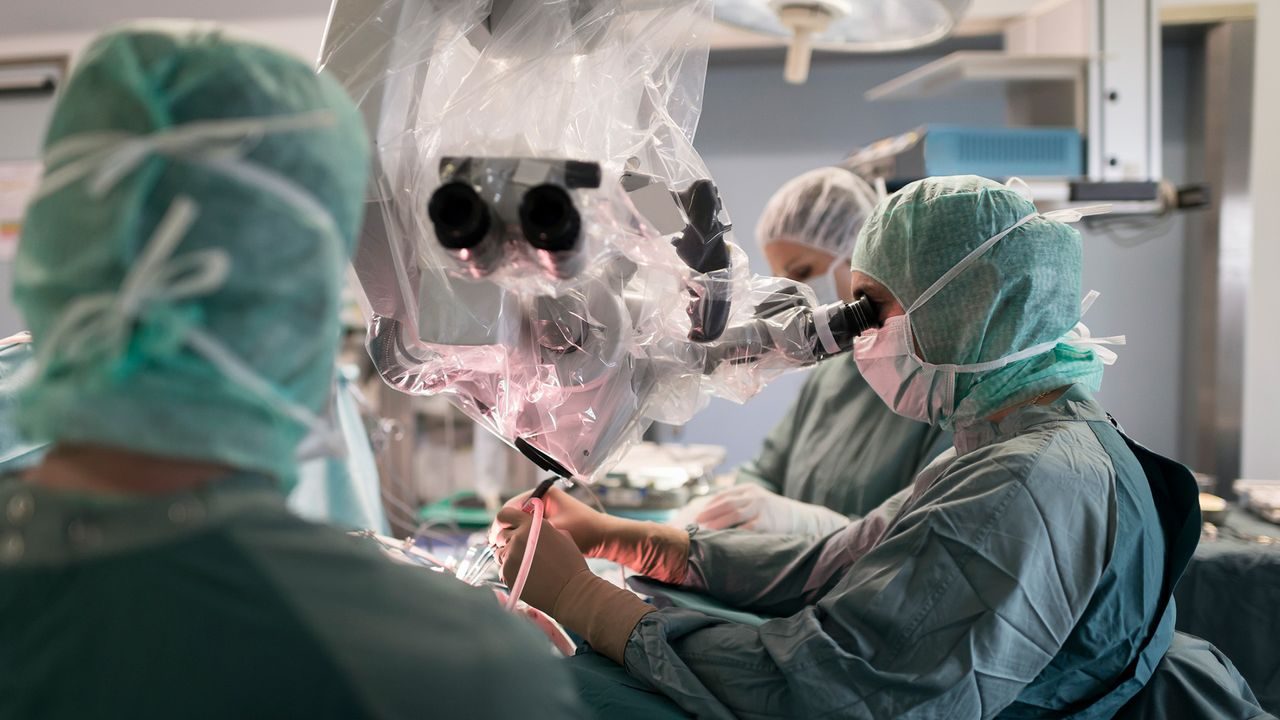
More than 150 disembodied heads are reportedly stored in cryogenic chambers at the Alcor facility in Arizona — preserved in liquid nitrogen by people who hope future medicine will give them a second shot at life. It’s one of the stranger corners of modern science, and it raises a question that feels almost too obvious to ask: why not just attach those heads to new bodies right now, while they’re still relatively intact?
The answer cuts to the heart of what makes the human brain so unlike any other organ — and why a brain transplant remains firmly in the realm of science fiction, no matter how advanced surgery becomes.
As it turns out, the obstacle isn’t surgical skill. Today’s neurosurgeons can accomplish extraordinary things. The barrier is something far more fundamental, rooted in how the nervous system is built and how — or more precisely, how poorly — it repairs itself.
Why a Brain Transplant Is Really a Body Transplant
Before getting into the science, there’s a framing issue worth addressing. Dr. Max Krucoff, an assistant professor of neurosurgery at the Medical College of Wisconsin, prefers not to call the procedure a brain transplant at all. He’d rather call it a body transplant — and the distinction matters more than it might seem.
Unlike receiving a donor heart or a new liver, transplanting a brain into someone else’s body wouldn’t just treat a patient. It would, as Dr. Krucoff put it, make them
“a completely new human being.”
He told Live Science plainly:
“Your agency, your identity, is contained within your brain.”
In other words, the person waking up after such a procedure wouldn’t be the body donor recovering with a new brain. They’d be the brain’s original owner, now living in an entirely different body. That philosophical distinction shapes how researchers and ethicists think about the procedure — and why the terminology matters when discussing whether it should ever happen at all.
The Real Reason Brain Transplants Aren’t Possible Yet
Setting aside the identity questions, the core scientific barrier is this: surgeons currently cannot reconnect the nerves of the central nervous system after they’ve been severed.
The central nervous system — which includes the brain and the spinal cord — does not repair itself the way other tissues in the body do. When you cut a peripheral nerve, the kind that branches out through your arms, legs, and torso, there’s at least some capacity for regrowth and functional recovery. Surgeons have developed techniques to work with peripheral nerves in ways that can restore partial sensation or movement.
But the central nervous system plays by different rules entirely. Once those connections are broken, current medicine has no reliable way to forge them again. A transplanted brain would be severed from its new body’s spinal cord, and no existing surgical technique can bridge that gap in a way that restores real, functional communication between brain and body.
That means a transplanted brain wouldn’t be able to move its new body, receive sensory information from it, or regulate its basic functions the way a brain normally does. The procedure, as things stand, would not produce a living, functioning person — it would produce a brain in biological isolation, attached to a body it cannot communicate with.
What Makes Central Nervous System Connections So Hard to Restore
The gap between peripheral and central nervous system repair is one of the most significant unsolved problems in neuroscience. Here’s a quick breakdown of why the two are so different:
| Nervous System Type | Location | Can It Repair After Injury? | Surgical Reconnection Possible? |
|---|---|---|---|
| Peripheral Nervous System | Nerves branching beyond brain and spinal cord | Partially, in some cases | Yes, with some functional recovery |
| Central Nervous System | Brain and spinal cord | Extremely limited | Not currently possible |
This distinction is why spinal cord injuries are so devastating and so difficult to treat. It’s also precisely why a brain transplant — which would require severing and then reconnecting the spinal cord — remains out of reach. The surgery itself might theoretically be performed. The reconnection is where medicine hits a wall.
What This Means for Cryonics and the Alcor Patients
The people whose heads are stored at Alcor are, in a sense, betting on two things happening simultaneously in the future: scientists learning how to successfully revive a cryogenically preserved brain, and surgeons learning how to connect that brain to a new body in a way that actually works.
Right now, neither of those things is possible. Scientists have not yet demonstrated the ability to revive a cryogenically preserved brain with its memories, personality, and functions intact. And even if they could, the transplantation barrier described by Dr. Krucoff would still need to be overcome before any kind of functional life could resume.
That’s a significant double hurdle — which is why many neuroscientists remain deeply skeptical about cryonics as a realistic path to future survival, even as its proponents argue that the science will eventually catch up.
Could Brain Transplants Ever Become Possible?
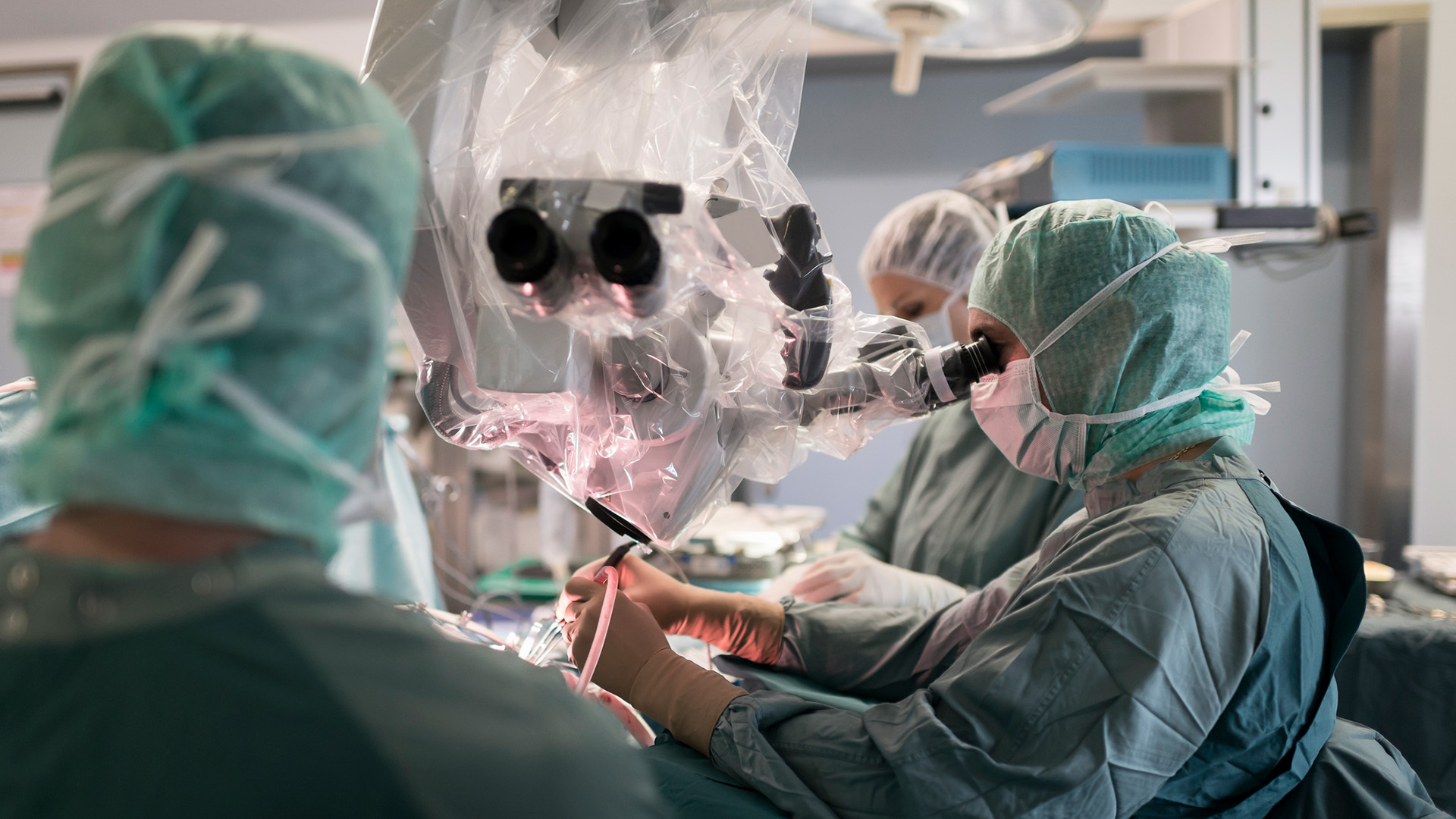
The honest answer is that no one knows. Research into spinal cord repair and central nervous system regeneration is ongoing, and there have been incremental advances over the decades. But forging new, functional signaling connections across a completely severed spinal cord — the exact challenge a brain transplant would require — remains one of the hardest problems in all of medicine.
Some researchers are exploring biological approaches, including stem cell therapies and nerve bridging techniques. Others are looking at electronic interfaces that might one day substitute for biological connections. But none of these approaches has yet produced a solution that would make a full brain-to-body transplant viable, even in animal models.
For now, the science simply isn’t there — and the gap between what surgeons can do and what a brain transplant would require remains enormous.
Frequently Asked Questions
Why isn’t a brain transplant possible today?
Surgeons cannot currently forge functional signaling connections between severed nerves in the central nervous system, which includes the brain and spinal cord. Without that ability, a transplanted brain could not communicate with its new body.
What’s the difference between a brain transplant and a body transplant?
Dr. Max Krucoff of the Medical College of Wisconsin argues the procedure should be called a body transplant, because the brain contains a person’s identity and agency — meaning the brain’s original owner, not the body donor, would be the one waking up.
Can peripheral nerves be reconnected after injury?
Yes, peripheral nerves — those that branch beyond the brain and spinal cord — can sometimes be surgically reconnected with partial functional recovery. Central nervous system nerves, however, cannot currently be repaired or rejoined in the same way.
What is the Alcor facility and what happens there?
Alcor is a cryonics facility in Arizona where more than 150 disembodied heads are reportedly stored in cryogenic chambers. The patients chose preservation in hopes that future medicine could revive their brains and transplant them into new bodies.
Has any brain or head transplant ever been successfully performed on a human?
No.
Could future technology make brain transplants possible?
Researchers are exploring approaches including stem cell therapies and electronic nerve interfaces, but none has yet produced a viable solution. The timeline for any such breakthrough, if it comes at all, remains unknown.




Leave a Reply