
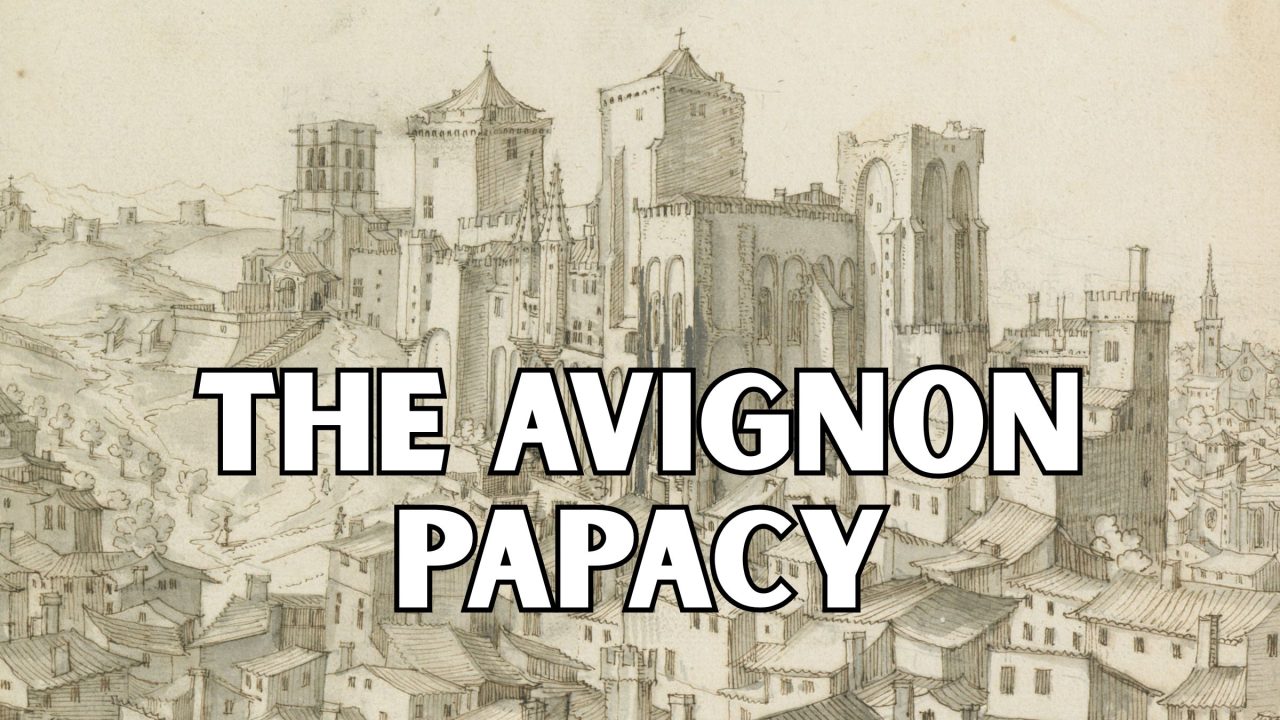
A seven-century-old chapter of Church history became an unlikely flashpoint in modern geopolitics early in 2026 — and the controversy revealed just how potent a medieval myth can still be when wielded as a political weapon.
In early April 2026, multiple news outlets reported that senior U.S. Defense Department officials had summoned Cardinal Christophe Pierre, the Vatican’s ambassador to the United States, to a closed-door meeting at the Pentagon. According to reporting first published by The Free Press and later picked up across mainstream and religious media, one official allegedly invoked the “Avignon Papacy” during what Vatican sources described as an unusually confrontational exchange.
The implication was unmistakable to anyone familiar with the history: a suggestion that the papacy could once again be relocated, subordinated, or controlled by a foreign power. Whether or not the threat was actually made, the fact that millions of people immediately understood the reference — and that it generated such an intense reaction — says everything about how deeply this medieval episode is embedded in the Western imagination.
What Actually Happened at the Pentagon
The U.S. Department of Defense confirmed that the January meeting with Cardinal Pierre did take place. However, officials strongly disputed the claim that any threats were made or that the Avignon Papacy was referenced during the exchange.
Fact-checking organizations weighed in, labeling the allegations unproven. Their assessments pointed to a reliance on anonymous sources and sharply conflicting accounts between Vatican and U.S. officials — the kind of evidentiary gap that makes it impossible to say with certainty what was or wasn’t said behind closed doors.
That uncertainty did not slow the story down. Countless organizations reported on the alleged meeting anyway, and in doing so, they unleashed — as historian Joëlle Rollo-Koster put it — “a torrent of falsehood on the Avignon papacy.” The historical record was buried under a wave of half-remembered assumptions and politically convenient distortions.
The Avignon Papacy: What the Myth Gets Wrong
The standard version of the Avignon Papacy — the period from 1309 to 1377 when the papal court resided in Avignon, in what is now southern France, rather than in Rome — has been handed down for centuries as a story of corruption, weakness, and French domination over the universal Church.
That narrative is powerful precisely because it is simple. A pope who does not sit in Rome is a pope who has been compromised. A Church headquartered in France is a Church serving French interests. The Avignon period became shorthand for institutional failure and foreign manipulation.
But according to Rollo-Koster, a medievalist who has written extensively on the period, the reality was far more complex than the myth allows. The Avignon papacy was not simply a story of a captive Church doing the bidding of French kings. The political, theological, and administrative realities of fourteenth-century Europe were considerably more layered — and considerably less flattering to anyone looking for a clean villain.
Why This History Still Carries So Much Weight
The reason the alleged Pentagon reference landed with such force — real or invented — is that the Avignon Papacy functions less as history and more as a cultural symbol. It represents, in shorthand, the idea that spiritual authority can be bent to political will. That the Church can be made an instrument of state power. That a pope can be turned into a puppet.
Those are not abstract fears. They resonate across centuries because the tension between religious independence and political pressure has never gone away. Invoking Avignon, whether in a Pentagon conference room or a newspaper headline, is a way of saying: we know how this can end for you.
That is precisely what makes the myth so durable — and so dangerous when it circulates without historical grounding. When the details are wrong, the lesson drawn from them tends to be wrong too.
Key Facts: The Controversy at a Glance
| Element | What Was Reported | What Was Confirmed |
|---|---|---|
| Meeting location | The Pentagon | Confirmed by U.S. Department of Defense |
| Vatican representative | Cardinal Christophe Pierre | Confirmed |
| Alleged Avignon reference | Made by a senior U.S. official | Disputed — labeled unproven by fact-checkers |
| Source of original reporting | The Free Press | Confirmed as first outlet to publish |
| Tone of meeting | Unusually confrontational (Vatican sources) | Disputed by U.S. officials |
| Threats made | Alleged by anonymous sources | Strongly denied by Department of Defense |
- The meeting took place in January, though it became major news in early April 2026.
- Fact-checkers cited anonymous sourcing and conflicting official accounts as reasons for their unproven designation.
- The story was picked up by both mainstream and religious media outlets globally.
- Historians noted that widespread reporting spread significant inaccuracies about the historical Avignon period itself.
The Real Cost of Getting History Wrong
For most readers, the Avignon Papacy is a dim memory from a history class — something about popes in France, probably scandalous, probably a long time ago. That vagueness is exactly what makes the myth so easy to exploit and so hard to correct.
When a politically charged reference to a historical event goes viral, the history itself rarely follows. What spreads is the shorthand, stripped of nuance, repurposed for the argument at hand. The Avignon papacy becomes whatever the person invoking it needs it to be: a threat, a warning, a precedent, a humiliation.
Scholars like Rollo-Koster argue that this is why getting the history right still matters — not as an academic exercise, but because distorted history produces distorted thinking about the present. The gap between what the Avignon papacy actually was and what people believe it was is not a minor footnote. It shapes how millions of people interpret a live geopolitical controversy.
What Comes Next
The diplomatic dimensions of the Pentagon-Vatican meeting remain unresolved in the public record. No formal statements have clarified what was said, and the conflicting accounts between U.S. and Vatican officials leave the factual core of the story genuinely uncertain.
What is clear is that the controversy has reignited serious scholarly interest in correcting the popular record on the Avignon papacy — and in understanding why medieval history retains the power to inflame modern political disputes. That conversation, at least, is unlikely to cool down quickly.
Frequently Asked Questions
What is the Avignon Papacy?
The Avignon Papacy refers to the period between 1309 and 1377 when the papal court was based in Avignon, in what is now southern France, rather than in Rome.
Did a Pentagon official actually threaten the Vatican using the Avignon Papacy as a reference?
This has not been confirmed. The U.S. Department of Defense disputed the claims, and fact-checking organizations labeled the allegations unproven due to anonymous sourcing and conflicting official accounts.
Who is Cardinal Christophe Pierre?
Cardinal Christophe Pierre is the Vatican’s ambassador to the United States, who was reportedly summoned to the Pentagon meeting described in the controversy.
Which outlet first reported the alleged Avignon reference?
The story was initially published by The Free Press before being picked up by mainstream and religious media outlets.
Why does the Avignon Papacy carry such political weight today?
It functions as a cultural symbol representing the subordination of religious authority to political power — making it a potent reference in any dispute involving Church independence and state pressure.
Was the Avignon Papacy really just a period of French domination over the Church?
According to medievalist Joëlle Rollo-Koster, that widely held view is an oversimplification — the reality of the Avignon period was far more complex than the popular myth suggests.



Leave a Reply