
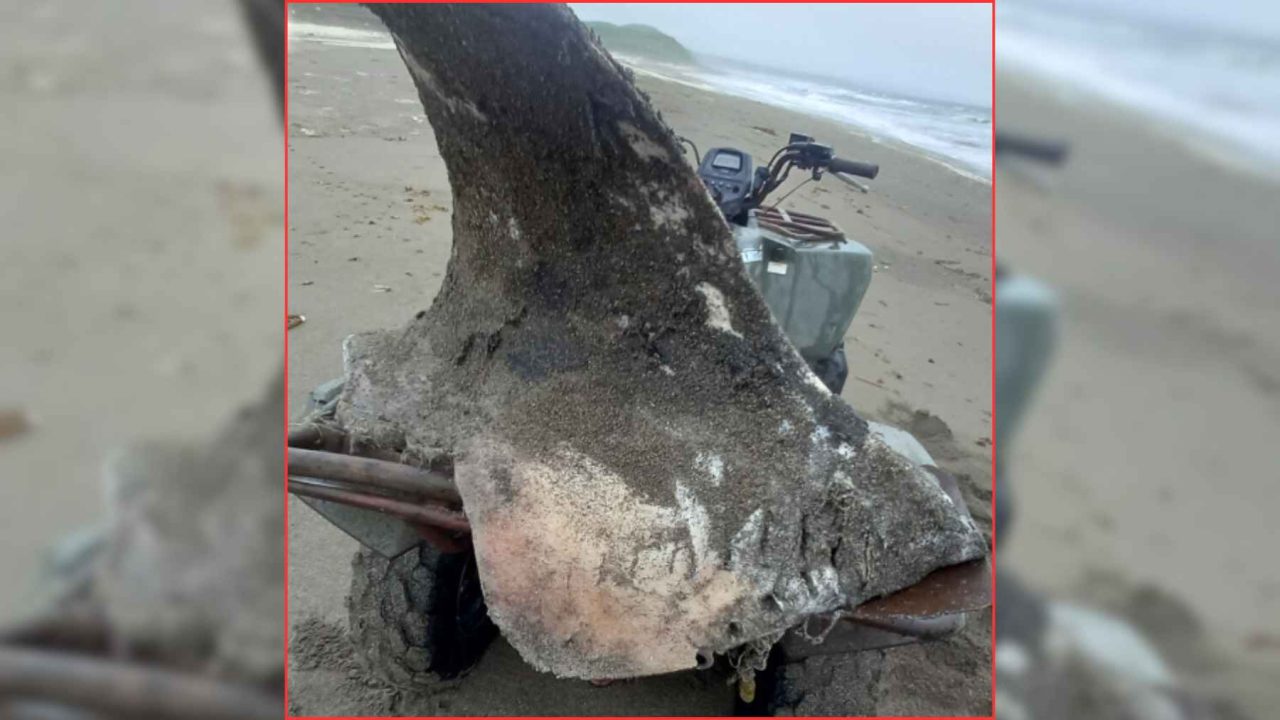
Two severed orca fins, found on the same remote Russian beach two years apart, have led scientists to a deeply unsettling conclusion: killer whales may sometimes hunt and eat each other — and it may be more deliberate than anyone previously realized.
The discovery started with a photograph. Whale biologist Olga Filatova, who works at the University of Southern Denmark, received an unusual image from a colleague showing a torn-off dorsal fin washed up on Bering Island, off Russia’s Pacific coast. What followed was years of investigation that is now reshaping how researchers think about orca behavior, social structure, and survival.
This isn’t just a curiosity for marine scientists. It touches on something fundamental about one of the ocean’s most intelligent predators — and raises questions about why orca populations remain so fiercely divided along cultural and dietary lines.
What Was Actually Found on That Russian Beach
The first severed fin turned up on Bering Island in 2022. It stood approximately 19 inches tall and showed tooth marks consistent with another orca. Then, in 2024, a second fin was discovered roughly 1.2 miles away on the same island. That one was larger — about 28 inches tall — and bore similar markings.
On its own, a single unusual find might be dismissed as an anomaly. Two finds, on the same island, with the same type of damage, two years apart? That’s when the researchers started treating it as a pattern rather than a fluke.
Filatova and her collaborators, Sergey Fomin and Ivan Fedutin, analyzed the evidence and concluded that the most likely explanation is one killer whale — or a group of them — killing and consuming another. The tooth marks were the key detail. They were consistent with orca dentition, not any other predator in the area.
Why Scientists Think This Is Predation, Not Just a Fight
Orcas are known to be aggressive toward one another under certain circumstances. Rival groups sometimes clash, and males can be violent. But the researchers argue that what happened on Bering Island goes beyond a territorial dispute or a skirmish.
“Also, if it was just aggression, they wouldn’t bother to tear off the fin,” Filatova said.
That detail matters. Tearing off a dorsal fin takes effort and intent. It’s not something that happens incidentally in a fight. It suggests the attacking orca — or orcas — were engaged in something more deliberate: consuming part of the animal they had killed.
The researchers’ leading theory is that a mammal-hunting group of orcas targeted a fish-eating group. This distinction is significant because orca populations around the world are often divided into what scientists call ecotypes — groups with different diets, dialects, and social customs that rarely interbreed and sometimes actively avoid each other. In some regions, these divisions are so strong that the groups behave almost like separate species in practice.
The Key Evidence at a Glance
| Detail | First Find (2022) | Second Find (2024) |
|---|---|---|
| Location | Bering Island, Russia | Bering Island, Russia (~1.2 miles away) |
| Fin Height | ~19 inches | ~28 inches |
| Tooth Marks Present | Yes — consistent with orca | Yes — consistent with orca |
| Suspected Cause | Orca predation | Orca predation |
- Both fins were severed, not simply scarred or partially damaged
- The tooth mark pattern pointed specifically to another orca as the source
- The proximity of the two finds on the same island strengthened the case for a recurring behavior rather than a one-time event
- Researchers involved: Olga Filatova (University of Southern Denmark), Sergey Fomin, and Ivan Fedutin
What This Might Tell Us About How Orca Groups Survive
If mammal-hunting orcas are actively preying on fish-eating orcas, it reframes something researchers have long observed but not fully explained: why orca family groups stay so extraordinarily tight-knit.
Orcas are among the most socially bonded animals on the planet. Offspring often remain with their mothers for life. Groups travel, hunt, and communicate together using dialects that are unique to each family. Scientists have debated why this social structure is so durable — and one answer that’s now gaining traction is that there may be real survival pressure driving it.
If rival groups pose a genuine lethal threat, staying close to your family isn’t just a preference. It’s protection. A lone orca or a small splinter group would be far more vulnerable than a tightly coordinated pod traveling together.
This also raises harder questions about how often orca-on-orca predation might occur without leaving evidence that washes ashore. Fins are durable and visible. Most of what happens beneath the surface leaves no trace at all.
What Researchers Are Still Working to Understand
The scientists are careful about the limits of what two fins can prove. This is early-stage evidence — suggestive and compelling, but not yet a fully documented pattern backed by direct observation. No one has filmed this behavior in the wild, at least not in this context.
What the Bering Island finds have done is give researchers a concrete physical artifact to study and a hypothesis worth pursuing more rigorously. Future fieldwork in the region, combined with photo-identification of local orca populations, could help determine which groups are involved and how frequently these encounters might be happening.
For now, the image that started everything — a strange photo of a torn fin on a Russian beach, sent to a whale biologist by a colleague — has opened a door into a darker and more complex picture of orca life than most people had imagined.
Frequently Asked Questions
Where were the severed orca fins found?
Both fins were found on Bering Island, off Russia’s Pacific coast — one in 2022 and a second approximately 1.2 miles away in 2024.
What makes scientists think this was predation rather than a fight?
Researcher Olga Filatova noted that if the encounter were purely aggressive, the attacking orca would not have torn off the fin — suggesting the behavior was consistent with feeding rather than a simple conflict.
Which type of orca is suspected of attacking which?
The researchers’ leading theory is that a mammal-hunting group of orcas targeted a fish-eating group, reflecting the deep dietary and cultural divisions that exist between orca ecotypes.
How large were the fins that were found?
The 2022 fin was approximately 19 inches tall and the 2024 fin was approximately 28 inches tall, with both showing tooth marks consistent with another orca.
Who are the scientists behind this research?
The findings were put forward by whale biologist Olga Filatova of the University of Southern Denmark, along with collaborators Sergey Fomin and Ivan Fedutin.
Has orca-on-orca predation been confirmed beyond these two finds?
The researchers describe this as a suspected pattern based on physical evidence — it has not yet been confirmed through direct observation in the wild, and the scientists acknowledge this remains early-stage evidence.




Leave a Reply