
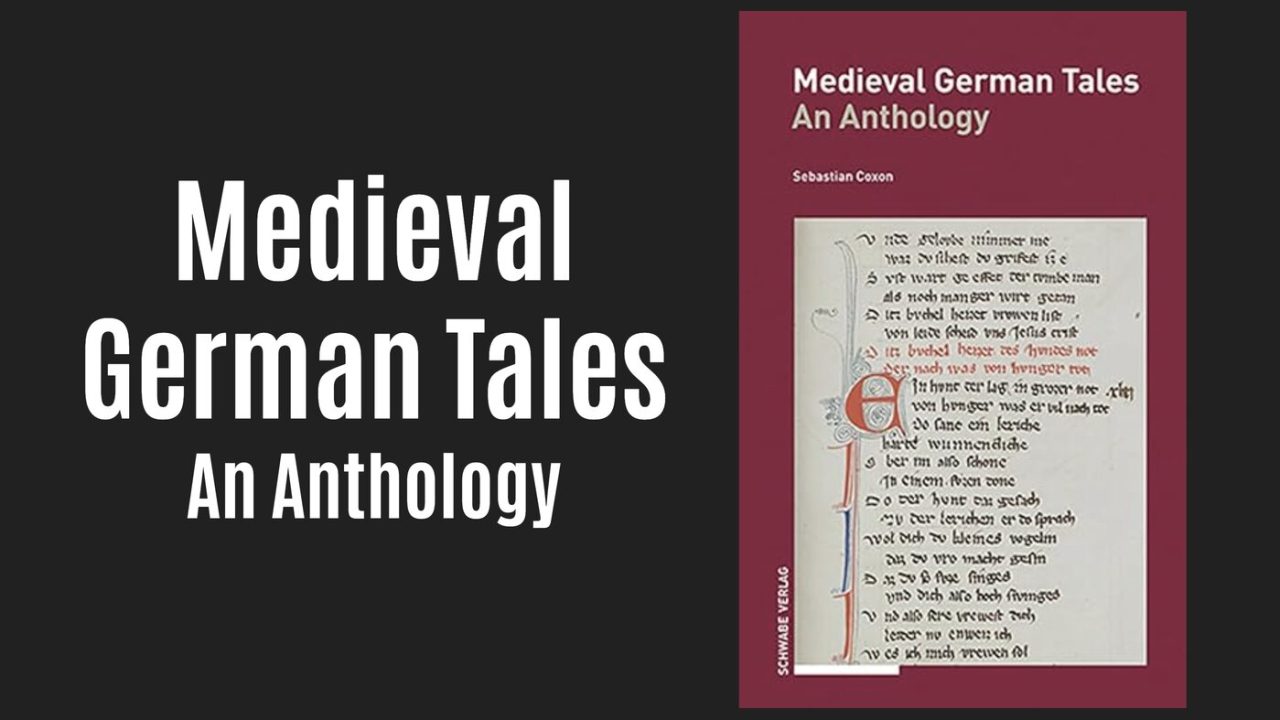
More than 700 years after they were first told, the comic, courtly, and morally tangled stories of medieval Germany are finally reaching English-speaking readers — and they are stranger, funnier, and more human than most people would expect.
A new anthology titled Medieval German Tales, compiled and translated by Sebastian Coxon and published by Schwabe Verlag, brings 20 short narrative works from later medieval German literature into English for the first time in an accessible single volume. Drawn from a much larger body of 174 tales spanning the 13th and 14th centuries, the collection offers a rare window into the storytelling culture of the medieval German-speaking world — a tradition that has remained largely invisible to readers who don’t have specialist training in Middle High German.
For anyone curious about what people actually laughed at, worried about, and found morally compelling in the Middle Ages, this book makes a compelling case that the past was far more complicated — and entertaining — than the popular image of it suggests.
What Medieval German Tales Actually Contains
The anthology is built around 20 short prose translations, each originally composed in verse couplets — a formal feature that the translator acknowledges is necessarily lost when moving into English. The tales range considerably in length, from pieces that occupy less than a single page to longer narratives running to about seven pages.
What makes the collection particularly useful is how it organizes that material. Rather than grouping the tales by date or region, the anthology divides them into four thematic categories, with two additional animal tales standing somewhat apart from the main groupings.
- Religious tales — stories engaging with faith, sin, and the sacred
- Comic tales — including works comparable to the European fabliau tradition, known for bawdy humor and social satire
- Moral tales — narratives with explicit ethical lessons or cautionary dimensions
- Courtly tales — stories reflecting aristocratic ideals of behavior and romance
- Animal tales — two unusual entries that sit outside the main four categories
The anthology draws selectively from that larger archive to give general readers a representative sample of the tradition’s range.
A Literary Form With Its Own Rules
One of the more interesting aspects of this collection is what it reveals about how medieval German storytellers structured their work. According to the anthology’s own framing, nearly all 20 texts share certain consistent formal features — despite the differences in genre and tone between a comic fabliau and a courtly romance.
Almost every tale ends with an epilogue in which the author-narrator directly addresses the audience one final time, signing off in a way that would have felt familiar and conventional to medieval listeners. Many also open with some form of introduction, preface, or prologue, though this opening convention is described as slightly less consistent across the texts than the closing epilogue.
This pattern — prologue, story, epilogue — reflects a tradition of oral and written performance in which the storyteller’s relationship with the audience was an explicit, acknowledged part of the work itself. These weren’t anonymous texts dropped into the world without framing. The narrators were present, performing, and speaking directly to their recipients.
Key Facts About the Anthology at a Glance
| Detail | Information |
|---|---|
| Title | Medieval German Tales: An Anthology |
| Author / Translator | Sebastian Coxon |
| Publisher | Schwabe Verlag |
| ISBN | 978-3-7574-0112-2 |
| Number of tales included | 20 |
| Source archive | 174 tales from the Deutsche Versnovellistik project |
| Historical period covered | 13th and 14th centuries |
| Tale length range | Less than one page to approximately seven pages |
| Thematic categories | Religious, comic, moral, courtly, plus two animal tales |
| Original verse form | Verse couplets (not preserved in translation) |
Who This Book Is Actually For
The anthology is explicitly designed for non-specialists. The stated aim is to give general readers and students a taste of shorter medieval German narrative literature without requiring any background in medieval languages or literary scholarship.
That said, the book’s structure and origins suggest it will also serve a clear academic purpose. Students of medieval literature, German cultural history, or comparative European storytelling traditions would find the collection a practical teaching text — one that makes a largely inaccessible corpus available in a manageable, well-organized form.
The tales themselves span enough tonal and thematic ground that readers interested in any one aspect of medieval culture — whether religious life, gender and comedy, aristocratic ideals, or animal symbolism — are likely to find something directly relevant to their interests.
For general readers with no academic background, the short length of individual tales makes the book easy to pick up and put down. A story that runs three or four pages can be read in a single sitting, which lowers the barrier considerably compared to longer medieval works in translation.
Why This Corner of Medieval Literature Gets Overlooked
Medieval German literature is not entirely absent from English translation — works like the Nibelungenlied and the poetry of Walther von der Vogelweide have been available for decades. But the shorter narrative tradition represented here has received far less attention outside specialist circles.
Part of the reason is practical: verse tales of this kind were produced in large numbers, vary enormously in quality and ambition, and require considerable editorial work before they can be presented to a general audience. The Deutsche Versnovellistik project addressed the scholarly side of that problem by producing critical editions of 174 such tales. This anthology takes the next step by making a curated selection of that material readable in English.
The result is a collection that fills a genuine gap — not just in what’s available to English readers, but in how the Middle Ages tend to be imagined. These are not grand epics or solemn theological texts. They are short, often playful, sometimes sharp-edged stories told to entertain real audiences in a real world. That humanity is exactly what makes them worth reading now.
Frequently Asked Questions
Who translated the tales in this anthology?
The anthology was compiled and translated by Sebastian Coxon and published by Schwabe Verlag.
How many tales are included in the book?
The anthology includes 20 tales, selected from a larger archive of 174 medieval German verse tales edited by the Deutsche Versnovellistik project.
What time period do the tales come from?
The tales date from the 13th and 14th centuries, representing a significant period of later medieval German literary culture.
What categories are the tales divided into?
The tales are organized into four main categories — religious, comic, moral, and courtly — along with two animal tales that stand apart from the main groupings.
Do you need to know German or medieval literature to enjoy this book?
No. The anthology is explicitly aimed at non-specialists and general readers, with the goal of making this literary tradition accessible without requiring any specialist background.
Is the original verse form preserved in translation?
No. The tales were originally composed in verse couplets, but the translator acknowledges that this formal feature is lost when rendering the works into English prose.

Leave a Reply